Common Home Cleaning Mistakes to Avoid for a Truly Spotless House
Most people clean their homes regularly, yet many households still struggle with lingering dust, hidden odors, sticky surfaces, and recurring mold. The problem often lies not in insufficient cleaning frequency, but in incorrect cleaning habits and misunderstood methods. Many unintentional home cleaning mistakes lead to incomplete sanitation, secondary pollution, surface damage, and wasted time and effort. Learning to identify and avoid these common errors allows homeowners to clean smarter, achieve better results, and maintain a permanently fresh, sanitary living environment with minimal workload.
Why Wrong Cleaning Methods Make Your House Dirtier
Cleaning is not simply wiping and scrubbing; it follows basic physical and hygienic logic. Many routine cleaning behaviors adopted in daily life actually spread dirt instead of removing it. Using dirty tools, cleaning in the wrong order, misusing detergents, and ignoring hidden areas all cause residual dirt and bacteria to accumulate gradually.
Incorrect cleaning does not only fail to improve household hygiene but also brings additional problems. Improper detergent use may corrode furniture surfaces, fade fabrics, and leave chemical residues. Unreasonable cleaning sequences cause dust and bacteria to transfer to already clean areas, resulting in repeated contamination. Over time, these wrong habits turn superficial tidying into ineffective labor, making homes prone to dust buildup, peculiar odors, and mold growth.
Most Common Home Cleaning Mistakes and Correct Solutions
Cleaning From Bottom to Top
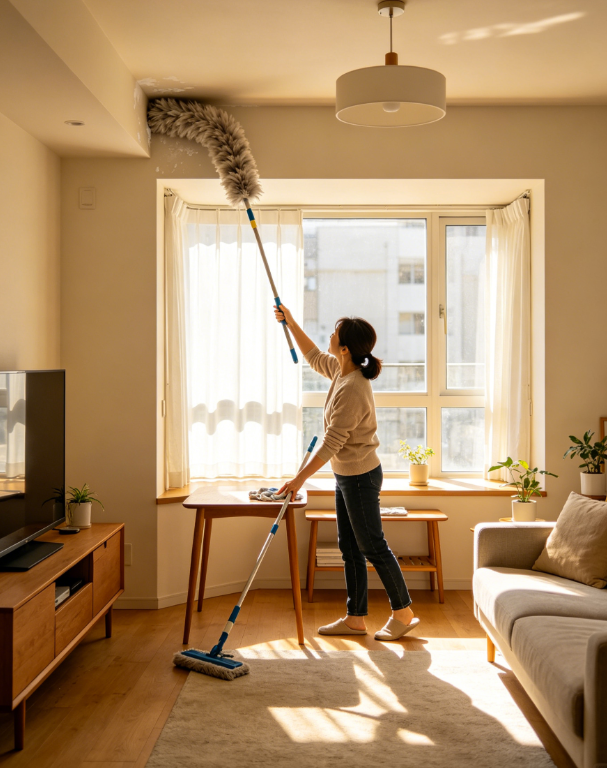
One of the most widespread cleaning mistakes is starting from floors and low surfaces. Ceiling corners, lamp shades, window frames, and cabinet tops accumulate large amounts of floating dust. When users mop floors and wipe low areas first, dust falling from high places will re-contaminate cleaned surfaces, leading to repeated cleaning and low efficiency.
Correct Method: Always follow the top-to-bottom cleaning principle. Finish dusting high walls, ceiling edges, light fixtures, and high cabinets first, then clean tabletops, windowsills, and middle surfaces, and finally mop the floors. This ensures all falling dirt is cleaned at one time, avoiding secondary pollution.
Using a Single Rag for the Entire House
Many families use one universal rag to wipe kitchen countertops, bathroom sinks, dining tables, and door handles. This behavior causes serious cross-bacterial contamination. Kitchen rags carry grease and food bacteria, while bathroom rags harbor mold and intestinal germs. Mixing cleaning tools spreads bacteria across rooms, turning cleaning tools into pollution carriers.
Correct Method: Prepare classified cleaning rags for different areas, including independent tools for kitchens, bathrooms, bedrooms, and public areas. Color-coded rags are recommended for easy distinction. Wash and dry cleaning tools thoroughly after each use, and replace old rags regularly to maintain cleaning hygiene.
Overusing Harsh Chemical Cleaners
To pursue instant cleaning effects, many homeowners use excessive amounts of strong detergents, including bleach, heavy-duty degreasers, and multi-purpose chemical sprays. Excessive chemical residues adhere to floors, furniture, and fabric surfaces, causing indoor air pollution, skin irritation, and respiratory discomfort. In addition, highly concentrated chemicals easily corrode metal hardware, damage tile glaze, and fade wooden furniture.
Correct Method: Follow the dilution ratio specified on cleaning product labels. Use mild, low-irritation, and environmentally friendly detergents for daily cleaning. For mild dirt, clean with warm water and microfiber tools to reduce chemical reliance. Rinse or wipe chemically cleaned surfaces again to eliminate residual ingredients.
Ignoring Hidden High-Touch Surfaces
Most people only clean visible large areas such as floors and walls while ignoring high-frequency contact surfaces. Light switches, door handles, remote controls, faucet knobs, cabinet handles, and mobile phones accumulate massive bacteria and sweat stains. These invisible pollutants are the main sources of household bacterial cross-infection, yet they are rarely included in daily cleaning lists.
Correct Method: Add high-touch surfaces to daily and weekly cleaning routines. Wipe and disinfect frequently contacted hardware and electronic surfaces regularly with mild disinfectant wipes. This simple operation effectively reduces household bacterial density and improves overall sanitation.
Scrubbing Stains Vigorously
Faced with stubborn water stains, oil marks, and mold spots, many people choose to scrub hard with rough brushes and steel wool. Intense friction can remove surface stains temporarily but leave tiny scratches on tiles, glass, stainless steel, and wood surfaces. These micro-scratches easily hide more dust and dirt, making stains harder to clean in the future and causing permanent surface wear.
Correct Method: Adopt a soft soaking method for stubborn stains. Apply targeted cleaning solutions on stained areas and let them sit for several minutes to decompose dirt naturally. Then wipe and clean with soft sponges or microfiber cloths to remove stains thoroughly without damaging household surfaces.
Neglecting Ventilation After Cleaning
Many people finish cleaning and close doors and windows directly. Wet floors, residual water vapor, and volatile detergent components remain indoors. In enclosed environments, high humidity breeds mold, and residual chemical gases affect indoor air quality, easily causing stuffy odors and wall mildew.
Correct Method: Keep doors and windows open for ventilation for 20 to 30 minutes after each cleaning. Promote air circulation to accelerate surface drying, discharge residual odor and volatile substances, and keep indoor air fresh and dry.
Smart Cleaning Habits for Long-Term Household Sanitation
Avoiding cleaning mistakes is the premise of efficient household sanitation. First, standardize cleaning tool management to ensure dedicated tools for specific areas and regular disinfection. Second, abide by scientific cleaning sequences of top-down and dry-before-wet to maximize cleaning efficiency. Third, prioritize mild and safe cleaning products to protect family health and household facilities.
In addition, form the habit of partial cleaning at any time. Timely treatment of daily stains and dirt prevents long-term accumulation of stubborn dirt, reducing the difficulty of subsequent deep cleaning. Combine daily light cleaning with weekly key maintenance to keep the home in a stable hygienic state all year round.
Conclusion
Effective home cleaning depends on scientific methods rather than brute force or excessive detergents. Avoiding common cleaning mistakes can prevent secondary pollution, surface damage, and ineffective repeated labor. By mastering correct cleaning logic, standardizing tool use, and developing healthy cleaning habits, every homeowner can easily create a truly clean, sanitary, and healthy living space, effectively improving household living quality and family physical health.