One Renter-Friendly DIY Gadget: How to Build a No-Damage Under-Sink Storage Shelf in Japan
Introduction
Living in a typical Japanese one-room rental apartment often means confronting structurally awkward dead spaces. Among all inconvenient corners, the area beneath the kitchen sink remains the most underestimated trouble spot. Most Japanese rental sinks come with protruding drainage pipes, uneven baseboards, and narrow vertical gaps, making commercial storage shelves impossible to fit. Tenants are forbidden to drill nails, apply permanent glue, or modify pipelines. Under such strict restrictions, a handmade adjustable under-sink storage shelf becomes one of the most practical DIY gadgets. Built entirely with 100-yen shop materials, this tool requires no professional tools, leaves zero traces after removal, and perfectly adapts to Japan’s uniquely twisted sink layouts. This article elaborates on its design logic, detailed manufacturing procedures, functional advantages, and deeper rental-living philosophy.
Design Philosophy Behind This Handmade Shelf
Unlike mass-produced furniture designed for standardized Western kitchens, this DIY shelf adopts a deconstructed and flexible structure specifically customized for Japanese old apartments. Its core design follows three local rental principles: no wall damage, easy disassembly, and moisture resistance. Considering Japan’s humid climate and compact kitchen area, the shelf prioritizes hollow breathable construction to prevent mold accumulation. Moreover, every component is lightweight and portable, which fully suits the frequent moving culture among Japanese young renters.
Raw Materials (All Purchasable at Japanese 100-Yen Shops)
- Transparent plastic U-shaped support tubes (4 pieces)
- Detachable hollow mesh plastic boards (2 pieces)
- Soft silicone adjustable buckles (6 pieces)
- Waterproof anti-slip rubber pads (4 pieces)
- Removable adhesive cable ties (4 strips)
Step-by-Step Making Procedure
Step 1: Measure and Adapt to Irregular Pipeline Structure
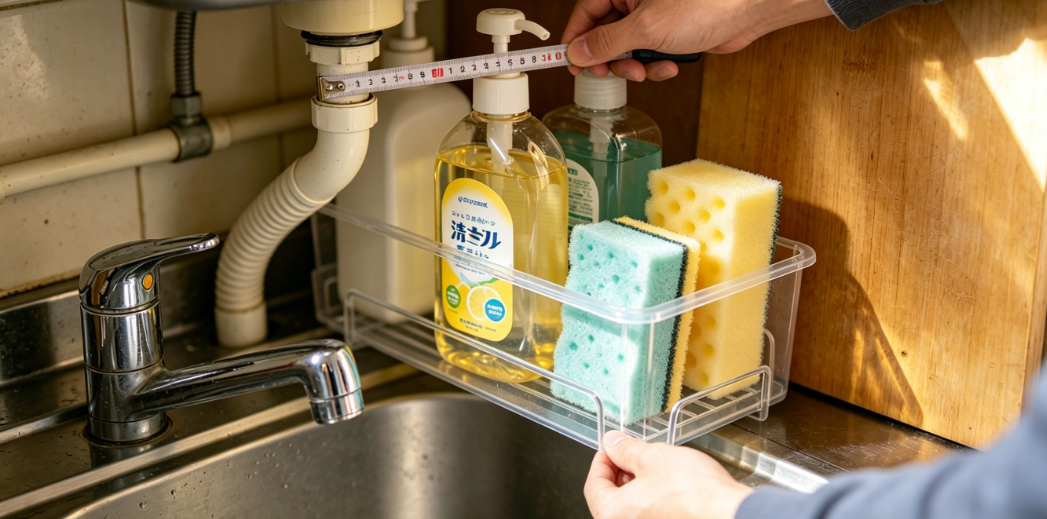
Use a soft measuring tape to record the height, width, and pipe offset under the sink. Different from ordinary cabinets, Japanese sink pipelines often tilt sideways. Mark the proper height for the upper and lower layers to avoid collision with curved drainage pipes. This measurement step reflects the Japanese living habit of respecting the original building structure rather than forcibly changing it.
Step 2: Assemble the Adjustable Supporting Frame
Connect four U-shaped plastic tubes into a vertical standing frame using silicone buckles. Do not fasten the buckles excessively at this stage. Keep the frame slightly flexible so that users can subtly adjust the angle to fit uneven sink bottoms. The soft silicone material prevents hard friction against the original metal pipeline, protecting the rental facility from scratches.
Step 3: Install Breathable Mesh Storage Boards
Clip two mesh boards onto the plastic frame at separated heights. The hollow mesh design is intentionally chosen instead of solid plastic plates. In Japan’s humid rainy season, breathable gaps accelerate air circulation and effectively reduce mildew and peculiar smells under the damp sink. Users can freely shift the board height to accommodate tall detergent bottles or flat cleaning rags.
Step 4: Complete Anti-Slip and Reinforcement Treatment
Attach rubber anti-slip pads to the four bottom tube ends to stabilize the entire shelf on slippery ceramic sink bases. For extra stability, paste removable adhesive cable ties to lightly fasten the frame onto the pipeline. The ties can be peeled off without residual glue, strictly complying with Japanese rental move-out inspection standards.
Functional Usage and Daily Application
This handmade two-tier shelf divides the messy under-sink space into classified storage areas. The upper layer holds frequently used supplies such as dish soap, sponges, and kitchen wipes, keeping daily cleaning tools within easy reach. The lower layer stores bulky refills, spare detergents, and plastic garbage bags. Thanks to its transparent plastic material, users can clearly observe stored items without opening extra storage boxes. When deep cleaning is needed, the entire shelf can be disassembled within one minute and reassembled freely.
Broader Reflections: Why Simple Handmade Tools Matter in Japan
This single handmade shelf is far more than a storage gadget; it embodies Japan’s unique residential wisdom of living gently within limitations. In most countries, people tend to purchase new furniture to adapt to living demands. In Japan, however, tenants learn to reshape and reconstruct simple materials to fit flawed housing structures. The strict no-renovation rental rules force residents to develop reversible, low-impact living solutions.
Moreover, the slow assembly process provides psychological comfort. In high-pressure Japanese urban life, manually building a functional item helps people regain a sense of control over their living environment. Even in a temporary rental house without ownership, tenants actively optimize every corner, turning indifferent architectural space into personalized daily territory.
Conclusion
The DIY under-sink storage shelf is a miniature model of Japanese rental aesthetics: simple, transparent, functional, and non-invasive. With merely cheap 100-yen materials and five minutes of manual assembly, renters successfully reorganize dead space without damaging any fixed facility. It demonstrates that excellent living quality does not rely on expensive decoration or large apartment sizes. Instead, it comes from careful observation, mild modification, and sincere respect for the existing space. In every plain Japanese rental room, such tiny handmade tools quietly support a delicate, comfortable, and self-sufficient urban lifestyle.