Renter Slim Gap Storage | No Scratches, No Jamming & Zero Residue

Slim gaps between appliances, cabinets, sofas and walls are the most wasted yet problematic dead spaces in rental apartments. Most rental layouts leave narrow 5–15cm gaps beside refrigerators, kitchen cabinets, bed frames and living room sofas. These tight crevices cannot fit regular storage furniture, so they accumulate hidden dust, fallen debris, crumbs and pet hair year-round. Many renters attempt to fill gap space with generic slim carts, only to face common rental disasters: jamming wheels that scuff floors, tight-fitting racks that scratch appliance surfaces, oversized carts that get stuck permanently, adhesive gap fillers that peel paint, and unventilated storage that traps mold and odors. I have tested dozens of gap-storage hacks and made every typical mistake. I bought ill-sized narrow carts that scratched refrigerator sides, used fixed gap organizers that blocked ventilation, and left unprotected gap bins that collected months of impossible-to-clean deep grime. Most mainstream organizing guides ignore renter-specific gap limitations: non-adjustable rental gaps, fragile appliance finishes, unblockable ventilation rules, scratch-prone flooring and no-drill temporary solutions. After repeated trial and error and move-out inspections, I built a fully adaptive, damage-free slim gap storage system categorized by gap location, width and environmental conditions.
Why Slim Gap Storage Always Fails for Renters (My Costly Real Mistakes)
My gap storage failures were invisible daily but caused noticeable deposit losses during move-out. Early on, I purchased a standard narrow rolling cart for my fridge gap. The rigid metal sides rubbed repeatedly against the refrigerator panel every time I slid it out, leaving permanent vertical scratch marks on the appliance finish. The landlord required professional panel cleaning and touch-up fees. I also used cheap fixed plastic gap fillers for cabinet side gaps. These rigid inserts blocked hidden ventilation slots, trapping kitchen humidity and causing musty cabinet odors. Worst of all, I overloaded slim carts with heavy canned goods and cleaning supplies. The uneven weight tilted the cart, dragged hard plastic wheels across laminate floors, and created long scratch lines across visible floor areas. These issues never appear in curated social media content because they only occur in fixed-size rental gaps with fragile fixtures and non-renovated surfaces.
1. Fridge & Appliance Side Gaps (Scratch & Vent Block Risk)
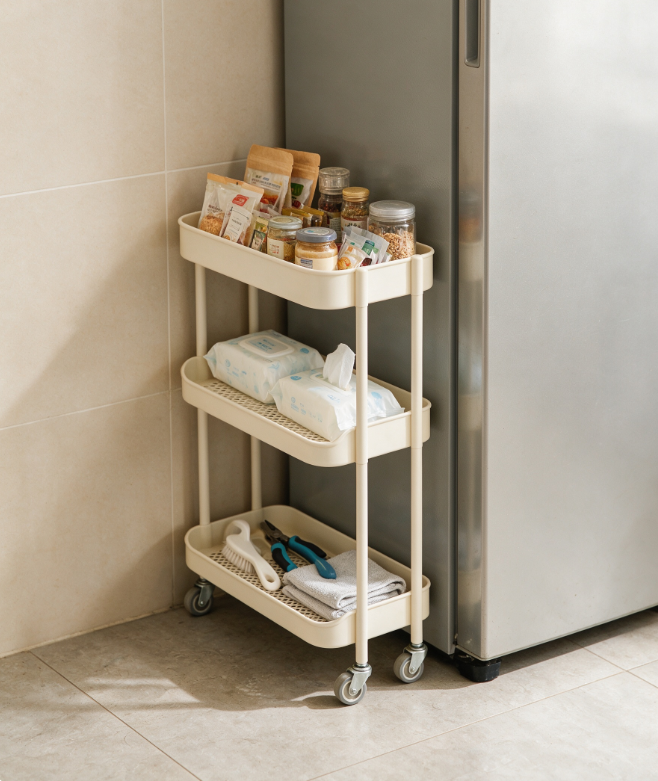
Critical gap limitations & forbidden tools
Refrigerator and appliance side gaps have two non-negotiable rental rules: zero surface friction and unobstructed ventilation. Fridge side panels have soft, easily scratched finishes that rub and scuff with rigid cart contact. Additionally, appliance side vents require consistent airflow to prevent overheating and energy inefficiency. Fixed tight-fitting organizers block heat dissipation and may even trigger maintenance alerts.
Renter-safe adjustable solution
Soft-edged adjustable slim rolling carts are the only approved option for appliance gaps. Flexible padded side frames eliminate metal-to-appliance friction and prevent panel scratches. Custom-width adjustable frames fit exact rental gap sizes without tight jamming. I store lightweight, frequently used items here: condiment packets, small snacks, cleaning wipes, bottle brushes and thin kitchen tools.
Strict weight & sizing rule
No heavy canned goods or oversized bottles. Overloading causes cart tilting, side rubbing and floor scratching. Always leave 1–2cm micro gaps for ventilation and smooth sliding.
2. Kitchen Cabinet & Counter Gaps (Grime & Stain Risk)
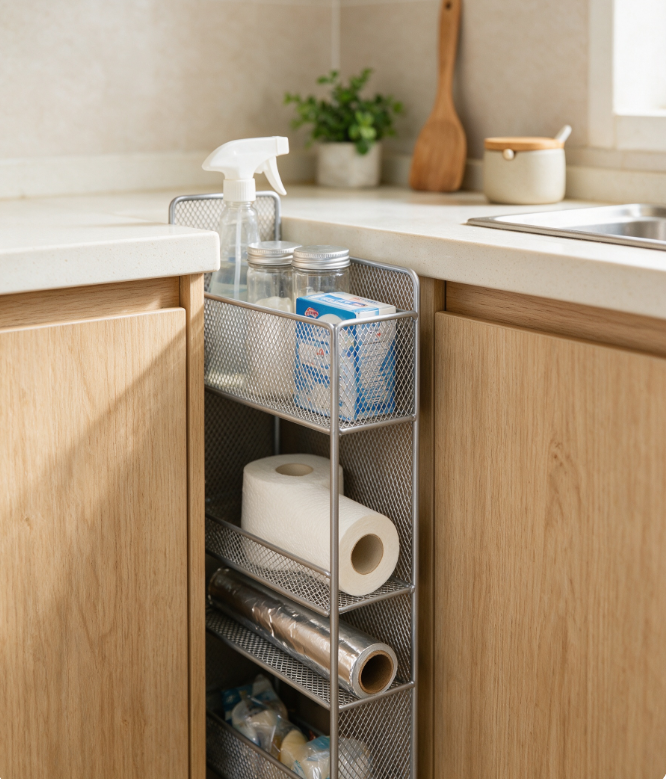
Environmental challenges
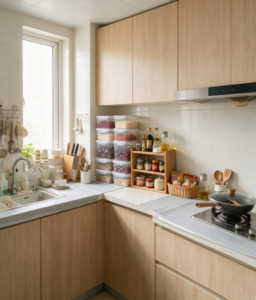
Kitchen narrow gaps beside countertops and lower cabinets face constant cooking grease splatter, food crumbs and moisture buildup. Unprotected gap storage traps layered grime that hardens over time, requiring aggressive scrubbing that damages cabinet paint. Non-waterproof carts absorb oil stains and become discolored, leaving unsightly marks that are hard to clean before move-out.
Stain-proof easy-clean setup
Waterproof slim open-grid carts work best for kitchen gap zones. Hollow mesh structures prevent food buildup and allow full wipe-down cleaning. Smooth waterproof surfaces resist oil staining and daily kitchen moisture. I reserve these gaps for sealed cleaning supplies, foil wraps, paper towels and packaged kitchen accessories to avoid crumb accumulation.
Items to avoid
Unpackaged dry food, loose crumbly snacks and porous fabric organizers. They trap kitchen grime, attract bugs and create permanent gap dirt buildup.
3. Sofa & Bedroom Frame Gaps (Dust & Tilt Risk)
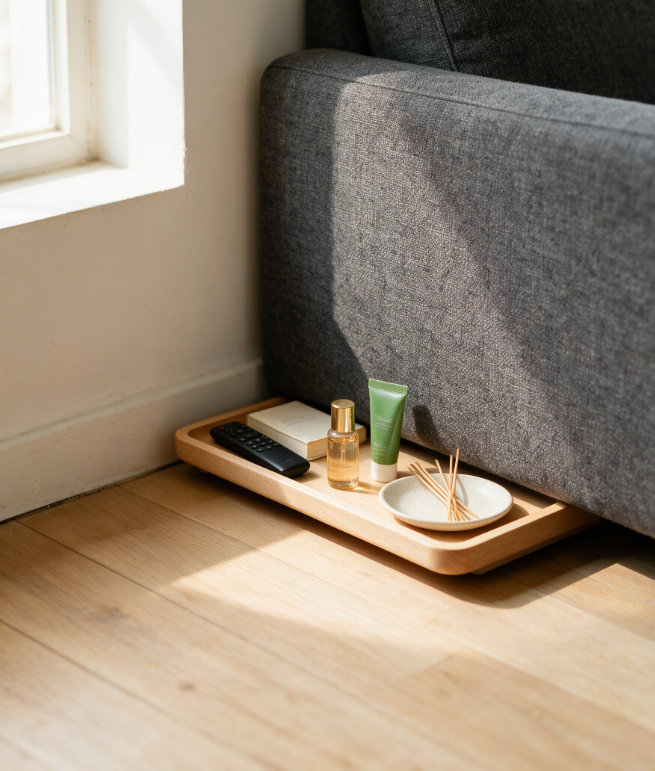
Hidden gap problems
Sofa and bed frame side gaps are dry, dark dead zones with massive dust accumulation. Most rental floor gaps are slightly uneven, causing standard rolling carts to wobble, tilt and jam. Forced sliding on uneven floors scuffs wood and laminate surfaces repeatedly. Deep furniture gaps also become hidden storage dumping grounds for random clutter that is nearly impossible to retrieve.
Stable dust-free organization strategy
Low-profile non-rolling slim insert trays and flat gap bins are optimized for furniture gaps. Wheel-free designs eliminate wobbling, jamming and floor scratching. Slim flat profiles fit deep tight gaps perfectly and block floating dust from settling in empty crevices. I use these stationary inserts for lightweight skincare, stationery, remote controls and small living room accessories.
Short-Term vs Long-Term Renter Decision Guide
Short-term renters (under 1 year)
Choose basic lightweight fixed-size slim carts and flat gap inserts. They require no complex adjustment, move easily, and cost minimally. Avoid high-end adjustable models that offer little short-term value.
Long-term renters (2+ years)
Invest in padded adjustable scratch-proof carts and waterproof grid designs. Long-term daily sliding and exposure to kitchen grease/dust demands durable, easy-clean, non-scratch hardware that protects appliances, floors and cabinet surfaces year-round.
Budget Tier Comparison & Tool Avoidance List
Low budget & zero risk: flat wheel-free gap inserts, basic slim plastic trays (fully portable, no scratch, no ventilation blockage)
Mid budget & most reliable: padded adjustable rolling gap carts, waterproof open-grid slim organizers (scratch-proof, stain-resistant, jamming-free)
Never buy for rental gaps: rigid fixed-size tight carts, metal unlined gap racks, solid closed gap fillers, heavy unadjustable rolling units (appliance scratching, vent blockage, floor scuffs, grime trapping)
Frequently Asked Questions
Do slim gap carts damage rental refrigerators? Only rigid un padded carts cause scratch damage. Soft-edged adjustable models leave appliance finishes completely unharmed.
Can gap storage block appliance ventilation? Yes, over-tight fixed organizers block heat dissipation. Always maintain small side gaps for airflow with adjustable designs.
What gap storage works on uneven rental floors? Wheel-free flat inserts perform best. Rolling carts wobble and jam on uneven surfaces, causing floor abrasion.
How do I keep kitchen gaps grease-free? Waterproof open-grid carts allow full surface wiping. Closed solid designs trap layered oil grime that hardens over time.
Are rolling gap carts safe for laminate floors? Only soft-wheel, padded models are safe. Hard plastic wheels create permanent track scratches with repeated sliding.
Final Verdict
Effective renter slim gap storage depends on precise sizing, surface protection and ventilation preservation, not forcing maximum capacity. Appliance gaps require padded adjustable low-friction carts to avoid scratches and vent blockage, kitchen gaps need waterproof easy-clean grid organizers to resist grease buildup, and furniture gaps benefit from stable wheel-free flat inserts to eliminate dust and jamming. Short-term renters prioritize portable low-cost inserts, while long-term renters gain lasting value from adjustable scratch-proof durable carts. By avoiding rigid tight-fitting racks, heavy overloaded rolling units and ventilation-blocking fillers, renters can convert useless narrow dead gaps into functional extra storage while protecting appliances, floors and security deposits.