Home Office Desk Drawer Organization: Real Tested Layouts for Daily Work Clutter
Why Desk Drawer Clutter Creeps Back No Matter How Many Times You Tidy
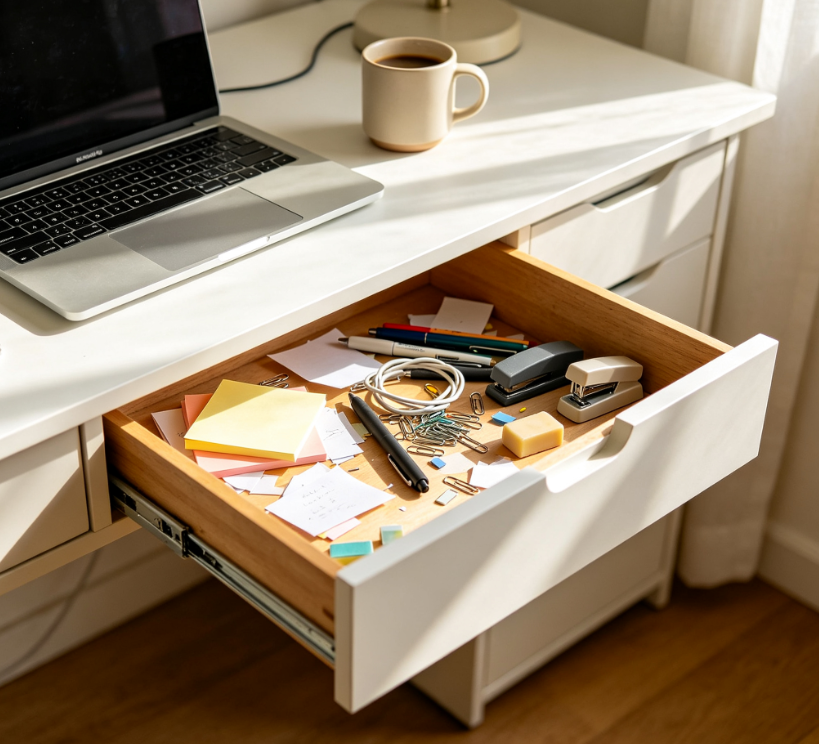
Working from home full-time for the past six years has taught me that the messiest spot in any home office is rarely the desktop. It’s the single standard desk drawer we all rely on for small workday essentials. Most people ignore how poorly these factory-default drawers function for real daily use. My current wooden home office desk has one main utility drawer with consistent, common residential measurements I’ve noted through dozens of organizing attempts: 46cm wide, 34cm deep, and 8cm tall. It’s a typical shallow, wide drawer built for generic office supplies, not the mixed tech, stationery, and random small items we actually use working from home.
For a long time, I could never keep this space stable. I’d spend half an hour sorting pens, charging cables, paper clips, sticky notes, and small tool bits into neat piles. Within three or four work days, everything would mix back together. Cables tangled under notepads, tiny stapler refills disappeared under loose paper, and everyday items like USB drives got buried under rarely used accessories. I used to think regular tidying was the only fix, until I tested two extremely popular desk drawer organizers and found their real-world flaws. These trendy inserts look clean in photos but fail to handle the messy, mixed-use flow of a real home office workspace.
Two Popular Drawer Organizers That Did Not Fit My Daily Work Routine
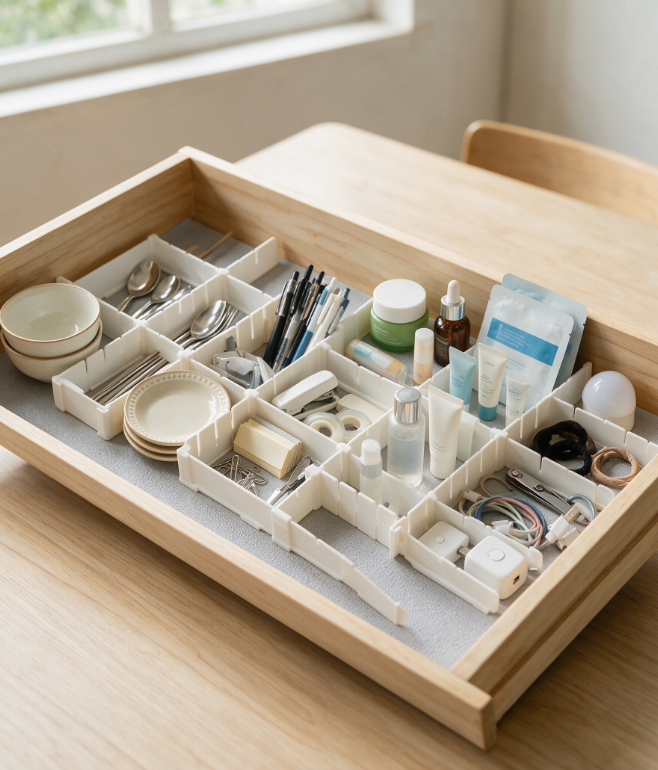
The first product I tried was a fully segmented fixed plastic drawer divider tray, the kind with many small, rigid square and rectangular slots. It’s one of the most widely recommended solutions for messy office drawers. The fixed compartments seemed perfect for sorting small stationery and tech bits into dedicated spots. But once I started using it during actual workdays, the rigid layout became more limiting than helpful.
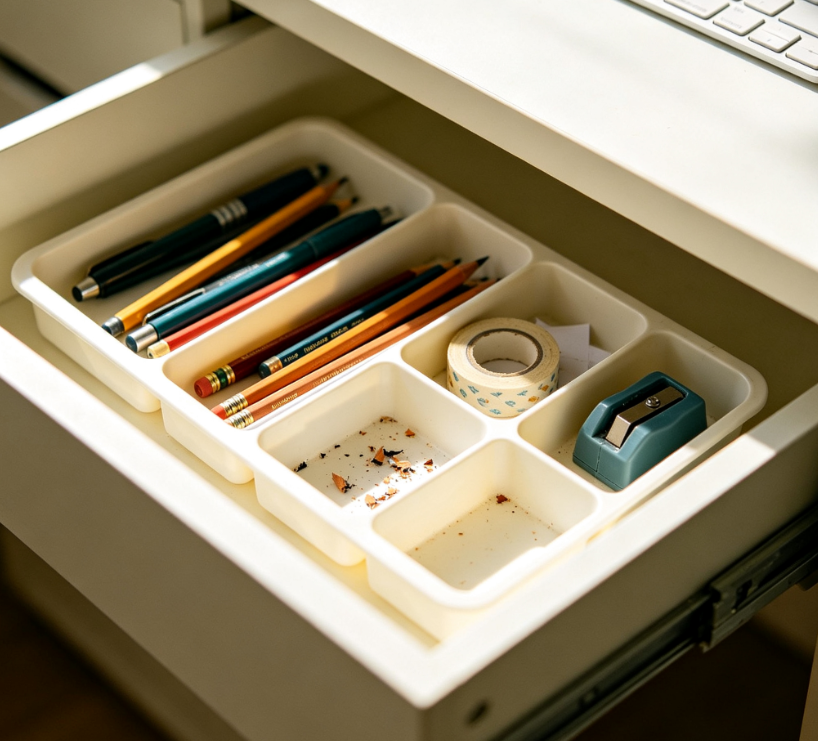
The pre-sized slots never matched my real item sizes. Tall marker pens couldn’t lie flat and stuck out above the tray edge, stopping the drawer from closing smoothly. Slightly larger items like mini tape dispensers and handheld pencil sharpeners didn’t fit into the smaller squares at all. Meanwhile, thin cables and tiny paper clips slid around loosely in oversized compartments. The hard fixed dividers also created dead empty gaps along the drawer’s uneven inner walls. No matter how I rearranged items, the layout felt forced. It prioritized uniform aesthetics over functional daily workflow, and I eventually removed it after a month of frustrating use.
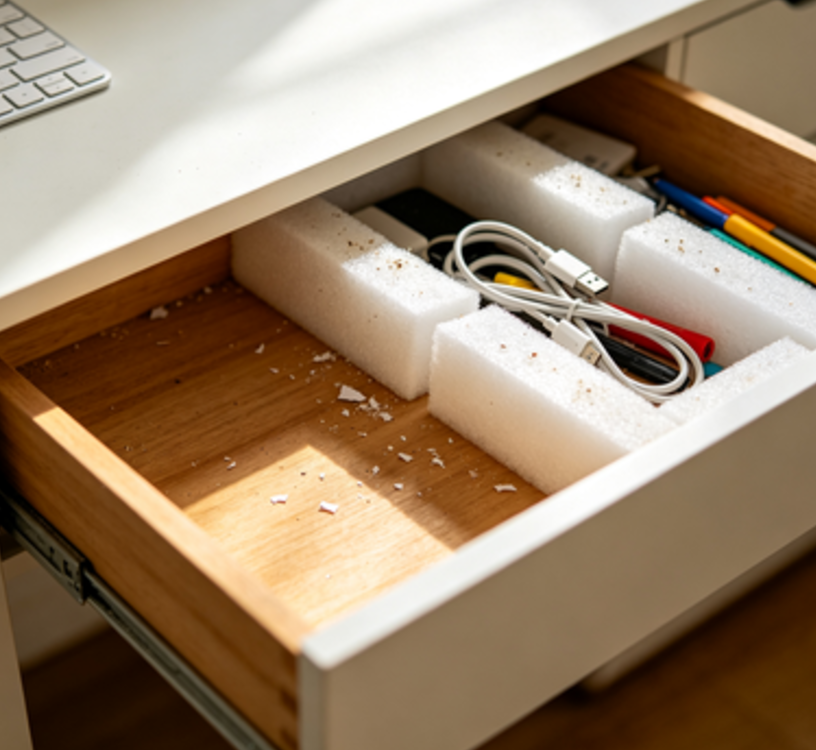
I also tested adjustable expandable foam drawer dividers, another viral home office hack. These flexible foam strips let you create custom-sized sections, which sounded ideal for mixed item storage. I liked that I could resize compartments freely, and the soft material felt gentle on desk drawer wood surfaces. The downsides only showed up with consistent daily movement and friction.
Foam material grips loosely on wooden drawer bases. Every time I pulled the drawer open or pushed it shut quickly, the dividers shifted slightly out of place. Within a week, my custom sections warped and merged into messy open spaces. Loose office supplies drifted across the shifted boundaries and mixed again. The soft foam also collects fine dust, pencil shavings, and tiny paper lint very easily. Cleaning between every divider gap took far longer than cleaning the original messy drawer. For anyone with a fast-paced daily work schedule, this adjustable foam system demands constant resetting that most people don’t have time for.
Functional Mixed-Use Drawer Layout Built for Real Work Items
After abandoning those two structured but impractical organizer styles, I rebuilt my drawer layout around how I actually work, not how social media tells us to organize. I stopped forcing strict symmetrical divisions and focused on zone-based grouping that matches my daily workflow, fitting my 46cm×34cm shallow drawer perfectly.
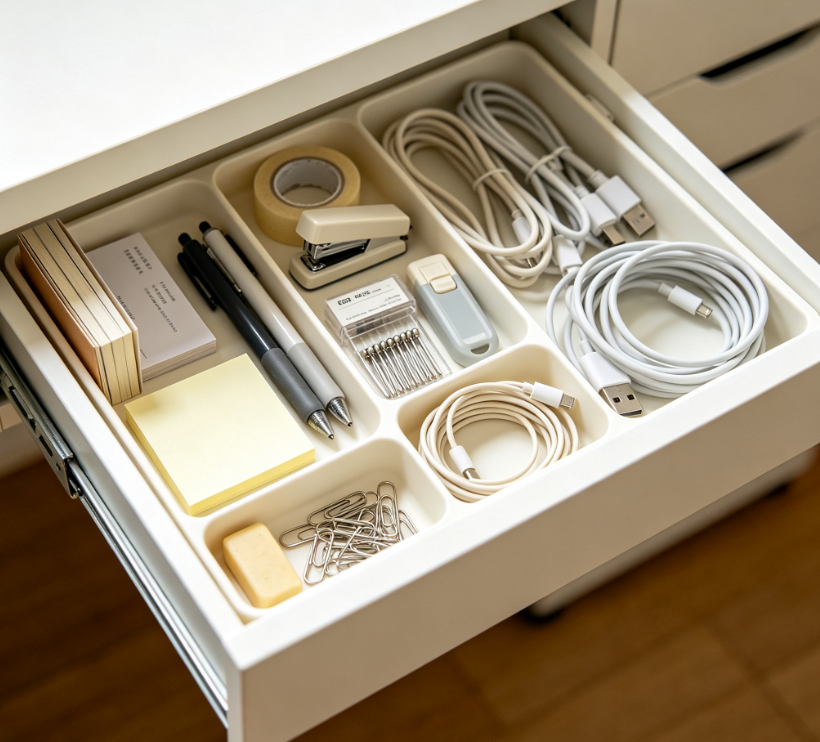
I use a combination of low-profile open plastic trays and slim flexible cable organizers. I split the drawer into three loose functional zones without rigid fixed barriers. The front section holds frequently used quick-grab items: pens, mechanical pencils, sticky note pads, paper clips, and erasers. Keeping daily essentials forward means I never have to dig deep during busy work hours.
The middle zone stores small office tools that I use a few times per week: mini staplers, tape rollers, label cutters, and staple refills. I keep these items in two shallow open trays to prevent them from mixing with front-row stationery. The rearmost zone is dedicated entirely to tech accessories. Slim cable management loops keep charging cords, short data cables, and earphone wires coiled separately. This rear zone keeps bulkier, less-frequently accessed items out of the way of daily workflow.
I also reserved the narrow side gaps of the drawer for flat thin items. Small notepads, business cards, and thin tool manuals sit flush against the inner walls, utilizing the fragmented space that fixed dividers always waste. This entire setup is intentionally flexible, so I can shift trays slightly when I need to fit occasional larger items without disrupting the whole system.
Honest Pros and Cons of This Work-Focused Drawer System
This zone-based layout fits real home office usage patterns far better than rigid segmented trays. The flexible grouping adapts to varying item sizes, so I no longer struggle with ill-fitting compartments. Open shallow trays allow full visibility, making it harder for tiny items to get lost or forgotten. The layout requires zero drilling or permanent changes, which works for both renters and homeowners who prefer reversible, low-commitment organization. It also cuts down daily search time significantly, keeping workflow smooth during busy workdays.
There are natural limitations to this flexible approach. Without fixed hard dividers, very small lightweight items can still drift slightly between zones over time. The multiple individual trays create more separate pieces to adjust during deep cleaning sessions. This system also relies on basic self-discipline; random placement of new items will gradually blur zone boundaries. It does not eliminate clutter entirely, but it slows down clutter buildup dramatically compared to fully open or overly rigid drawer setups.
Low-Effort Daily Habit That Prevents Drawer Clutter From Returning
Most desk drawer mess doesn’t happen from poor organizers. It builds from unprocessed random items accumulating over weeks. Extra business cards, leftover promotional stationery, old broken cables, and half-used sticky note pads pile up unnoticed until the drawer feels chaotic again.
I do a super quick one-minute drawer reset at the end of each work week. I simply toss broken accessories, expired notes, and unusable scraps, then shift misplaced items back into their general zones. I don’t spend time perfecting alignment or rearranging every single piece. This tiny routine stops minor disarray from turning into full clutter. It maintains consistent drawer functionality without eating into personal time or requiring deep monthly overhauls.
After years of testing trendy drawer organization methods, I’ve found that home office storage works best when it matches real human workflow. Perfect symmetrical layouts and rigid systems look neat in static photos, but flexible, forgiving setups hold up best for long-term daily home office use.