Toilet Tank Top Storage: Practical Renter Solutions for Tiny Bathroom Dead Space
Why Toilet Tank Space Is the Most Underrated Bathroom Storage Spot
Anyone living in small apartment bathrooms knows how scarce every inch of usable space truly is. Most compact rental bathrooms skip built-in wall cabinets and extra shelving, leaving almost no dedicated spot for bathroom sundries. For years, I overlooked the flat surface above the toilet tank, writing it off as unstable and unusable. After measuring my standard rental toilet tank, I found it offers surprisingly consistent usable space: 48cm wide, 20cm deep, a flat horizontal dead zone that sits completely unused in most tiny bathrooms.
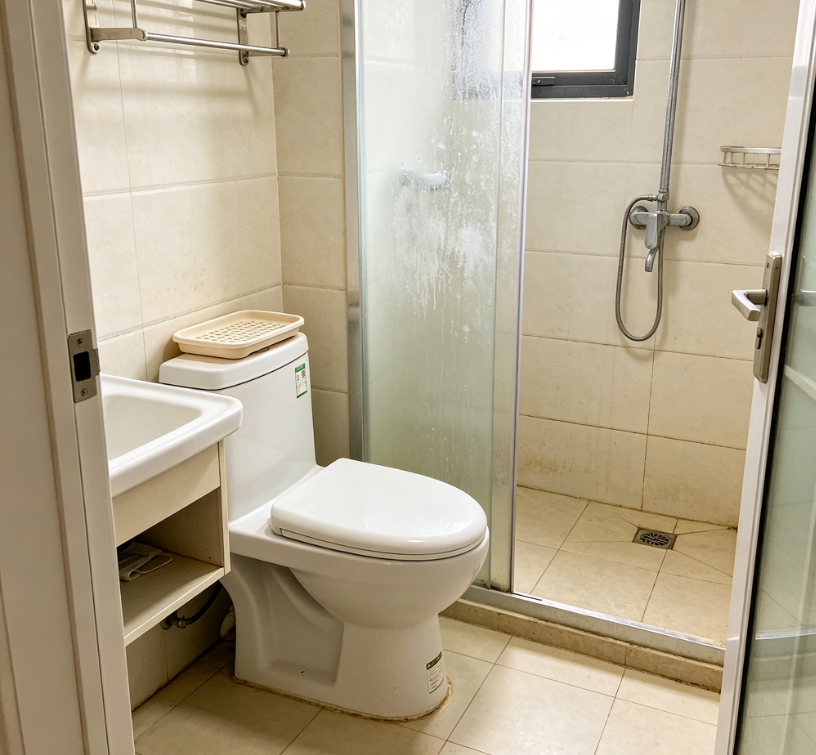
This small surface is perfect for stowing daily bathroom essentials, yet it’s tricky to organize well. Loose toilet paper rolls, cleaning wipes, air fresheners, and skincare minis always end up scattered here. Items slide off easily during cleaning or flushing, and random clutter makes the whole bathroom look messy and unkempt. I tried casual tidying for months with no lasting results. I then turned to popular toilet tank storage products online, hoping for a quick fix. After testing two mainstream organizers and experiencing obvious daily flaws, I realized most mass-produced designs don’t fit standard rental toilet dimensions or accommodate regular bathroom humidity and vibration.
Two Popular Toilet Tank Organizers That Failed Daily Bathroom Use
The first product I purchased was a full-size over-the-toilet plastic tray shelf, one of the most common recommendations for bathroom dead space. It features raised side rails and a long rectangular shape, marketed to fit most standard toilet tanks. The tray’s overall depth is 23cm, slightly deeper than my 20cm tank surface. I thought the small margin would simply overhang without causing issues, but real daily use brought constant, annoying problems.
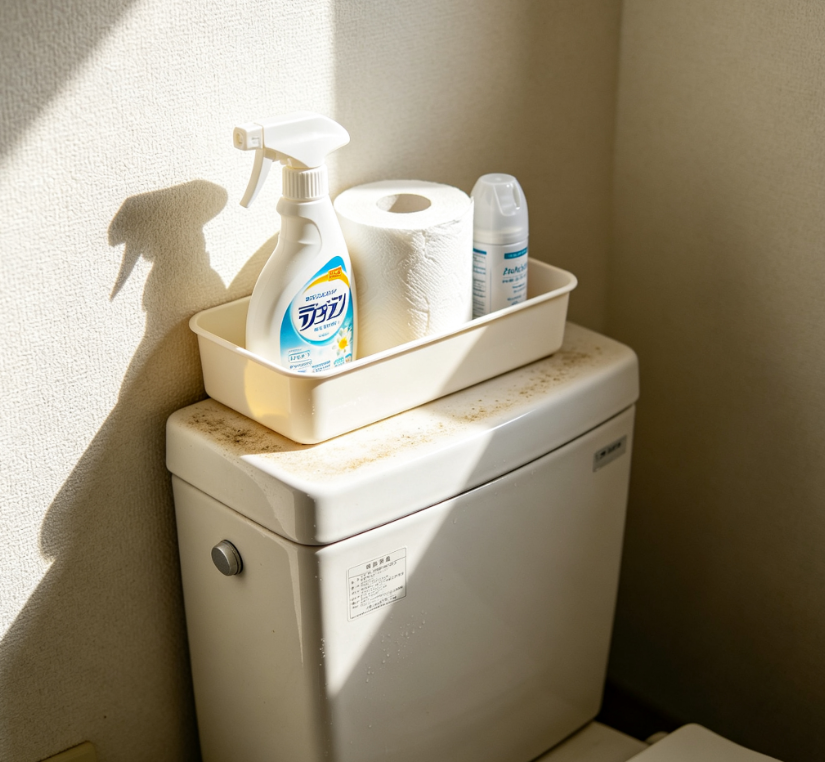
The extra depth meant the back edge of the tray hung over the toilet tank’s rear side, pressing against the wall. Every time I flushed the toilet, subtle tank vibration shifted the tray slightly forward. Within a week, the tray slid noticeably forward, leaving items unbalanced and prone to falling off. The tall solid side rails also trapped dust and moisture between the tray and toilet tank. Bathroom humidity lingered in those tight gaps, forming faint mold spots along the plastic base after a few months. Cleaning underneath and around the tray required lifting the entire bulky unit every time, which turned simple bathroom upkeep into a hassle.
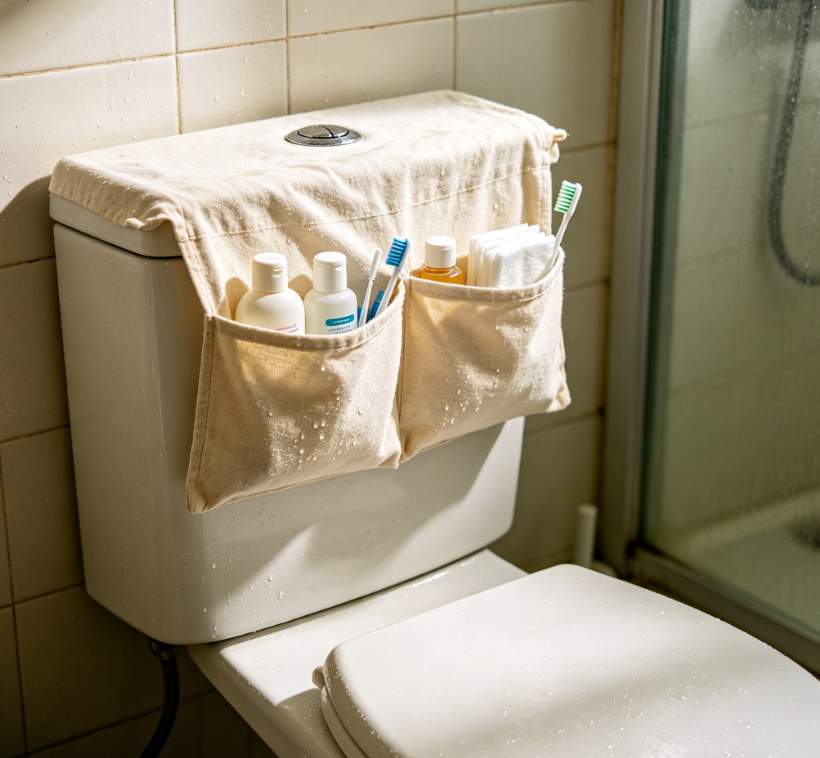
I also tested a hanging fabric toilet tank storage basket set, a lightweight, renter-friendly option with divided pockets. It drapes over the tank top, with hanging pockets on both sides for small bathroom items. The soft fabric design looked lightweight and non-intrusive in photos, but it struggled with basic bathroom conditions. The thin fabric material absorbed ambient bathroom moisture from showers and steam, staying damp for hours every day.
Stored items like wet cleaning cloths and perfume bottles made the fabric sag unevenly. The uneven weight distribution pulled the basket sideways, leaving it lopsided on the tank top. The divided pockets also had fixed sizes that limited flexibility. Tall air freshener cans couldn’t stand upright, while tiny items like cotton swabs slipped through loose stitching gaps. Over time, the constant dampness made the fabric develop a mild musty odor, which was difficult to eliminate with regular wiping.
Stable Low-Maintenance Toilet Tank Storage Layout for Rentals
After removing those two impractical storage solutions, I built a simple, space-matched layout tailored exactly to my toilet tank’s size and humid bathroom environment. I prioritized anti-slip stability, ventilation, and easy cleaning over maximum storage capacity, which completely changed how I use this dead space.
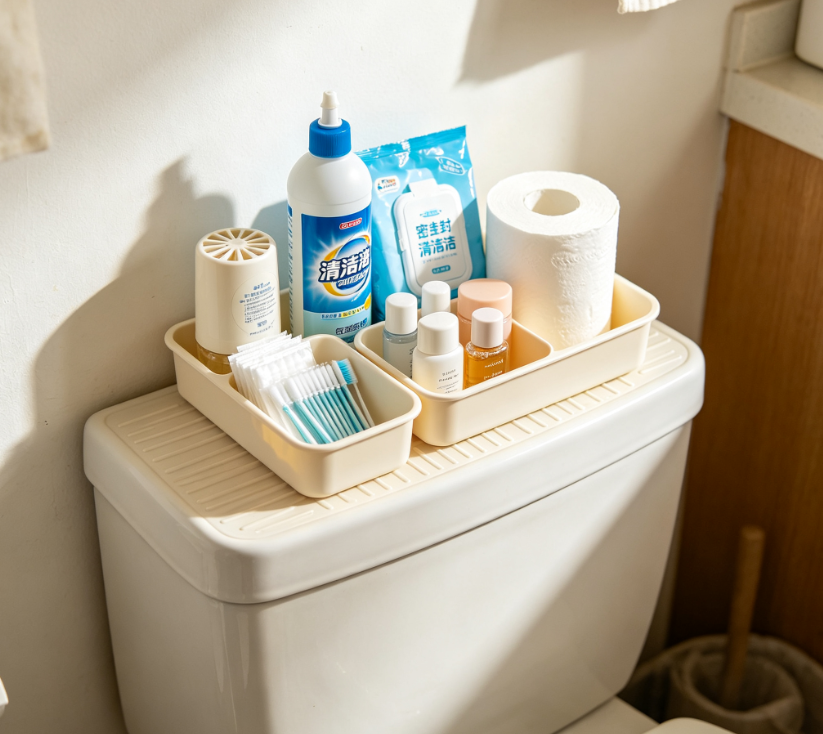
I switched to a slim 19cm shallow non-slip plastic tray, sized to sit fully centered on the 20cm tank top with no overhang. The minimal front and rear lip design prevents items from sliding off without trapping moisture underneath. I split the single tray into casual functional zones. One side holds upright air fresheners and toilet bowl cleaning sprays, while the other side stores sealed cleaning wipe packs and spare toilet paper rolls. The compact size eliminates vibration sliding, as it fits entirely within the tank’s stable flat surface.
For tiny loose accessories like cotton pads, floss picks, and skincare minis, I use two small open mini trays that sit neatly inside the main tray. This secondary containment stops small items from scattering and makes it easy to tidy up in seconds. I also adopted a simple usage rule: only sealed, dry bathroom supplies stay on the toilet tank. Damp cloths and open liquid products are stored elsewhere to avoid adding excess moisture to the area.
Realistic Pros and Cons of This Toilet Tank Storage System
This tailored setup works well for small rental bathroom limitations. The fully fitted shallow tray eliminates sliding and tilting caused by toilet vibration. Open ventilated design prevents moisture buildup and hidden mold growth that plagues enclosed or fabric organizers. All freestanding tray fixtures require no drilling, adhesive, or permanent installation, so they leave zero damage during move-outs. The simple layout also keeps the bathroom looking clean and minimal, without bulky structures crowding the tiny space.
There are practical limitations to keep in mind. The compact tray size offers limited storage volume, so large bathroom bulk items cannot be stored here. Open tray design provides no dust coverage, so unused small items can collect fine bathroom dust over time. This setup also depends on consistent item weight balance; overloading one side can still create minor shifting during strong flushes. It is not a solution for households with high-volume bathroom supply storage needs.
Tiny Habit That Maintains Long-Term Tidiness
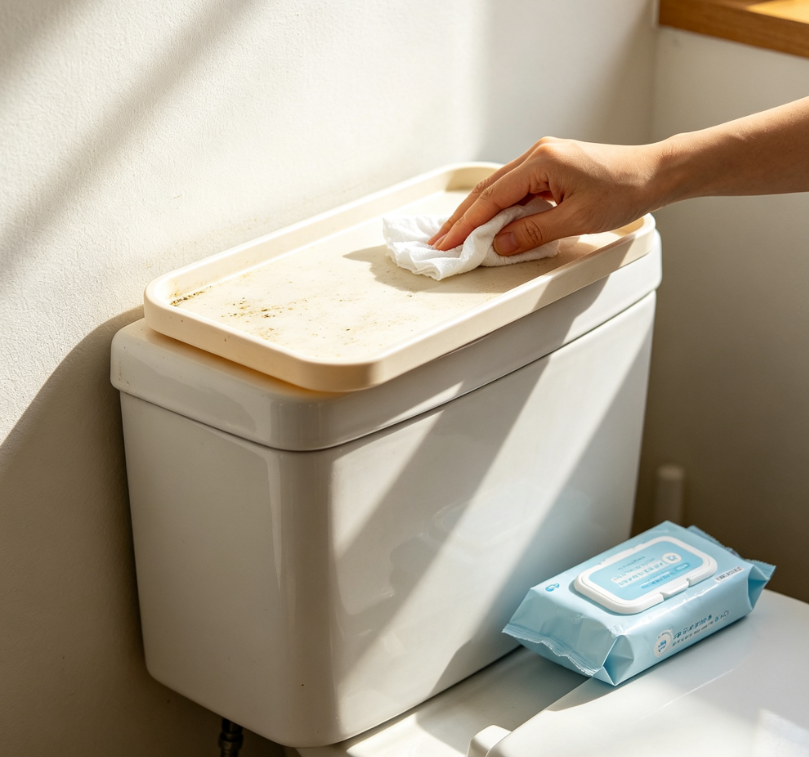
Most toilet tank clutter doesn’t come from poor organizers, but from accumulated dust and unbalanced item placement. Bathroom steam creates thin sticky dust film on plastic surfaces, which gradually makes items shift more easily. Random placement of heavy and light items also disrupts the tank top’s subtle stability.
I do a quick surface wipe every three days to clear light dust and residual steam film. I also keep heavier spray bottles toward the tank’s rear stable area and lightweight items up front. This small balancing habit prevents uneven weight distribution and reduces tray movement. It takes almost no extra time but keeps the storage zone stable and clutter-free month after month.
After years of testing trendy bathroom storage hacks, I’ve learned tiny rental spaces benefit most from modest, well-fitted solutions. Working around the toilet tank’s natural size and bathroom humidity creates far more reliable results than oversized, high-capacity organizers that ignore real daily living conditions.