Home Office Desk Drawer Organization: No-Perfect-System Tips for Regular Homeowners
If you work from home even part-time, you probably know the exact struggle of a chaotic desk drawer. Your desk surface might look clean and put-together for Zoom calls, but open a single drawer, and everything falls apart. Tangled charging cords, half-dead pens, random sticky notes, loose paper clips, and old printed documents pile up fast. For years, I ignored this mess because I thought desk drawer organization was either overrated or required fancy bins, strict routines, and hours of free time I simply don’t have. I tried quick fixes countless times—shuffling items around, pushing clutter to the back, tossing obvious trash—but my drawers would turn messy again within three or four days. After countless frustrating mornings digging for a working pen or a USB drive right before a meeting, I started testing slow, realistic organizing methods that fit a regular homeowner’s lifestyle. None of these tricks are flawless, and I still make mistakes, but they keep my home office drawers functional without endless upkeep.
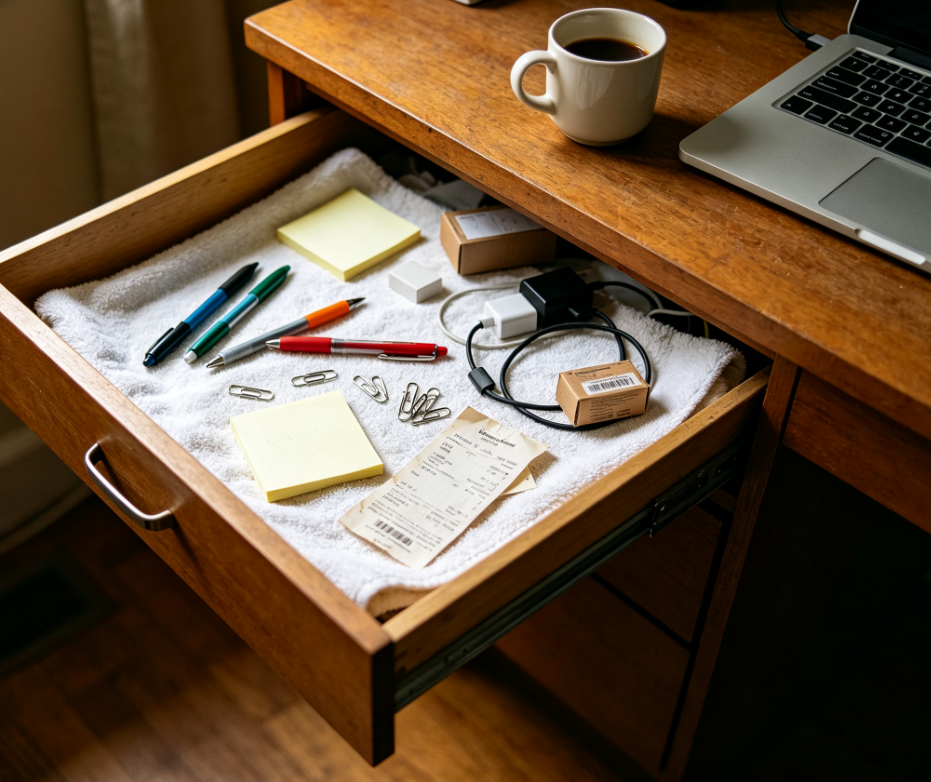
The first real change I made was ditching the “organize on the fly” habit and doing a full drawer reset. Previously, I would tidy my drawers while working, grabbing five minutes between tasks to straighten things up. This never worked because I never removed the hidden junk. Last month, I set aside one lazy Sunday afternoon, around 30 minutes total, and emptied every home office desk drawer completely onto a clean kitchen towel. I had three drawers in total, and dumping everything out instantly revealed how many useless items I’d been storing out of pure laziness. I found broken earbuds, dried-out markers, expired grocery receipts I’d stuffed in my pocket, old business cards I’d never use, and multiple duplicate chargers I forgot I owned.
My simple, actionable sorting method has only three piles, no complicated categories to memorize: keep for daily work, keep for occasional use, and throw away or relocate. I tossed every broken item and every piece of outdated paper right away instead of setting it aside to “sort later”. I piled up stray items that didn’t belong in my office at all—small screwdrivers, kids’ hair ties, random spare keys—to put back in their correct household spots afterward. My biggest personal weakness here is hesitation to discard unused small items. I tend to think “this might come in handy someday” and hold onto junk for months. To fight this bad habit, I made a loose personal rule: if I haven’t touched an item in six months and it’s not an emergency backup supply, it gets removed. It’s not a perfect rule, and I still occasionally save a few unnecessary things, but it cuts down on 90% of my drawer bloat.
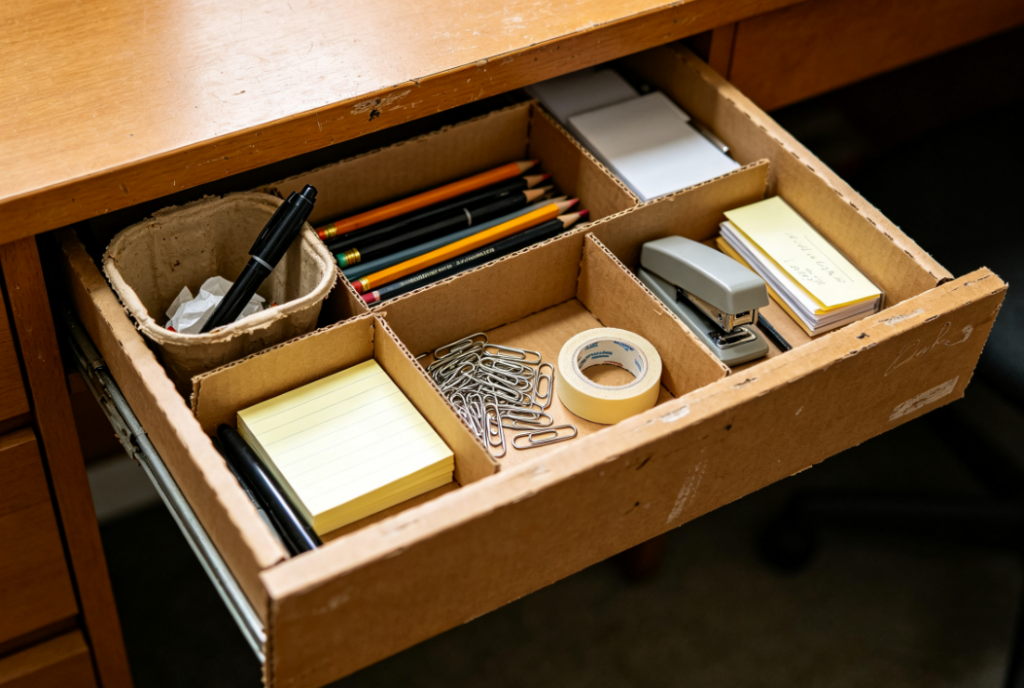
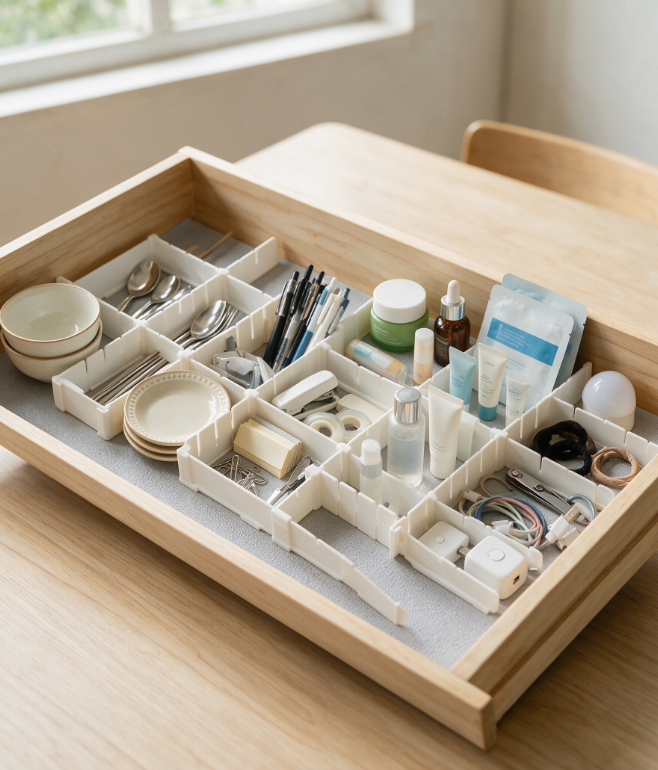
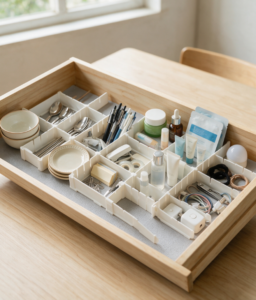
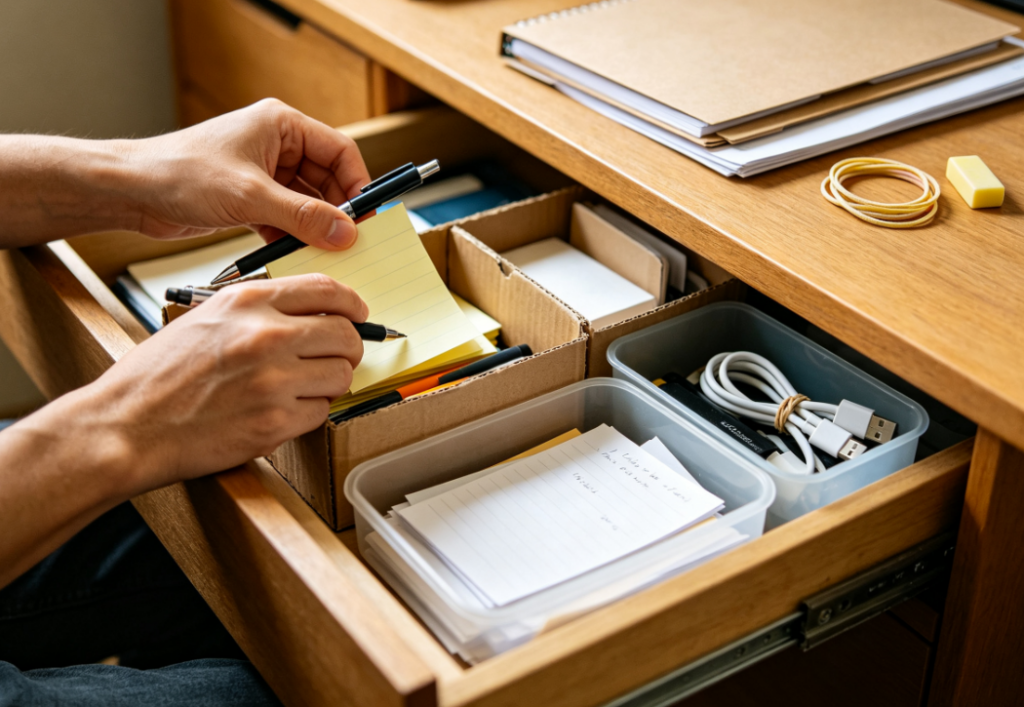
Once sorting was done, I moved on to arranging items with zero expensive organizing tools. I’ve wasted money on thin plastic drawer dividers before that broke easily or didn’t fit my drawer size, so now I only use leftover boxes, old pencil cases, and empty cosmetic containers I already have at home. My top drawer holds all my daily work essentials, so I grouped writing tools, sticky notes, paper clips, and small erasers together. I used a small cardboard box to separate pens and pencils from tiny metal office bits, which stops them from mixing into one big jumble every time I rummage around. I placed all daily-use items toward the front of the drawer, so I never have to move other things to reach them.
A real downside I’ve experienced with this setup is overfilling the front section when I’m busy. On stressful work weeks, I toss new pens and extra sticky note pads in the front without adjusting the space, and it slowly crowds the drawer again. My simple fix is a quick two-minute check every Friday evening. I just remove excess supplies and move them to my occasional-use pile, which prevents big messes from building up over time. It’s a tiny, low-effort step that doesn’t feel like a chore, even when I’m tired after work.
My middle drawer stores items I only use weekly or monthly: staplers, packing tape, spare notebooks, file folders for old project paperwork, and extra printer paper scraps. In the past, I stacked notebooks flat on top of each other, which meant I had to lift every single notebook to reach the one at the bottom. Switching to vertical stacking completely changed how functional this drawer feels. I stand notebooks and thin folders upright, just like books on a shelf, so I can grab exactly what I need in one second.
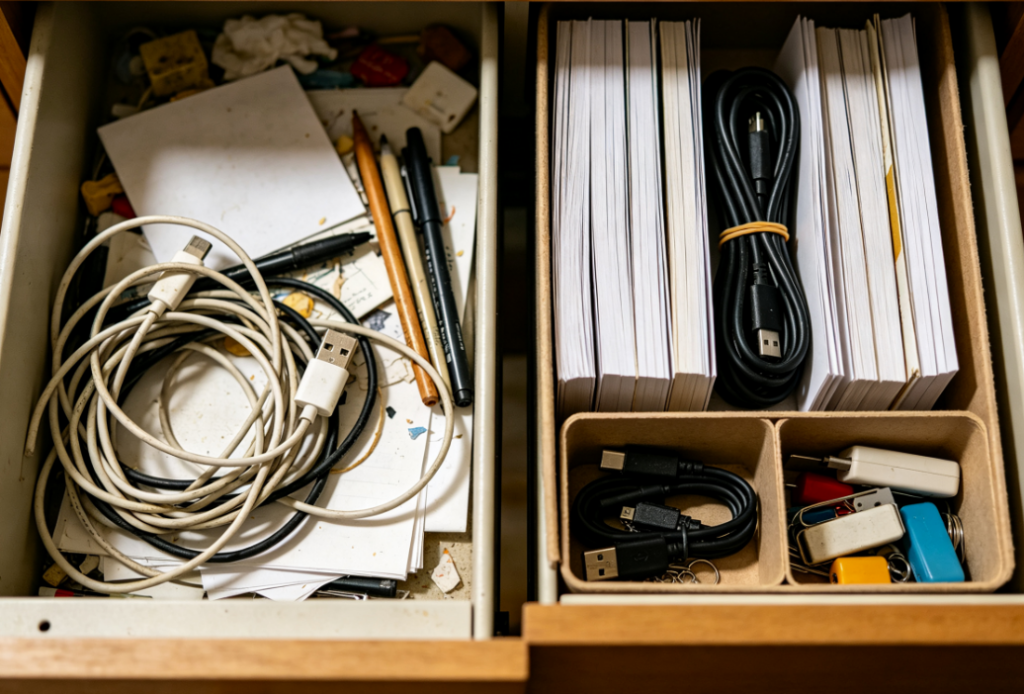
My biggest ongoing struggle with the middle drawer is paperwork buildup. I’m naturally someone who prints out reference pages and saves old project notes “just in case”, and they pile up fast. I used to let loose papers float around the drawer, creating messy layers that were impossible to sort through. My practical solution is one basic folder labeled “old work files”. Every loose paper goes straight into this folder instead of floating freely. The flaw here is that the folder gets thick quickly, so I have to do a quick paper purge every two months. If I skip this step, the folder bulges and jams the drawer slightly, which is a constant reminder to stay consistent.
The bottom desk drawer was always my worst trouble spot. It turned into a universal catch-all for tech accessories, old headphones, random batteries, and miscellaneous small items with no clear home. Tangled cords were my biggest nightmare here; I’d spend minutes untangling charging cables every time I needed