Renter-Friendly Noise Reduction Hacks (No-Damage, Lease-Safe Ways to Block Apartment Floor, Wall & Street Noise)
Most urban rental apartments suffer from serious noise pollution, including neighbor wall tapping, upstairs floor footsteps, hallway chatter, street traffic sound, and indoor echo problems. Unlike homeowners who can install professional soundproof cotton, replace sound-insulated windows, lay fixed floor carpets, and renovate wall acoustic structures, renters cannot make permanent structural upgrades, drill soundproof panels, or modify door and window fixtures. Professional soundproof renovation involves wall chiseling, fixed pasting, and structural changes that violate lease agreements and cause security deposit loss. Long-term noise interference affects sleep quality, work efficiency, and living comfort. Fortunately, fully reversible, no-damage renter-friendly noise reduction hacks effectively weaken wall noise, floor vibration, street sound, and indoor reverberation, creating a quiet living environment without any rental property damage.
Sources of noise in rental apartments & tenant mistakes. Apartment noise is divided into three core categories: structural vibration noise, air conduction noise, and indoor echo noise. Upstairs footsteps, furniture dragging, and pipeline vibration transmit through building structures, forming low-frequency noise that is difficult to block. Outdoor traffic sounds, wind noise, and hallway voices penetrate through window gaps, door gaps, and thin wall structures. Empty hard-walled rental rooms produce obvious sound reflection and echo, amplifying daily noise. Many tenants use lease-risky solutions such as permanently pasting thick soundproof foam, nailing acoustic panels, and modifying door structures, leaving residual glue, wall peeling, and hole damage. The core principle of renter-safe noise reduction is physical gap sealing, portable sound absorption, vibration buffering, multi-layer blocking, and zero irreversible modification.
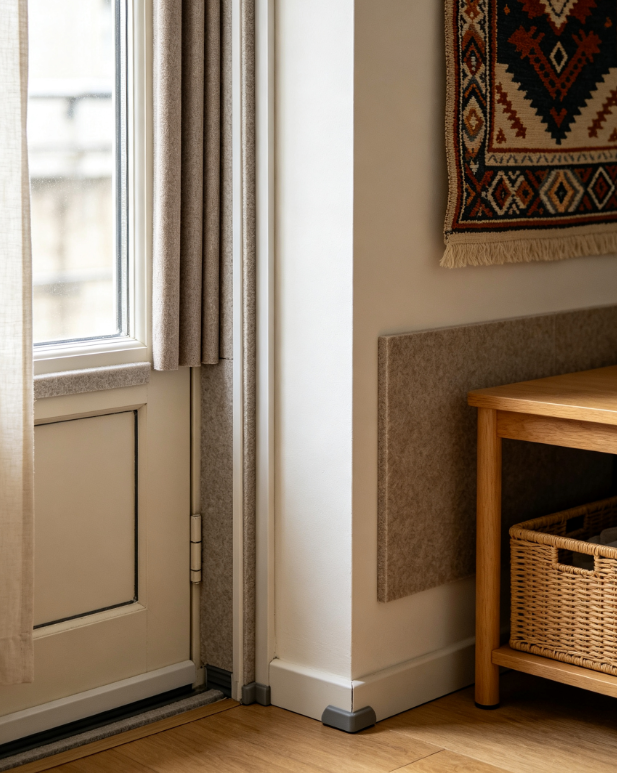
No-drill window & door sound insulation for street noise. Windows and doors are the largest leakage channels for outdoor noise. Thin single-layer glass, loose window frames, and unblocked door bottom gaps allow most street noise and hallway sound to penetrate indoors. Renters cannot replace windows or install fixed sealing structures, but removable sound insulation accessories significantly reduce noise transmission. Removable window soundproof sealing strips fill frame gaps to block air-borne noise leakage. Heavy-duty soundproof blackout curtains with multi-layer thick fabric weaken outdoor traffic sound and isolate light noise efficiently. Adjustable door bottom gap blockers eliminate sound transmission through door gaps. All sealing and sound insulation materials are fully peelable and leave no traces after removal.
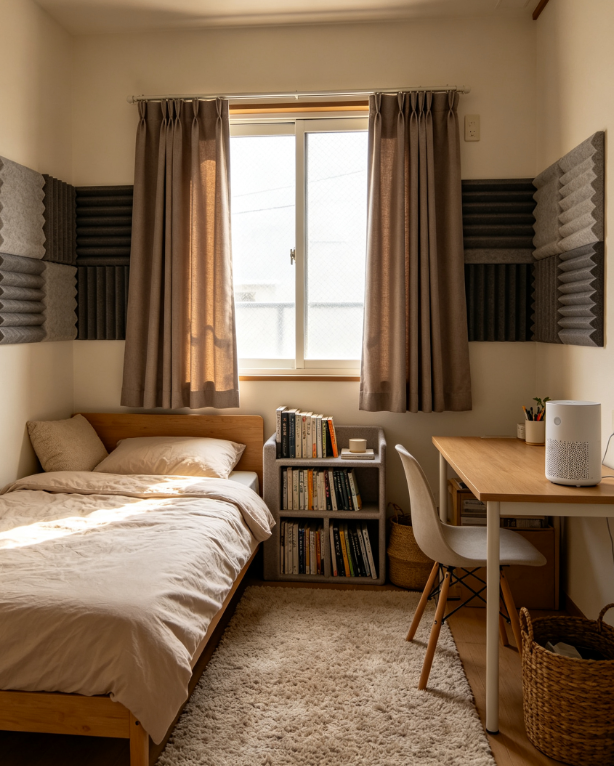
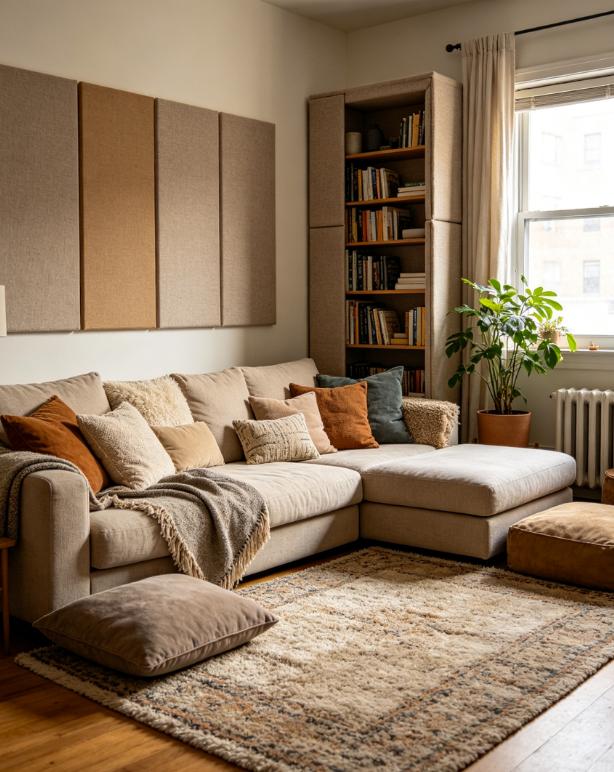
Wall sound absorption solutions for neighbor noise interference. Shared thin partition walls easily transmit talking sounds, TV noise, and daily movement sounds from adjacent units. Renters cannot add fixed wall sound insulation layers, but portable sound-absorbing decorations reduce wall noise and indoor echo. Thick fabric tapestries, large wall hanging fabrics, and movable acoustic foam panels (self-adhesive, residue-free) attach to noisy wall areas to absorb reflected sound waves. Freestanding tall bookshelves and fabric storage cabinets placed against shared walls form physical sound buffer layers, weakening low-frequency vibration noise. These temporary arrangements avoid bare wall echo and effectively reduce adjacent noise perception.
Floor vibration reduction for upstairs & indoor noise. Upstairs floor impact noise is the most disturbing type of rental noise. Tenants have no right to modify upstairs floors, but indoor buffer settings can optimize overall quietness. Thick high-density area carpets and soft rug pads reduce indoor walking noise and weaken downward sound transmission for tenants on lower floors. Furniture anti-vibration pads under bed frames, tables, and cabinet legs isolate structural vibration and avoid resonant noise. These floor buffer layers absorb friction and impact sound, making the entire room quieter without floor modification.
Indoor echo elimination & quiet space optimization. Empty rental apartments with hard walls, hard floors, and few soft furnishings have severe sound echo, making ordinary speaking and daily movement sounds amplified. Increasing soft furnishings is the most renter-friendly way to absorb noise. Thick fabric curtains, plush carpets, soft sofa cushions, and fabric bedding form a full-room sound-absorbing system. Proper placement of potted plants and fluffy decorative ornaments disperses sound wave reflection and reduces indoor reverberation. All soft decoration upgrades are replaceable and movable, suitable for temporary rental living.
Portable auxiliary tools for ultra-quiet sleep environment. For sensitive sleepers and remote workers, weak residual noise still affects rest and focus. Lease-safe portable tools assist in eliminating noise interference. White noise machines mask intermittent neighbor noise and unstable street sound through steady uniform frequency. Portable window sound insulation blankets enhance noise blocking effect during night rest. These small devices require no installation, do not change apartment structures, and solve occasional noise troubles efficiently.
Seasonal noise adjustment strategies. Noise environment changes with seasons and living cycles. In open summer seasons with frequent windows open, strengthen window sealing and use thick soundproof curtains to block outdoor noise. In closed winter environments, reduce indoor echo by adding soft furnishings and avoid loud indoor vibration that disturbs neighbors. During renovation peak seasons in the community, use white noise equipment and multi-layer sound insulation to offset intermittent construction noise. Seasonal targeted collocation maintains long-term room quietness.
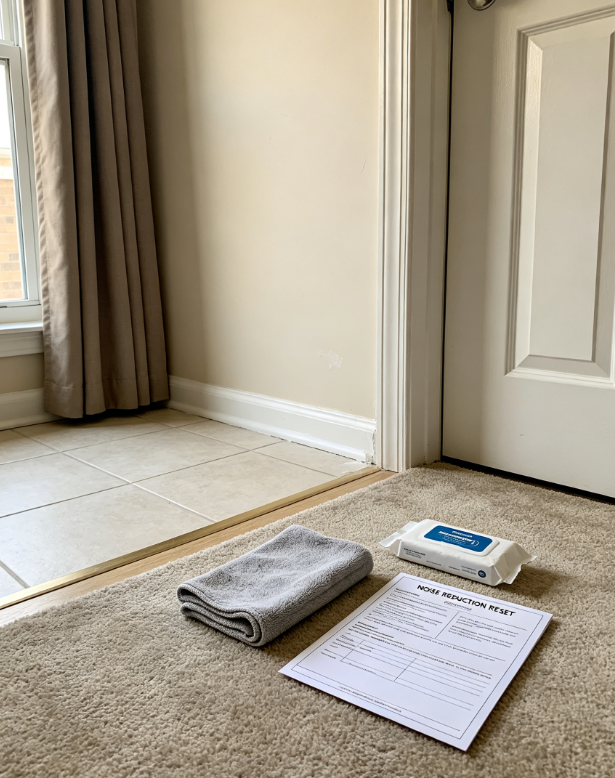
Move-out noise reduction reset & inspection checklist. Gently remove all window and door sealing strips, soundproof accessories, and self-adhesive sound absorption materials. Take down thick wall hangings and acoustic decorations. Remove all furniture vibration pads and carpet buffer layers. Clean wall, door, and window surfaces to eliminate minor residual traces. Restore all original building structures and fixtures to their initial state for landlord inspection.
All noise reduction upgrades are 100% lease compliant. Every soundproof strip, thick curtain, vibration pad, sound-absorbing decoration, and portable noise-blocking tool requires no drilling, no wall modification, no fixture replacement, no structural renovation, and no permanent adhesion. All noise reduction methods are temporary, fully reversible, residue-free, and security-deposit safe.
Overall, renters do not need professional soundproof renovation or structural reconstruction to obtain a quiet living space. With gap sealing noise blocking, wall sound absorption, floor vibration buffering, indoor echo elimination, and portable auxiliary quiet tools, various apartment noise problems can be effectively improved. These budget-friendly, no-damage noise reduction hacks solve neighbor noise, street sound, and indoor echo troubles, improve sleep quality and home working efficiency, and fully comply with rental lease rules for safe and comfortable long-term renting.