Small Balcony Storage: Real Renter Solutions for Cluttered Semi-Outdoor Spaces
Why Small Rental Balconies Always Turn Chaotic No Matter How You Tidy
Having moved through six rental apartments over the past decade, I’ve noticed one consistent issue across almost all budget city homes: poorly functional balcony storage zones. Most rental balconies come with a tiny enclosed utility nook designed for household sundries, but they rarely work well with generic storage solutions. My current balcony utility niche has accurate measured internal dimensions: 105cm wide, 33cm deep, and 178cm tall. This shallow, vertical-only space is typical of high-rise residential layouts, built for basic utility rather than organized storage.

This small zone is where I stow cleaning gear, spare laundry supplies, gardening tools, and seasonal household items. For a long time, I could never keep it under control. Items either stacked too high and toppled over, or small goods slipped into tight rear gaps and got forgotten. Weekly tidying never stuck. I used to blame my own lazy sorting habits until I tested two widely recommended balcony storage products and discovered the real problem. Most mainstream organizers are designed for covered, deep balconies, not the shallow, windy, dust-prone semi-outdoor nooks common in rentals.
Two Popular Balcony Organizers That Failed My Actual Living Scenario
The first product I tried was a popular tall folding metal storage shelf, a go-to choice for renters looking for tool-free assembly and extra vertical space. Its standard depth of 38cm seemed workable when I ordered it, even though my niche only offers 33cm of internal depth. I assumed the small overhang would not make much difference, a mistake I quickly regretted after installation.
The shelf’s base frame protruded 5cm outward, blocking part of my narrow balcony walkway. Every time I hung laundry or swept the floor, my arm or cleaning tools bumped the shelf. Consistent minor impacts shifted the entire unit slightly each week. Worse, the open metal frame offers zero protection against outdoor dust and urban pollen. All my stored detergent bottles and tool handles collected a thin gritty layer within days. The open structure also let wind blow lightweight items like disposable gloves and cleaning wipes off the shelves. After two months of constant adjustment and repeated cleaning, I took the shelf apart. It created more daily friction than organizational benefit.
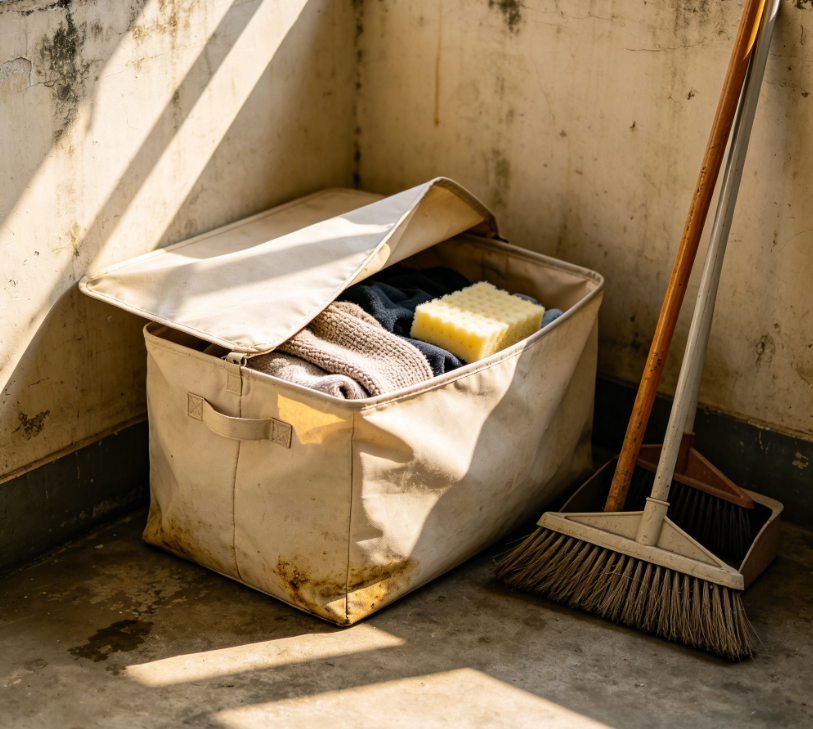
I also tested large waterproof Oxford fabric storage boxes, another viral small-balcony hack. These soft collapsible boxes are lightweight and easy to stack, which makes them look practical for outdoor environments. I used them to store seasonal throw blankets, spare shoe insoles, and backup cleaning sponges. Their hidden downside only showed after long-term semi-outdoor exposure.
Balconies experience constant temperature swings and lingering evening humidity. The sealed fabric structure traps moisture inside with no way to ventilate. Within three months, the inner lining developed faint damp odors, and items stored inside felt slightly clammy. The soft-sided design also lacks structural rigidity. Stacking two boxes caused the bottom one to bulge and deform, which wasted shelf space and created unstable stacking. Fabric corners also frayed gradually from rubbing against rough balcony wall edges, making the boxes less durable for long-term use.
Custom Low-Maintenance Storage Layout for Shallow Balcony Niches
After ditching those two impractical products, I redesigned my entire balcony storage routine around my niche’s actual 33cm shallow depth and semi-outdoor conditions. I stopped trying to maximize storage volume and focused on stability, ventilation, and dust resistance instead.
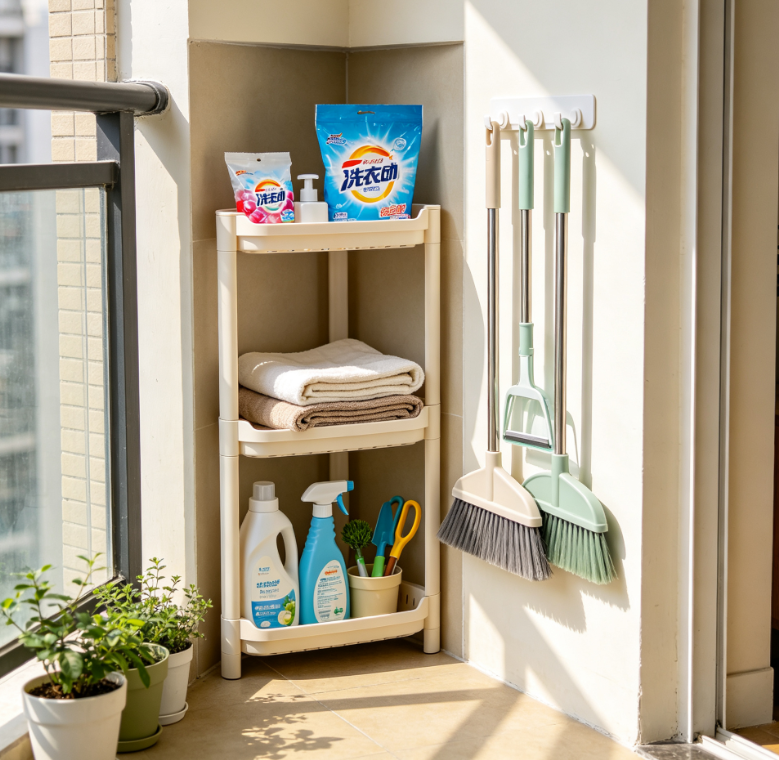
I replaced the deep metal shelf with a customized 32cm shallow plastic shelving unit. The tiny 1cm buffer gap fits perfectly inside the niche without protruding, keeping the balcony walkway fully clear. Hard plastic material resists dust buildup better than metal mesh and wipes clean with a simple damp cloth. I split the shelves into clear functional zones. Upper layers hold lightweight sealed supplies like laundry pods and cleaning sachets. Middle layers store folded seasonal textiles, while the reinforced bottom layer holds heavier spray bottles and handheld gardening tools.
For long-handled items like mops, brooms, and window squeegees, I installed heavy-duty weather-resistant adhesive hooks on the side blank wall. Vertical hanging removes the need for leaning tools against shelves, which used to create uneven weight pressure and clutter. I also swapped fraying fabric boxes for small, lidded hard plastic bins. The tight-fitting lids block outdoor dust and light humidity, while the rigid shape stacks evenly without deforming. I use separate bins for small hardware parts, seasonal accessories, and unused toiletries backups.
Honest Pros and Cons of This Rental-Friendly Balcony System
This tailored setup fixes the core pain points of shallow semi-outdoor balcony storage. The shallow shelf profile eliminates walkway obstruction and accidental bumping. Hard plastic materials reduce dust accumulation and resist mild weather fluctuations better than fabric or open metal structures. All adhesive fixtures require no drilling, so they leave no permanent wall damage, fitting standard rental move-out requirements. Clear zoning also reduces blind rummaging, which slows down clutter rebuilds.
There are unavoidable drawbacks to keep in mind. Shallow shelf depth limits the size of bulky items, so large gardening pots or oversized cleaning buckets cannot fit comfortably. Multiple individual plastic bins mean more separate pieces to sort during seasonal deep cleans. Adhesive hooks will slowly weaken after months of wind and temperature changes, requiring occasional checks and re-sticking. This layout also cannot fully resist heavy rain humidity, so extra temporary covering is needed on rainy seasons.
Small Monthly Habit That Keeps Balcony Storage Stable
Most balcony clutter doesn’t stem from bad organizers. It builds from unmonitored item accumulation. The semi-outdoor space easily becomes a random dumping ground for unused household goods, which slowly overwhelms organized storage zones.
I do a quick monthly balcony inventory. I check every stored item and relocate or discard anything I haven’t used in three months. This simple check prevents idle items from piling up unnoticed. I also wipe down shelf surfaces and bin lids during each check to clear accumulated dust. It only takes a few minutes each month, but it stops small messes from turning into unmanageable clutter.
Years of rental organizing have taught me that small balcony storage succeeds when it adapts to environmental limits. Wind, dust, humidity, and shallow space all shape how items stay organized. Working with these natural constraints creates far more sustainable results than chasing trendy organizers built for ideal, non-rental spaces.