Laundry Room Detergent Storage Layout: Honest Renter Tested Solutions
Why Laundry Detergent Storage Always Feels Disorganized in Rental Spaces
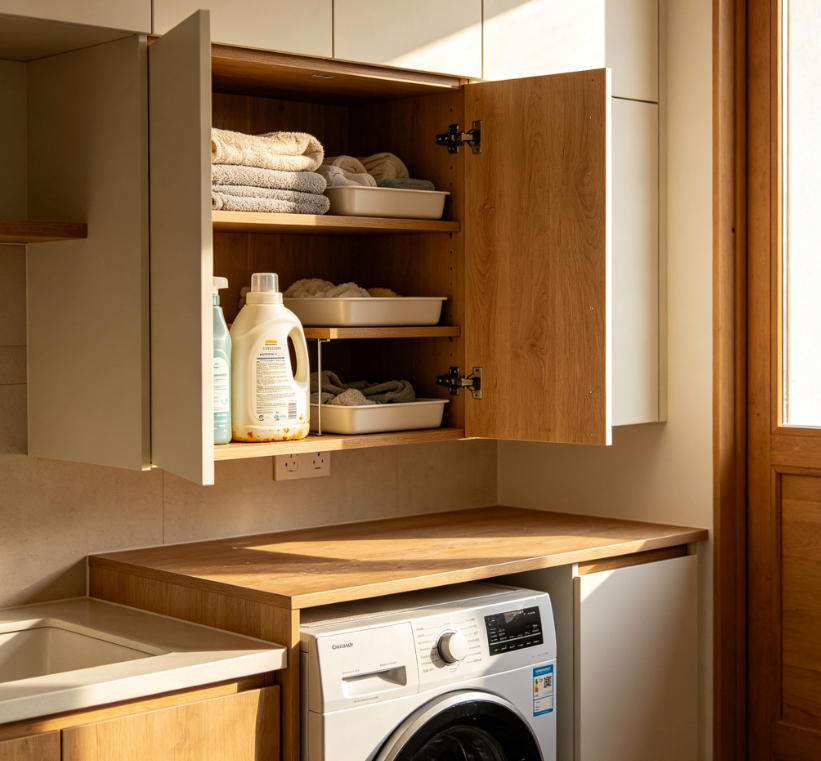
Rental laundry areas, whether a standalone small laundry room or a compact washer closet, almost always come with poorly planned storage. Most builders leave minimal dedicated space for laundry supplies, forcing renters to cram bottles, pods, stain removers, and fabric softeners into tiny cramped cabinets. My current laundry zone features a single overhead storage cabinet above the washing machine, with precise internal measurements I’ve noted through multiple organizing attempts: 48cm wide, 30cm deep, and 32cm tall. This shallow, low-profile cabinet is extremely common in apartment laundry setups, yet most laundry storage accessories are made for deeper, larger pantry-style spaces.
For a long time, my detergent cabinet was a constant mess. Tall detergent bottles toppled forward every time I opened the door. Small packs of laundry pods slipped into the back gap and got forgotten. Stain treatment brushes and mini spray bottles scattered randomly across the shelf surface. I’d reorganize it every few weeks, only for the clutter to return quickly. I originally thought I just needed neater stacking habits, until I tested two popular laundry storage products and found their design flaws simply don’t work for standard rental cabinet dimensions.
Two Popular Laundry Storage Products That Failed Real Daily Use
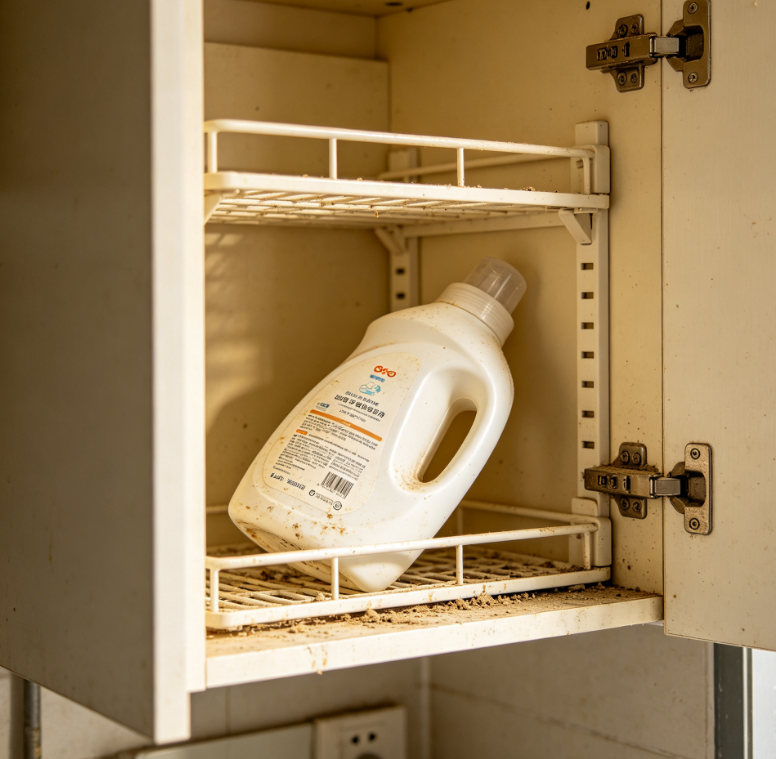
The first product I tried was a full-size expandable tiered laundry shelf, one of the most commonly recommended upgrades for laundry rooms. It stretches to fit wider cabinets and features raised back lips to prevent items from falling. The expandable width seemed flexible enough for my 48cm cabinet, but its fixed depth of 33cm created immediate issues. My cabinet only offers 30cm of internal depth, so the shelf’s rear edge pressed tightly against the back panel while the front rim jutted out slightly.
Every time I closed the cabinet door, the plastic rim made contact and created subtle pressure. Over time, this constant friction loosened the shelf’s adjustable joints. The whole unit started tilting slightly to one side, which made tall, heavy detergent bottles lean and slide. The raised back lip also trapped dust and dried detergent residue in narrow crevices. Cleaning those tight gaps was far more tedious than tidying a flat shelf. After two months of inconsistent stability and extra cleaning work, I removed the expandable shelf entirely.
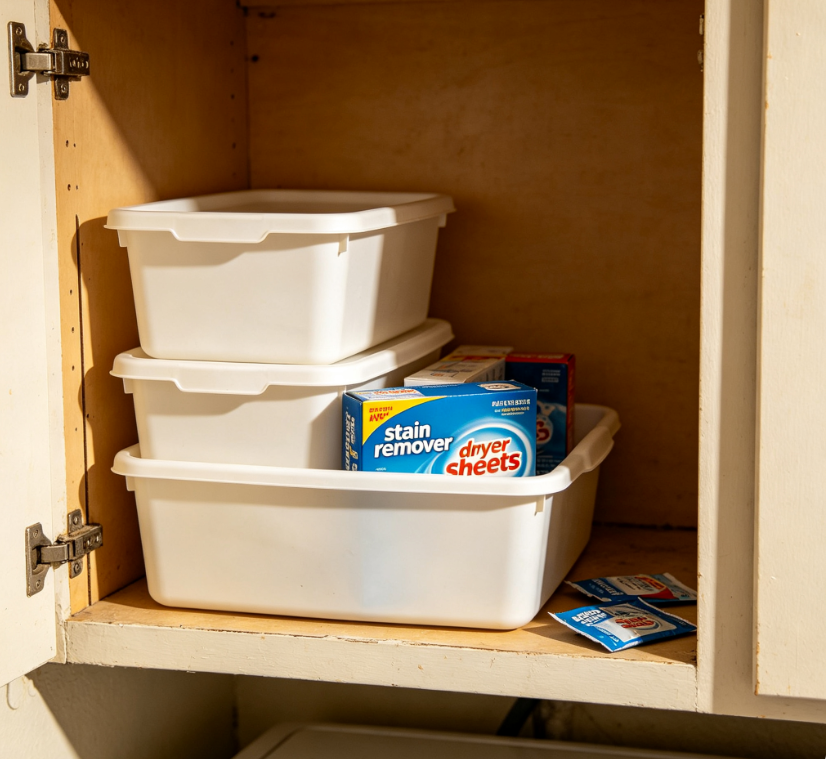
I also tested clear stackable square plastic bins designed for laundry supply sorting. These uniform bins look neat and orderly in social media photos, with separate compartments for pods, liquids, and tools. In practice, their rigid 10cm fixed height created major space waste in my low 32cm cabinet. I could only stack two bins with almost no leftover headroom, leaving unused vertical space that couldn’t fit any additional supplies. Their square shape also failed to adapt to the shallow depth, leaving a useless empty strip along the cabinet’s back wall.
The biggest daily annoyance was accessibility. To reach stain remover or dryer sheets stored in the bottom bin, I had to lift out the entire top container. This extra step made me lazy about putting items back properly. Loose packets often ended up tossed on top of the stacked bins, slowly rebuilding clutter. The rigid structure offered no flexibility for odd-sized laundry tools, leaving brushes and long spray bottles leaning awkwardly against the bin sides.
Tailored Detergent Storage Layout for Shallow Laundry Cabinets
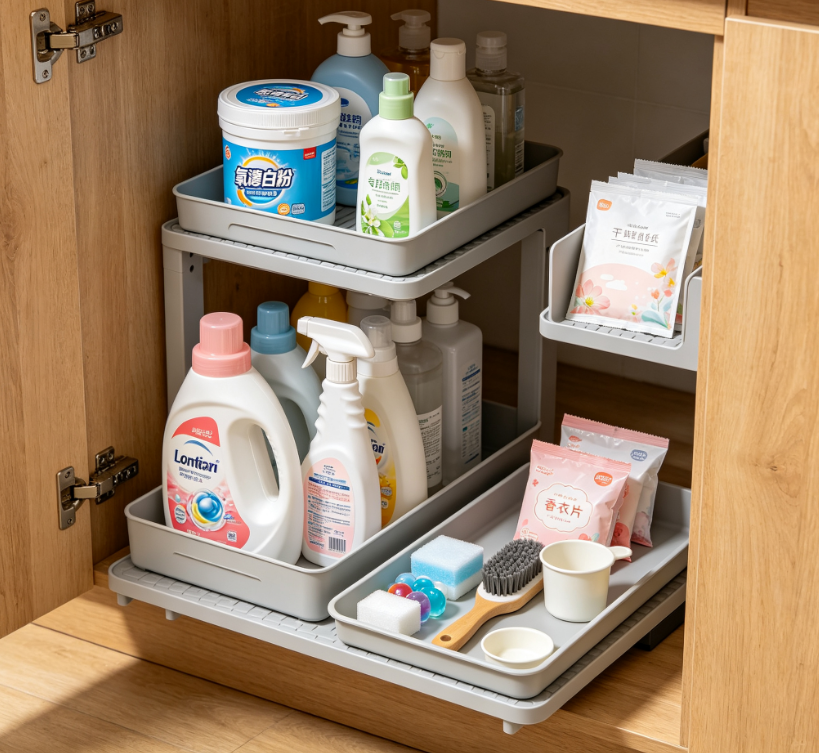
After moving on from those ill-fitting products, I built a low-fuss, cabinet-friendly layout designed strictly around my shallow laundry cabinet limits. I prioritized easy daily access, residue prevention, and space adaptability over uniform aesthetics or maximum stacking layers.
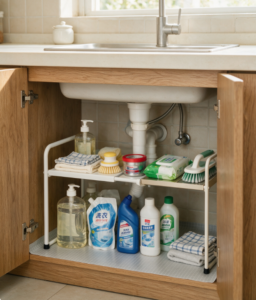
I swapped the deep expandable shelf for two slim 28cm non-slip shallow shelf risers. The shorter depth creates a small buffer zone, so nothing presses against the cabinet door or back panel. I placed one riser toward the front and one slightly toward the back, creating staggered tiered levels instead of rigid parallel stacking. The front tier holds daily-use items: liquid laundry detergent, fabric softener, and all-purpose laundry spray. The rear tier stores less frequent supplies, including oxygen bleach powder, specialty stain removers, and fabric freshener.
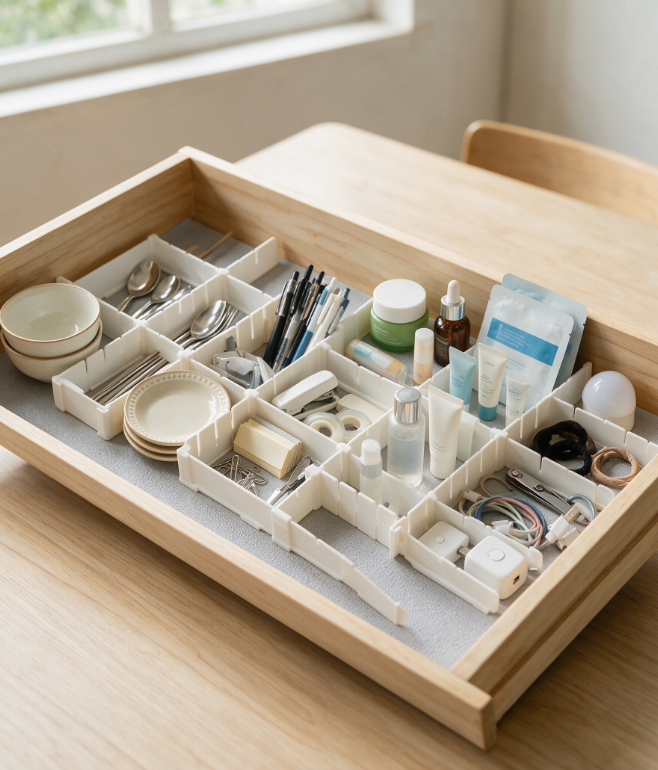
I replaced rigid square stacking bins with low-profile open rectangular trays. These flexible trays fit the cabinet’s shallow depth perfectly and conform to the slight uneven gaps along cabinet walls. I use one tray for single-dose laundry pods and dissolving strips, keeping all small, easy-to-lose items contained. A second tray holds portable cleaning brushes, measuring cups, and spare spray nozzles. Open-top access means I can grab any single item without rearranging the entire stack.
The tiny leftover gap at the very back of the cabinet holds slim paper pouches for dryer sheets and laundry fragrance boosters. This previously dead, unused space now stores lightweight flat items without crowding primary storage zones.
Objective Pros and Cons of This Laundry Storage System
This customized layout solves the most common pain points of shallow rental laundry cabinets. The staggered shallow riser setup eliminates door pressure and shelf tilting issues. Open tray containment stops small laundry supplies from disappearing into hidden gaps. All organizers sit fully within cabinet boundaries, protecting door hinges and reducing residue buildup in tight crevices. The entire setup uses non-damaging, freestanding tools, which works well for renters who need easy removal before moving out.
This method still has noticeable limitations. Staggered tier placement reduces fully flat shelf space, so extra-large bulk detergent jugs cannot sit steadily in certain spots. Multiple individual trays create more small pieces to rearrange during deep cleans. Open trays also offer no dust protection, so unused supplies can collect surface dust over time. This layout also requires intentional item grouping; mixing frequent and occasional supplies will weaken its accessibility benefits.
Small Daily Habit That Reduces Laundry Cabinet Clutter
Most laundry room disorganization stems from leftover detergent residue and excess packaging, not insufficient storage. Dripping bottle bases leave sticky film on shelf surfaces, which makes containers slide and tilt randomly. Bulky outer packaging for pods and treatment sachets also wastes valuable shallow cabinet space.
I remove all outer cardboard and plastic packaging from new laundry supplies before storing them. This simple step cuts down bulk significantly and lets every container sit flat and stable. I also quickly wipe bottle bases whenever I notice sticky residue buildup. These tiny, low-effort routines prevent slippery surfaces and gradual clutter accumulation, keeping the storage layout functional month after month without heavy reorganization.
After years of testing trendy laundry storage hacks, I’ve learned rental laundry spaces function best with adaptive, low-profile setups. Working around shallow cabinet depth and fixed physical limits creates far more consistent results than generic organizers designed for larger, more forgiving laundry room layouts.