Smart Cleaning Device Maintenance: Maximize Performance and Long-Term Durability
Smart cleaning devices have revolutionized modern household sanitation, helping homeowners maintain dust-free, hygienic living spaces with minimal manual effort. Robot vacuums, wireless cleaners, air purifiers, and automatic mop systems have become essential home appliances for busy families. However, simply owning smart cleaning tools is not enough to sustain consistent cleaning results. Without regular and professional maintenance, intelligent cleaning equipment may experience reduced suction, incomplete cleaning, odor buildup, filter blockage, and even early failure. Proper daily maintenance and routine upkeep are key to stabilizing cleaning performance, extending device lifespan, and ensuring long-term hygienic home environments.
Why Smart Cleaning Device Maintenance Matters
Smart cleaning machines rely on precise sensors, motor systems, filtration components, and rolling brushes to complete automated cleaning cycles. During daily operation, these parts continuously contact dust, hair, debris, moisture, and fine dirt. Over time, accumulated residue can clog internal structures, weaken power performance, and affect navigation accuracy. Many users notice that their robot vacuums become weaker in suction, leave scattered dirt, or produce strange noises after months of use. Most of these problems stem from neglected daily maintenance rather than product quality issues.
Poorly maintained cleaning devices also bring hidden hygiene risks. Dirty filters, moldy brush rollers, and residue-filled dust boxes become secondary pollution sources. Instead of cleaning the house, unmaintained equipment spreads fine dust, bacteria, and odors across floors and carpets, reducing indoor air quality. Regular maintenance not only preserves device functionality but also guarantees clean, sanitary, and reliable cleaning results every single time.
In addition, systematic maintenance effectively reduces replacement frequency of accessories and avoids unnecessary equipment repairs, greatly lowering long-term household usage costs.
Daily and Weekly Maintenance for Robot Vacuum Mops
Robot vacuum and mop combos are the most widely used smart cleaning devices, requiring simple but consistent upkeep to maintain optimal performance. Daily cleaning of core components prevents dirt accumulation and performance degradation.
Users should empty the dust box after every few cleaning cycles. Residual dust and fine debris trapped inside the box can block air circulation, reduce suction power, and create stale odors. For models with automatic dust collection stations, check the dust bag weekly and replace it once it reaches full capacity to avoid backflow pollution.
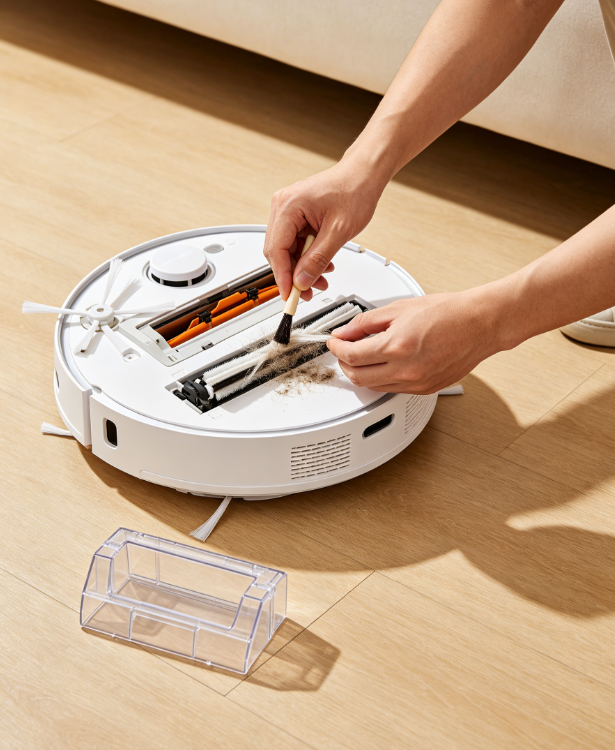
Clean rolling brushes and side brushes weekly. Hair, pet fur, and flexible threads easily wrap around brush shafts, hindering rotation and causing uneven cleaning. Use the equipped cleaning tool to cut and remove tangled hair, then wipe the brush bearings dry to ensure flexible operation. Meanwhile, wipe the device’s infrared sensors and cliff sensors with a soft dry cloth. Clean sensors ensure accurate navigation, prevent missing cleaning areas, and avoid repeated cleaning or stuck errors.
For mopping functions, detach and rinse the mop cloth after each wet cleaning. Residual dirt and detergent on mop pads will breed bacteria and produce odors if left overnight. Keep mop cloths fully dry before storage to prevent mold growth.
Professional Monthly Maintenance for Deep Performance Recovery
Besides daily simple upkeep, smart cleaning devices need monthly deep maintenance to restore peak performance. The filter system is the core of cleaning and dust removal. HEPA filters and sponge filters should be cleaned or replaced regularly. Wash reusable sponge filters with clean water and air-dry them completely. Non-washable HEPA filters need monthly inspection and replacement every two to three months to ensure effective interception of fine dust, pollen, and dander.
Check wheel structures and movable joints monthly. Dust and fine particles accumulated in wheel gaps may cause inflexible movement, loud noise, or stuck operation. Wipe wheel surfaces and gap dirt, and appropriately lubricate rotating joints according to product instructions to keep the device running smoothly.
Inspect the charging base and metal electrode contacts. Dust and oxide layers on electrodes may cause poor charging contact, slow charging, or charging failure. Gently wipe the contacts with a dry cloth to maintain stable charging efficiency and protect the battery lifespan.
Targeted Maintenance for Other Smart Cleaning Devices
Wireless Handheld Vacuum Cleaners
Handheld vacuums are frequently used for gap and local cleaning, so their nozzles and filter parts are prone to blockage. Empty the dust cup after each use, clean the long nozzle and brush head to remove residual debris, and keep the filter dry and ventilated. Regularly check the battery status, avoid long-term overcharging, and store the device with proper battery power to prevent battery aging.
Smart Air Purifiers
Air purifier maintenance focuses on filter replacement and air duct cleaning. Clean the pre-filter monthly to remove large particle dust. Replace formaldehyde filters, HEPA filters, and composite filters according to usage time and air quality conditions. Timely filter replacement ensures continuous purification effect, effectively removing airborne bacteria, allergens, and peculiar odors.
Automatic Window Cleaners
Window cleaning robots need regular cleaning of wiping cloths and water spray nozzles. Clean blocked nozzles to ensure even water output, and replace worn wiping pads to avoid water marks and residual dust. Check the safety adsorption function before each use to guarantee stable operation and safety.
Seasonal Maintenance and Long-Term Protection Tips
Seasonal environmental changes require adaptive maintenance adjustments. In spring and summer with high humidity, all smart cleaning devices need enhanced drying and mildew prevention measures. Thoroughly dry water tanks, mop cloths, and internal components after use to avoid mold and peculiar odor caused by damp residue.
In dry autumn and winter, static dust increases significantly. Increase the frequency of filter cleaning and sensor wiping to prevent static dust from covering sensitive components and affecting cleaning accuracy. In low-temperature winter environments, avoid long-term outdoor placement of equipment to protect battery activity and circuit stability.
For long-term idle equipment, fully charge the battery before storage, clean all dirt and residues, and place it in a dry and ventilated environment. Regularly activate the battery every month to prevent battery loss and aging.
Common Mistakes in Smart Cleaning Device Maintenance
Many users unknowingly shorten device lifespan through incorrect maintenance behaviors. One common mistake is washing electrical components with tap water directly. Excessive water residue inside the machine may cause circuit short circuits and equipment damage. Another error is overdue filter use. Overused saturated filters lose filtration capacity and cause secondary pollution.
In addition, many users ignore sensor cleaning and over-rely on automatic programs. Covered sensors will cause navigation deviation, resulting in repeated cleaning, missing cleaning, and stuck failure. Avoid using corrosive cleaners to wipe device surfaces, which may damage shell paint and internal parts.
Conclusion
Smart cleaning devices bring convenience and efficiency to modern home cleaning, but stable performance and long service life depend entirely on scientific and standardized maintenance. Daily simple cleaning, monthly deep component maintenance, and seasonal adaptive protection can effectively avoid performance degradation, secondary pollution, and equipment failure. Correct maintenance habits maximize cleaning efficiency, reduce household maintenance costs, and ensure that smart cleaning equipment continuously provides safe, thorough, and high-quality household sanitation services for every modern family.