Small Apartment Desk Storage: Practical Tiered Organizer for Remote Workers & Renters
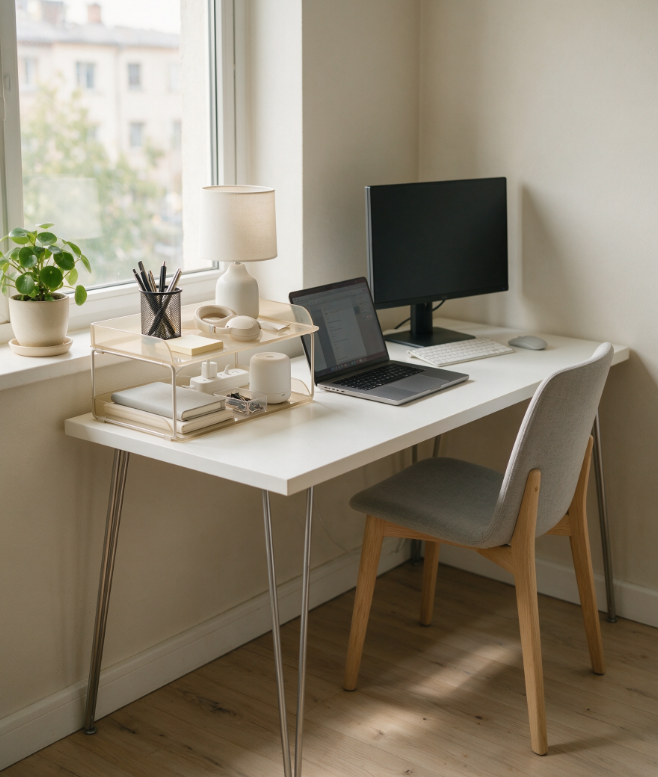
Working remotely from a small rental apartment for the past four years has taught me how impactful limited desk space can be on daily productivity. Most rental units come with standard compact desks, fixed wall layouts, and strict no-modification rules that prevent renters from installing floating shelves, drilling wall organizers, or adding built-in desktop storage. Over time, laptops, notebooks, stationery, charging cables, small office gadgets, and skincare accessories pile up on flat desk surfaces, leaving little room for typing, studying, or creative work. After testing various desktop organizers and adjusting my home office setup repeatedly, I have found that a tiered desk storage organizer delivers a flexible, renter-friendly way to maximize vertical space and maintain a tidy, functional work area without altering apartment fixtures.
Common Desktop Storage Limitations for Rental Home Offices
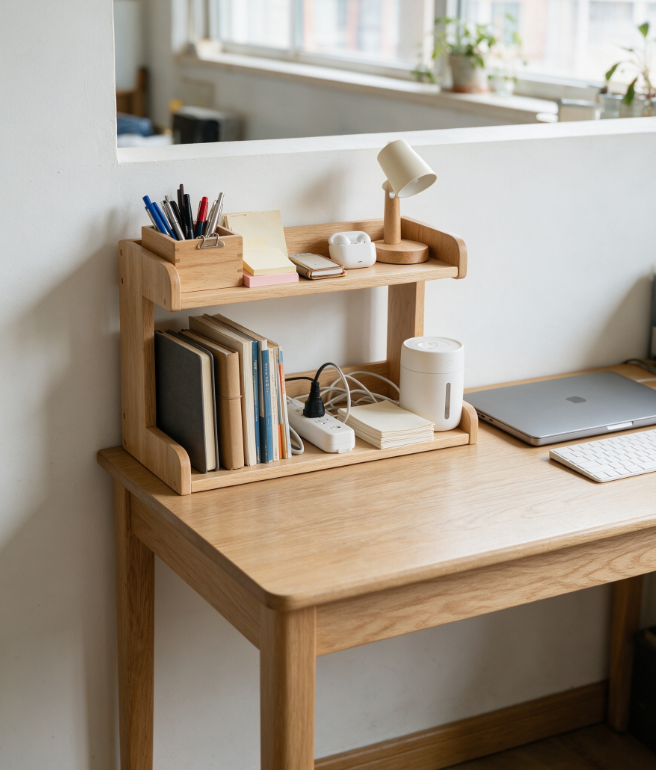
Rental home desk setups feature unique constraints that permanent home offices rarely encounter. The most prevalent issue is restricted desktop surface area. Standard apartment writing desks usually offer only 20 to 28 inches of usable flat space. This compact area needs to hold a monitor, keyboard, mouse, notebooks, pens, earbuds, power adapters, and small daily accessories simultaneously. When all items lie flat on the desk, the workspace feels crowded, and small stationery items easily shift out of place or get buried under larger devices.
Another underrated challenge involves desk edge and wall gap dimensions. Most rental desks sit 2 to 3.5 inches away from wall baseboards, creating slim unused gaps that regular storage boxes cannot occupy. Traditional wide desktop trays stretch across most of the desk, limiting movement for mouse usage and laptop placement. Additionally, rental wall surfaces are often thin and easy to damage, making hanging storage solutions risky for renters who want to avoid repair fees or deposit deductions when moving out.
Many generic desk storage tools fail to match long-term remote work habits. Single-layer flat organizers group all office items together, requiring users to sift through multiple objects to find small items like paper clips, USB drives, or styluses. Flimsy foldable desk organizers can bend under the weight of monitors or thick books, leading to unstable placement and messy desk layouts over time.
Zoned Desktop Organization With a Tiered Desk Storage Organizer
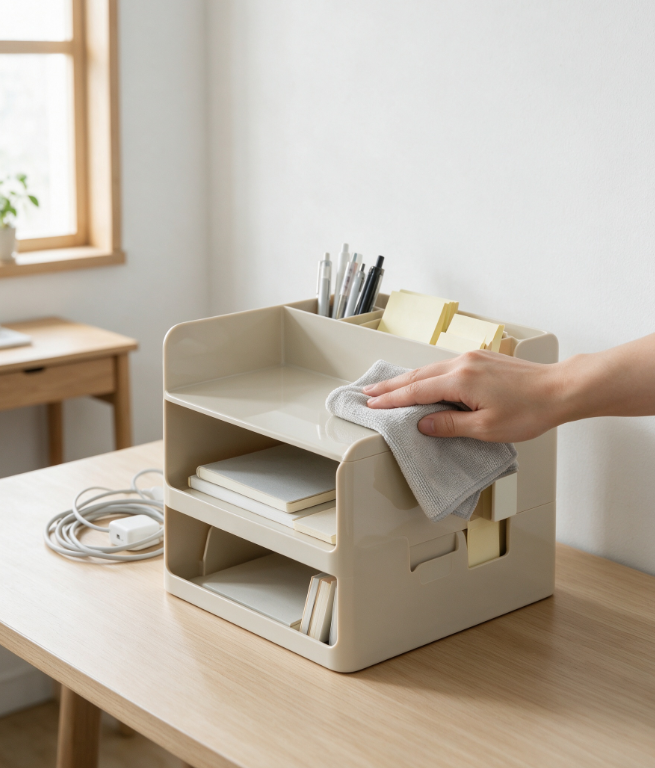
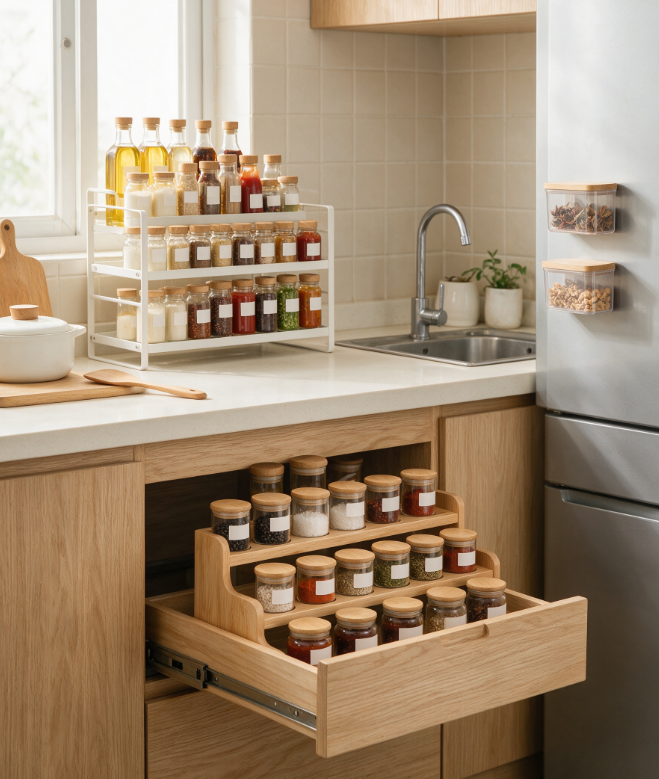
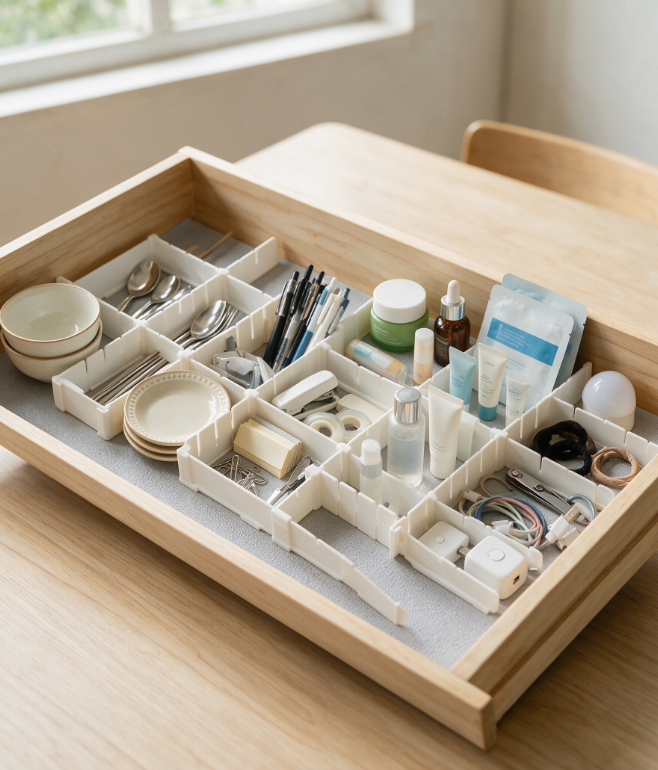
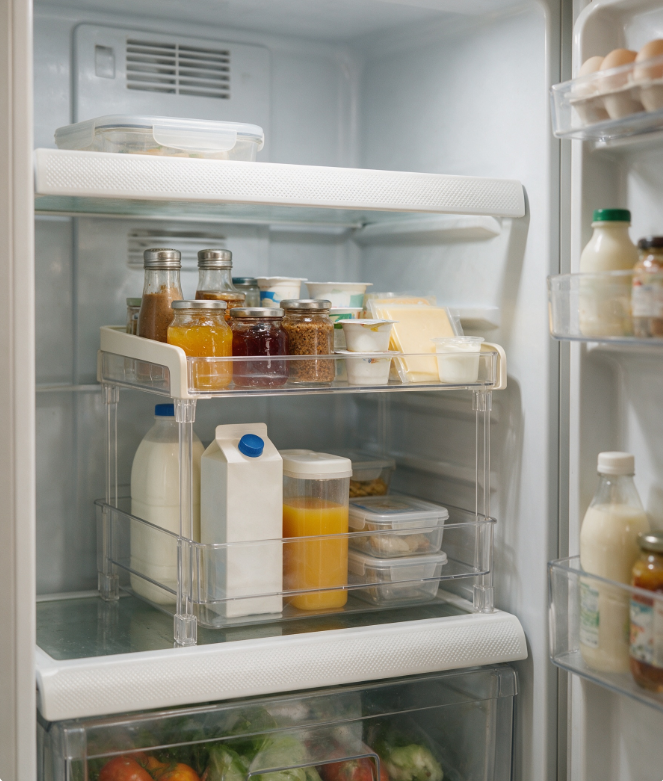
A tiered desk storage organizer solves small rental workspace challenges through vertical layered design and categorized zoning, with no drilling, no adhesive residue, and no permanent desk or wall changes. After long-term daily use in my compact home office, I have developed a simple, efficient storage layout tailored for small apartment desks and remote work routines.
Upper Tier for Lightweight Frequently Used Office Items
The elevated top tier features an open, accessible structure with comfortable vertical clearance, perfect for daily high-frequency office supplies. I store pen sets, markers, sticky notes, small notepads, Bluetooth earbuds, and desk lamps on this level. The raised edge design prevents slim stationery items from rolling off during typing or desk adjustments. The open front layout allows instant access to small work essentials, cutting down the time spent searching for misplaced items during work sessions.
Lower Tier for Heavy Stationery and Reserve Supplies
The widened bottom tier provides sturdy base support for heavier, bulkier desktop items. I place hardcover notebooks, thick textbooks, power strip organizers, small desktop humidifiers, and spare stationery reserves on this layer. The reinforced base evenly distributes weight, keeping the entire organizer stable even when holding heavier daily-use items. Separating lightweight daily gadgets from bulky reserves keeps the desk layout structured and avoids constant rearrangement of workspace items.
Compact Adaptability for Small Desk Corners and Slim Gaps
With a streamlined compact footprint, the tiered organizer fits perfectly in standard rental desk corners and the 2 to 3.5-inch wall-desk gaps common in apartment layouts. Unlike oversized multi-layer desk shelves that consume valuable working surface space, this vertical structure only occupies a small fixed base area. It sits flush against desk edges without blocking keyboard movement or monitor placement, making it suitable for student study desks and remote worker home office setups alike.
Renter Desktop Storage Mistakes to Steer Clear Of
Years of optimizing my rental home office have helped me filter out impractical desk storage solutions that create extra clutter and maintenance work.
First, avoid soft fabric desktop storage bins. Indoor desk environments accumulate fine dust, paper scraps, and occasional beverage splashes. Fabric containers trap dust deeply within fibers, and regular wiping cannot remove embedded debris. Fabric materials also lack structural rigidity, deforming easily under the weight of books and electronic accessories, which disrupts neat desk arrangement.
Second, avoid oversize multi-grid desktop shelves. Large assembled storage units cover most of the desk surface, restricting mouse movement and laptop placement. Many assembled structures have loose connecting parts that shift slightly after daily use, creating unstable storage spaces over time.
Third, avoid ultra-thin disposable plastic trays. These basic trays offer no vertical classification, forcing all items to stack on one flat surface. Thin plastic also lacks pressure resistance, warping easily under heavy objects and creating uneven surfaces that collect dust and tiny paper scraps.
Tiered Desk Organizer Material Comparison & Daily Care Guide
Material quality determines the stability, tidiness, and service life of desktop storage products, especially for long-term daily office use. I have tested and compared three mainstream desk organizer materials in real rental home office scenarios.
Pure wooden and bamboo desk organizers deliver a natural minimalist appearance but adapt poorly to variable indoor environments. Wood surfaces accumulate dust quickly, and frequent wiping can cause slight surface wear. Humid indoor air leads to gradual wood swelling or minor warping, while dry seasons may create faint cracks after long-term use.
Ordinary thin plastic organizers are budget-friendly but lack durability. Long-term exposure to indoor light causes slow yellowing and surface dullness. Thin plastic structures cannot support heavy books or electronic devices, bending easily and affecting overall desk stability.
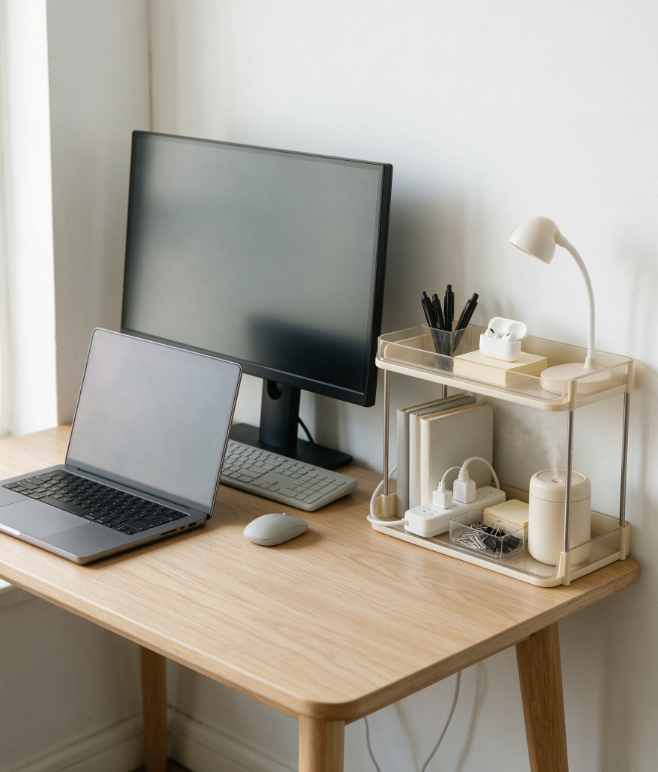
Composite metal and high-quality PET material tiered organizers offer optimal performance for daily desktop use. The metal frame provides solid structural support and balanced load-bearing capacity, maintaining a stable shape with long-term heavy item placement. The smooth PET surface resists dust adhesion, minor liquid splashes, and daily friction. Regular maintenance only requires gentle wiping with a dry or damp cloth; mild cleaning solutions can remove faint stains without damaging the surface or material texture. No complex maintenance or regular replacement is required, fitting long-term home office use.
Renter & Remote Worker Desktop Organizer Buying Guide
When selecting storage solutions for small rental desks, prioritize space adaptability, portability, and stability over decorative styling. First, measure your actual desk width, corner space, and wall-desk gap size before selection. Choose compact base dimensions that fit small apartment desks without occupying core working areas.
Second, opt for fully freestanding, tool-free structures. Organizers that require no drilling, no wall adhesion, and no desk modification protect original apartment furnishings, eliminate rental damage risks, and allow easy disassembly and movement during relocation.
Third, focus on material stability and easy cleaning features. Smooth, dust-resistant surfaces reduce daily tidying workload, while reinforced frame structures ensure long-term stable use. Reasonable tier spacing should accommodate standard stationery sizes and small electronic gadgets to avoid cramped storage or wasted vertical space.
Final Thoughts on Small Apartment Desktop Organization
Organizing a small rental home office does not require large furniture upgrades or complex storage systems. Effective vertical space utilization and categorized item placement can streamline cluttered desktops and create a comfortable, efficient working environment. A tiered desk storage organizer provides a portable, stable, renter-focused solution to maximize limited desk space without permanent renovations. It adapts perfectly for remote workers, students, and short-term apartment renters with flexible living and working arrangements.
You can browse storage options and check real usage tips to explore more practical desktop organization methods for small rental spaces.