Renter Small Table & Desk Storage | No Drilling, No Scratches & Zero Deposit Risk
Small desks and compact dining tables are standard in rental apartments, but their limited surface area creates persistent clutter problems. Most renters struggle with crowded tabletops, tangled cables, lost small accessories, and dusty empty desk undersides. Many popular desk storage hacks lead to hidden rental damage: permanent table scratches, peeled veneer from adhesive hooks, drill holes, sticky residue rings, and dented table edges from overhanging organizers. I have experienced every common small-table storage failure during my rental journeys. I installed strong adhesive under-desk baskets that peeled thin table veneer, used hard plastic cable managers that left sticky ghost marks, and overloaded side hanging holders that warped lightweight rental tabletops. Generic desk organizing guides are designed for solid wood owned furniture, ignoring fragile rental table limitations: thin particleboard surfaces, laminated peel-prone finishes, lightweight hollow tabletops, and strict no-modification lease rules. After countless messy desktops and move-out scares, I built a fully renter-safe desk and small table storage system categorized by table material, surface space, and daily usage habits.
Why Rental Desk Storage Always Fails (My Costly Move-Out Mistakes)
Most table damage from storage upgrades is invisible day-to-day but highly visible during inspections. My biggest mistake was applying permanent double-sided tape cable organizers and under-desk holders on a cheap laminated rental desk. After months of room temperature changes, the adhesive bonded completely to the thin lamination layer. During removal, large sections of the table surface peeled off, leaving rough, uneven patches that required full table replacement fees. I also used unprotected metal desk trays that scratched the polished tabletop every time I moved notebooks and gadgets. Worst of all, I hung heavy headsets and tool bundles on thin table edges, causing minor permanent bending and edge chipping on hollow particleboard tables. These failures are never mentioned in generic desk organization content because they only occur on low-quality, non-replaceable rental furniture.
1. Laminated & Particleboard Rental Desks (Peel & Dent Risk)
Surface weaknesses & forbidden tools
Over 90% of rental desks feature thin laminated particleboard construction. These surfaces are extremely vulnerable to adhesive peeling, hard-edge scratches, and pressure dents. Any permanent glue, rigid clamp-on accessories, or heavy over-edge hanging fixtures will damage the veneer layer irreversibly. Even mild adhesive can bake into the lamination over time, creating unremovable stains and ghost marks.
Renter-safe non-damage setup
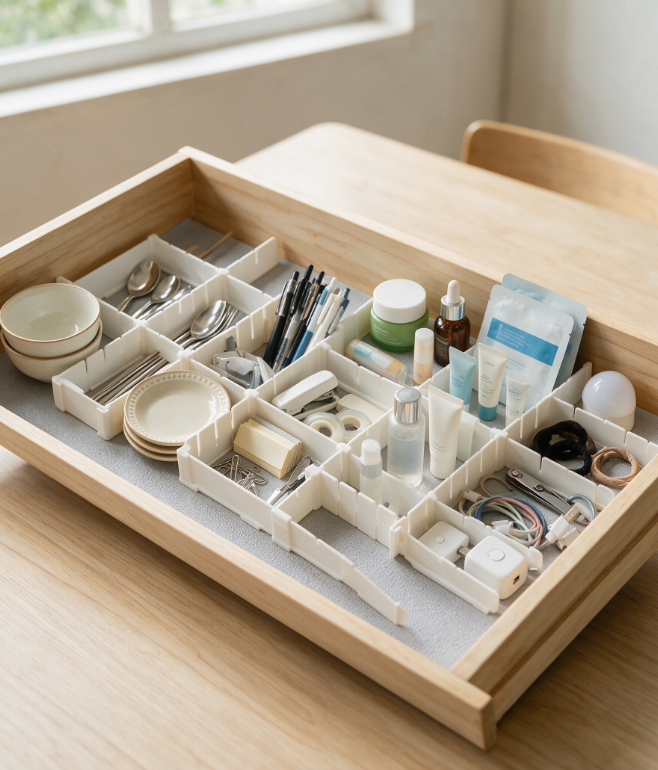
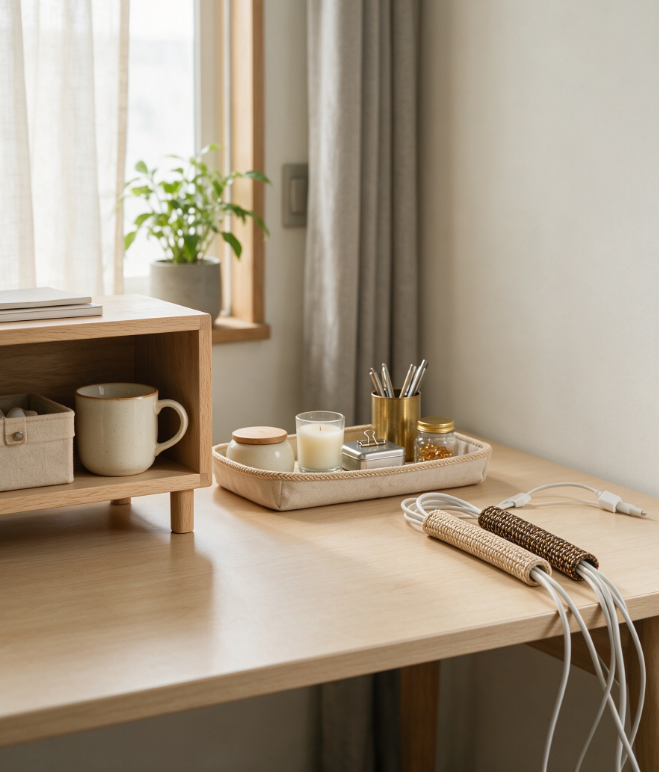
Glue-free, clamp-free, freestanding desktop organizers and hanging loop accessories are the only safe solution. I use soft silicone desktop trays, flexible cable loops, and independent shelf risers that sit flat without adhesion or clamping. Under-desk storage relies entirely on freestanding floor bins instead of mounted fixtures. This zero-contact setup preserves table veneer completely while expanding usable workspace.
Non-negotiable rule
No rigid over-edge clamps, no adhesive cable clips, and no heavy hanging objects on table sides. Particleboard edges dent and peel under concentrated side pressure.
2. Ultra-Small & Minimalist Tabletops (Overcrowding Risk)
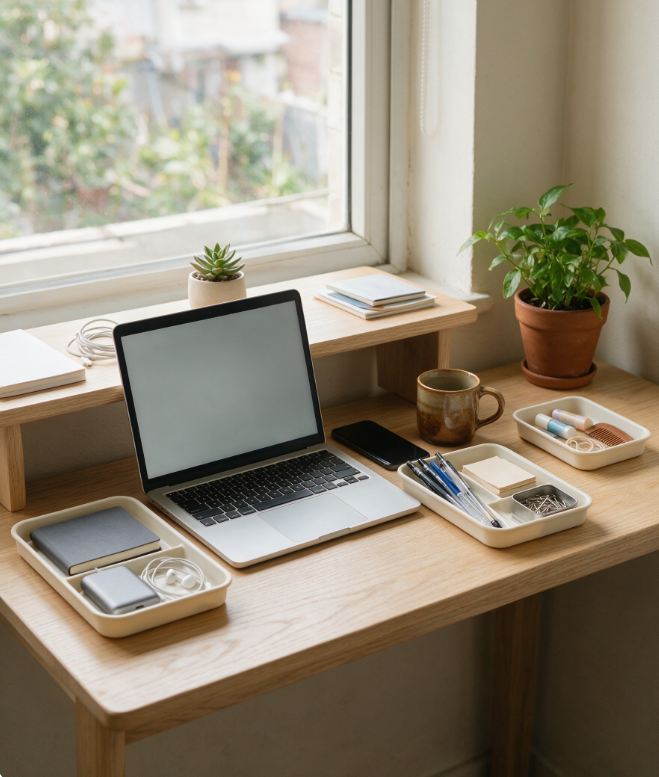
Space limitations & common errors
Micro rental desks and narrow dining tables have almost no spare surface area. Stacking tall organizers creates unstable layouts, blocks natural light, and limits workspace mobility. Many renters overload multi-layer desktop shelves, causing top-heavy collapses that scratch table surfaces and damage electronics. Crowded tabletops also trap dust and crumbs in tight gaps, creating hard-to-clean grime lines.
Flat & vertical optimized strategy
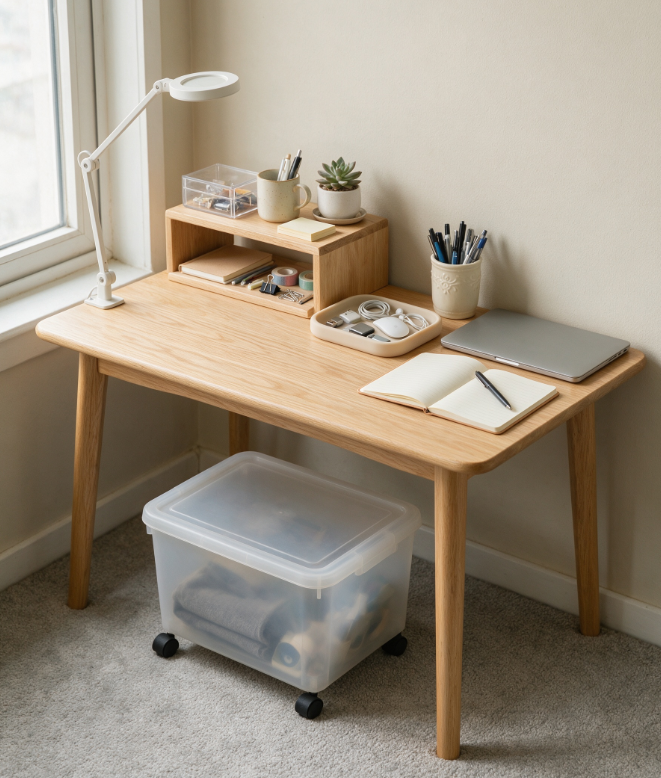
Low-profile slim desktop risers and shallow flat trays maximize vertical space without overcrowding. Short-layer, low-height organizers maintain visible table clearance while segmenting stationery, electronics, and daily items. I use flat under-riser gaps for notebooks and papers, and shallow top trays for frequently used gadgets. This method keeps tiny tabletops fully functional without visual clutter.
Items to avoid stacking
Tall pen holders, bulky multi-tier shelves, and heavy decorative objects. They shrink usable working space and create unstable top-heavy weight distribution.
3. Uncovered Under-Desk Zones (Dust & Clutter Risk)
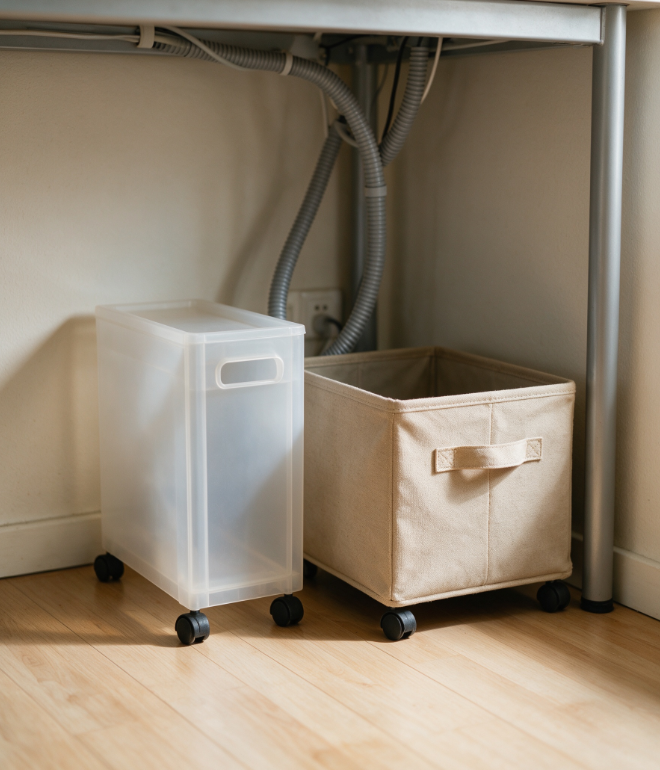
Hidden messy hazards
Under-desk areas are the largest neglected clutter zones in small rentals. Exposed floor space under desks accumulates tangled cables, fallen stationery, dust bunnies, and random misplaced items. Unorganized under-desk storage also blocks foot space, limits movement, and collects hidden moisture near baseboards, leading to musty dust buildup over time.
Clean & tidy under-desk system
Freestanding slim under-desk bins and flexible cable management sleeves create full order without wall or table mounting. Portable floor bins store shoes, bags, and spare supplies, while cable sleeves eliminate messy tangled wires. All under-desk organizers are fully movable, ensuring zero floor scratches and zero table damage.
Short-Term vs Long-Term Renter Decision Guide
Short-term renters (under 1 year)
Stick to basic foldable desktop trays and simple cable sleeves. They install instantly, pack flat for moving, and cost minimally. Avoid specialized riser sets and premium organizers for temporary desk setups.
Long-term renters (2+ years)
Invest in reinforced low-profile desk risers, scratch-proof silicone tray sets, and durable cable management systems. Long-term daily use benefits from stable, wear-resistant organizers that maintain a clean desk layout year-round without surface damage.
Budget Tier Comparison & Tool Avoidance List
Low budget & zero risk: flexible silicone desktop trays, fabric cable sleeves, foldable flat storage bins (fully removable, no residue, no scratches)
Mid budget & most practical: low-profile non-slip desk risers, segmented desktop organizers, freestanding under-desk storage units (stable layout, dust-proof, long-lasting)
Never buy for rental desks: adhesive desk clips, rigid edge clamps, heavy overhanging shelves, permanent mounted under-desk baskets (veneer peeling, denting, sticky residue, table warping)
Frequently Asked Questions
Do desk organizers damage rental tabletops? Only adhesive, clamped or heavy over-edge fixtures cause damage. Freestanding low-profile accessories leave laminated and particleboard tables completely safe.
How do I organize an extremely small rental desk? Use low-height risers and flat shallow trays to maximize vertical space without crowding. Avoid tall bulky organizers that shrink working area.
Is under-desk mounting safe for renters? No. Mounted baskets and clips peel thin rental table veneer and leave permanent residue or holes.
How do I keep rental desks dust-free? Segmented closed trays contain small items, while tidy under-desk bin storage eliminates hidden floor clutter and dust buildup.
Can clamp-on desk shelves warp small tables? Yes. Uneven side pressure from clamps bends thin hollow rental tabletops and chips fragile edges over time.
Final Verdict
Successful renter desk and small table storage relies on non-invasive, surface-protective organization rather than overloading limited space. Fragile laminated rental tables require glue-free, clamp-free freestanding accessories, ultra-small tabletops need low-profile flat vertical layouts to avoid crowding, and under-desk zones benefit from portable floor storage to eliminate hidden dust and clutter. Short-term renters thrive with simple portable organizers, while long-term renters gain value from durable scratch-proof desk systems. By avoiding adhesive fixtures, rigid clamps and top-heavy shelving, renters can maximize tiny desk space, maintain a clean working environment, and fully protect furniture deposits through every lease term.