Budget-Friendly, Non-Toxic Home Cleaning Tips: Real Solutions for Clean, Undamaged Surfaces
Most home cleaning content online falls into two unreliable categories: overhyped viral hacks that damage surfaces and overpriced chemical cleaners that deliver minimal long-term value. Many households waste money on single-purpose sprays, disposable wipes, and strong disinfectants that leave chemical residue, fade finishes, irritate sensitive skin, and worsen indoor air quality. What most people overlook is that effective home cleaning relies on surface-specific methods, not stronger chemicals or more expensive products.
Nearly all everyday household messes—kitchen cooking grease, bathroom limescale, soap scum, indoor dust, pet hair, and minor surface mold—can be fully cleaned with basic grocery-store staples. Safe, affordable cleaning does not involve risky shortcuts or exaggerated “spotless in seconds” tricks. It uses gentle, proven techniques that lift grime while protecting countertops, woodwork, upholstery, and electronics from gradual wear.
Only 4 Cleaning Supplies You Need for the Entire House
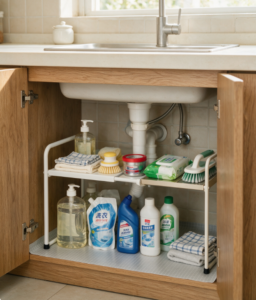
You do not need a closet full of cleaning products. Four inexpensive, multi-purpose items replace almost every commercial cleaner on the market and handle 90% of daily household messes: plain baking soda, distilled white vinegar, unscented mild dish soap, and microfiber cloths.
Each ingredient has a clear, practical job with zero unnecessary additives. White vinegar dissolves hard water minerals, limescale, and soap scum on water-resistant surfaces. Baking soda provides mild, non-scratch abrasion to lift dried food, sticky residue, and light stains. Diluted dish soap cuts through oil and kitchen grease without stripping protective surface coatings. Microfiber cloths trap fine dust and hair to prevent streaks, lint, and cross-contamination of grime.
Kitchen Cleaning: Remove Grease Without Ruining Expensive Surfaces
Kitchens build up stubborn grease over time, and incorrect cleaning is the top reason countertops and cabinets look dull and worn prematurely. Different kitchen materials have strict tolerance limits, making targeted cleaning essential.
Quartz countertops are low-maintenance but acid-sensitive. For daily cleaning, use warm water with a tiny amount of mild dish soap and dry immediately to avoid water spots. For dried food buildup, apply a thin baking soda paste, let it rest for two to three minutes, and wipe gently. Never use vinegar, lemon juice, bleach, or harsh scouring pads. Repeated acid exposure wears down the quartz protective layer, while rough scrubbing creates micro-scratches that trap grease and dust.
Marble and polished granite surfaces require completely acid-free care. Vinegar, citrus, tomato sauce, and coffee will permanently etch polished stone, leaving cloudy, pitted marks that cannot be repaired. Clean natural stone only with warm water or lightly diluted neutral soap. Always wipe spills immediately and dry thoroughly to prevent mineral streaks.
Wood and laminate cabinets degrade quickly from excess moisture. Greasy cabinet surfaces clean best with a well-wrung damp microfiber cloth and diluted mild soap. Wipe gently along the grain and dry right away. Avoid soaking seams and edges, where trapped moisture causes peeling paint, wood swelling, and hidden mold growth.
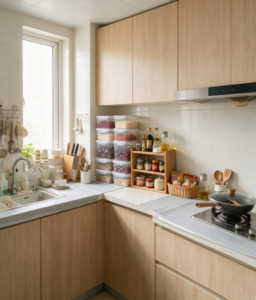
Stainless steel appliances smudge daily but are easy to maintain. Warm soapy water removes routine fingerprints and light grease. For old, hardened grease, apply baking soda paste, wait five minutes, and wipe along the metal grain. Skip steel wool and abrasive pads, which leave permanent scratch lines.
Bathroom Cleaning: Eliminate Limescale & Mild Mold Without Bleach Fumes
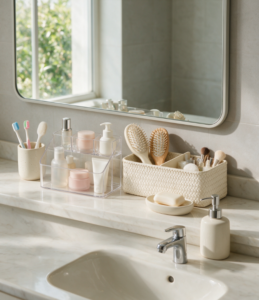
Bathroom grime is caused by hard water, soap residue, and high humidity. Most store-bought bathroom cleaners rely on bleach and strong synthetic chemicals that irritate the eyes, throat, and skin, especially in poorly ventilated bathrooms. Gentle alternatives deliver cleaner, longer-lasting results for regular upkeep.
Shower glass and ceramic tiles respond extremely well to diluted vinegar solutions. Mix equal parts white vinegar and water, spray on glass doors, tile walls, and floor grout, and leave for three to five minutes. This dissolves cloudy soap scum and hard water limescale with no harsh odor. For dark grout lines and surface mold, use thick baking soda paste and scrub lightly with a soft toothbrush to restore brightness safely.
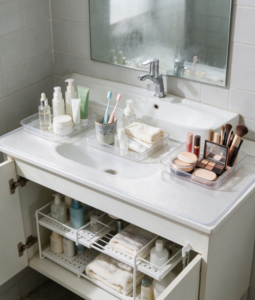
Bathroom vanities need material-specific cleaning. Waterproof synthetic vanities tolerate mild vinegar and soap solutions. Wood and MDF vanities must stay dry at all times. Clean only with a barely damp cloth and dry instantly to avoid warping, discoloration, and edge damage.
Metal faucets and shower hardware turn dull due to mineral buildup. Wrap a vinegar-dampened cloth around scaled fixtures for two minutes to dissolve deposits, then polish dry for a clear shine. Overusing industrial descaling sprays wears away metal plating and causes permanent tarnishing.
Living Room & Bedroom: Gentle Cleaning for Delicate Furniture & Electronics
Bedrooms and living rooms do not accumulate grease, but invisible dust, pet hair, fabric lint, and body oil slowly build up, making surfaces look tired and dull. These spaces contain the most delicate household items, including wood furniture, fabric upholstery, and coated screens that cannot withstand harsh cleaners.
Hardwood floors and wooden furniture cannot handle excess water or acidic cleaners. Daily dry dusting with a microfiber cloth is sufficient for regular maintenance. For light smudges and footprints, use a barely damp cloth with a drop of mild soap and dry immediately. Mopping wood floors with vinegar or standing water destroys floor wax, leading to fading and fine cracks over time.
Fabric sofas and cushions are prone to water rings and fiber damage. Use a vacuum brush attachment weekly to remove embedded dust and hair. For localized stains, mix cold water and mild soap to create foam, clean only the stained area, and blot dry with a towel. Never soak the entire fabric or use hot water, which causes shrinking and fading.
TV and monitor screens have fragile anti-glare and fingerprint-resistant coatings. Paper towels and alcohol-based cleaners scratch and peel these protective layers permanently. For daily cleaning, use a dry ultra-fine microfiber cloth. For stubborn fingerprints, use a minimal amount of distilled water on a fully wrung cloth and wipe gently in one direction only.
Key Home Cleaning Safety Rules
Safe cleaning always comes before perfect cleaning results. Never mix vinegar and bleach, as this combination creates toxic chlorine gas that causes severe respiratory irritation. Avoid baking soda scrubbing on matte paint, plastic, and polished surfaces to prevent micro-scratches. Never spray liquid cleaners directly on electronics, power strips, or light fixtures; always apply solution to a cloth first to avoid electrical danger.
Over-disinfecting living spaces creates unnecessary chemical residue on beds, tables, and floors. Regular physical cleaning and daily ventilation are enough to maintain a hygienic home without constant disinfectant use.
Simple Daily Habits to Stop Grime From Building Up
The hardest deep-clean jobs come from months of neglected residue, not tough dirt. After cooking, wipe countertops while slightly warm; softened grease wipes away easily instead of hardening into stubborn layers. After showering, do a quick wipe of shower walls to prevent recurring limescale.
Open windows for 5 to 10 minutes daily to reduce indoor humidity and prevent mold and mildew growth. Complete a quick weekly dusting routine to stop dust from mixing with moisture and forming sticky film. These tiny daily habits eliminate exhausting seasonal deep-cleaning sessions.
Final Thoughts
A consistently clean, healthy home does not require expensive cleaning kits or harsh chemicals. By using low-cost pantry staples and surface-aware cleaning methods, homeowners and renters can remove everyday grime safely while protecting their furniture, fixtures, and indoor air quality. Small, sustainable cleaning habits create long-term cleanliness with minimal time and budget investment.