Practical Home Organization: Useful Room-by-Room Storage Tips for a Clutter-Free Home

Clutter is an unavoidable problem in most modern households. Many people spend hours tidying up their homes, yet messy surfaces, stuffed cabinets, and scattered small items quickly return. This cycle happens not because residents are untidy, but because most homes lack reasonable storage planning and standardized item management. Generic built-in storage spaces rarely match real living habits, resulting in low space utilization and recurring disorganization.
Common Storage Mistakes That Cause Repeated Clutter
Most household clutter stems from consistent small mistakes in daily storage habits. Many people purchase a large number of unmarked storage boxes, which turn open mess into hidden mess. Items are piled inside closed containers, making them hard to find and easy to repurchase repeatedly. Storing frequently used daily necessities in deep cabinet corners increases the difficulty of daily access and indirectly creates random stacking.
In addition, most residents ignore vertical space and home dead zones. Narrow gaps beside furniture, blank wall surfaces, door back spaces, and high wall corners are often wasted. These unused areas can undertake a large number of storage demands. Correcting these basic storage errors is the premise of efficient home organization.
Kitchen Storage: Keep Countertops Clean and Cabinets Orderly
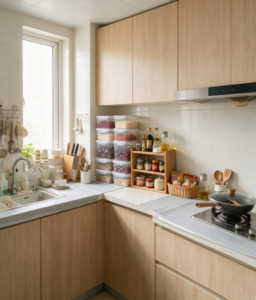
The kitchen is the highest-frequency clutter area in the home. Seasoning bottles, tableware, kitchen utensils, and bulk food are prone to scattered placement, resulting in crowded countertops and slow cleaning efficiency. Scientific kitchen storage focuses on classified placement and frequency-based storage.
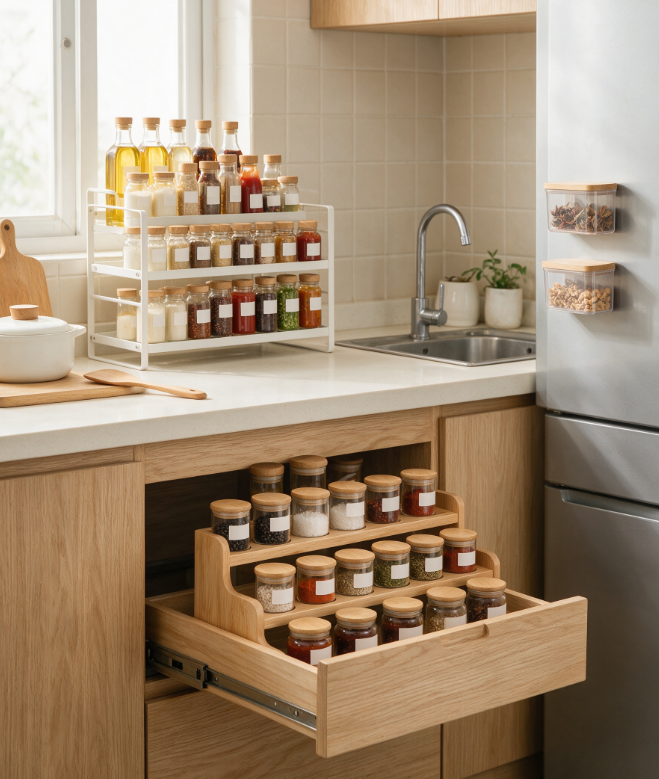
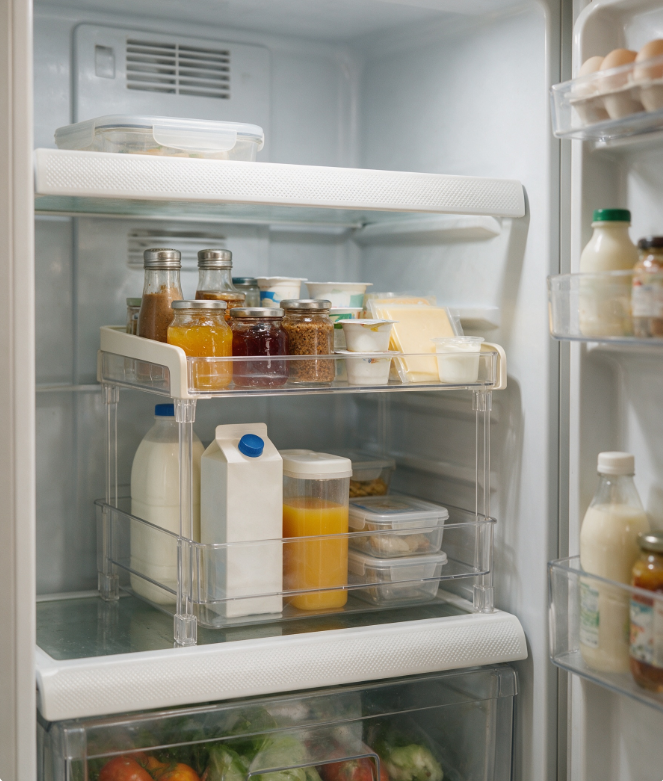
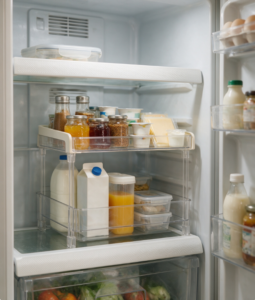
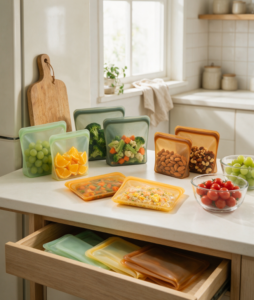
Use layered storage tools to optimize cabinet space. Most kitchen cabinets only have single-layer partitions, which waste a lot of vertical space. Adhesive shelf risers and hanging storage racks can divide a single layer into multiple storage areas, separately placing tableware, small tools, and spice supplies. Uniform sealed containers are recommended to store grains, nuts, and condiments, avoiding irregular packaging gaps and preventing food from getting damp and dusty.
Classify items according to usage frequency. Place only commonly used dishwashing tools, cups, and seasonings on the countertop. Infrequently used small kitchen appliances, baking tools, and spare food materials are uniformly stored in lower cabinets and corner positions. This method ensures unobstructed operating space during cooking and reduces grease accumulation on idle items.
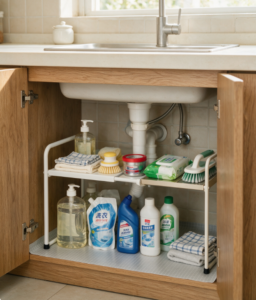
Make full use of kitchen dead gaps. Slim rolling storage carts can be placed in narrow gaps next to refrigerators and stoves to store cleaning supplies, spare condiments, and disposable kitchen supplies. Movable carts facilitate daily cleaning and flexible adjustment of storage positions.
Bathroom Storage: Solve Humid Clutter and Product Accumulation
Bathrooms are humid all year round, and wet-dry mixed storage is the main cause of messy vanities, mildewed supplies, and expired product accumulation. Effective bathroom organization core lies in zoning storage and ventilation maintenance.
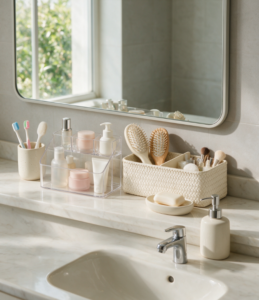
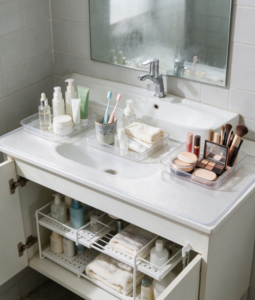
Strictly separate wet area and dry area storage. Install adhesive wall-mounted storage racks in shower areas to place shower gel, shampoo, razors, and other bath supplies. Concentrate all wet items in the shower area to prevent water stains and soap scum from polluting the vanity countertop. Skincare products, cosmetics, oral care tools, and dry grooming supplies are placed on layered vanity shelves to maintain air circulation and avoid moisture deterioration.
Develop vertical storage above the toilet. The wall space above the toilet is the most easily wasted area in the bathroom. Slim vertical storage shelves can place spare toilet paper, backup toiletries, and cleaning tools without occupying floor space. Do not stack items on the toilet tank to avoid affecting ventilation and breeding bacteria.
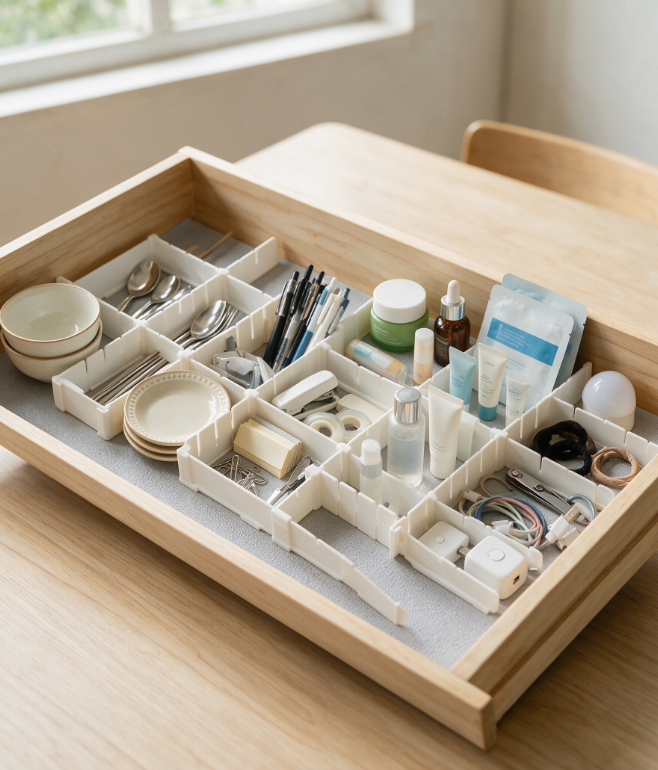
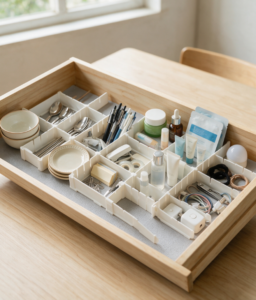
Sort tiny scattered items with divided storage trays. Cotton pads, swabs, hair accessories, and disposable toiletries are easy to lose and scatter. Compartmentalized storage trays can realize classified storage and instant access. It is necessary to regularly sort out expired cosmetics and deteriorated toiletries every month to avoid unnecessary accumulation.
Bedroom & Closet Storage: Fix Seasonal Clothing Chaos
Most original wardrobes have single-layer hanging rods and single-space drawers, which cannot meet the mixed storage of daily clothes, seasonal clothes, and thick bedding. Random stacking leads to wrinkled clothes, insufficient drawer space, and difficult item searching.
Optimize wardrobe structure with non-destructive tools. Adjustable tension rods can increase hanging layers, separating long coats and short tops to improve hanging space utilization. Drawer dividers are used to classify socks, underwear, belts, and jewelry to avoid tangling and messy stacking of small accessories.
Compress and store seasonal thick textiles. Thick quilts, down jackets, and heavy winter clothes occupy a large amount of wardrobe space. Vacuum compression storage bags can effectively reduce volume, while isolating dust and moisture. Compressed seasonal items are placed on high wardrobe shelves, and the middle convenient access area is reserved for daily wearable clothes.
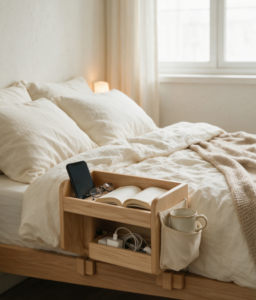
Set up an independent semi-clean clothes area. Prepare a lightweight storage basket in the bedroom corner for clothes that have been worn once but do not need to be washed. This method avoids random stacking of clothes on beds and chairs and eliminates the main source of bedroom clutter.
Living Room Storage: Reduce Visual Clutter in Public Areas
Living room clutter mainly comes from tangled wires, scattered remote controls, books, sundries, and children’s toys, which affects the overall visual neatness and living comfort. Living room storage focuses on hidden arrangement and fixed-point placement.
Unify electronic wire management. TV sets, game consoles, chargers, and desk lamps produce a large number of scattered wires, which are easy to tangle and accumulate dust. Use cable clips and wire storage boxes to sort and bundle wires to keep the TV cabinet and floor clean.
Match open display and hidden storage. Open shelves are used to place frequently read books and simple decorations. Infrequently used seasonal ornaments, idle electronic gadgets, and miscellaneous sundries are stored in opaque closed storage boxes to reduce visual noise.
Classify and store children’s toys. Use labeled modular storage boxes to sort building blocks, dolls, and art supplies. Cultivate the habit of taking and placing items by category, which can effectively reduce daily toy mess and reduce long-term cleaning pressure.
Long-Term Maintenance Habits to Avoid Clutter Rebound
One-time deep sorting cannot maintain long-term tidiness. Sustainable home organization depends on low-cost and repeatable daily habits.
Adhere to the one-in one-out principle. When purchasing new clothes, daily supplies, and household items, sort out unused old items for donation or disposal. Balance the total number of household items to avoid storage saturation caused by excessive accumulation.
Complete a 5-minute daily reset before going to bed. Put scattered keys, water cups, chargers, and small sundries back to fixed storage positions. Minor daily tidying can prevent clutter from accumulating into large messy piles.
Conduct quarterly household inventory sorting. Regularly clean up expired food, outdated skincare products, broken tools, and long-term idle items. Timely removal of invalid items can keep the home storage system efficient and orderly all year round.
Conclusion
High-quality home organization does not rely on high investment and complex skills, but on scientific space utilization, standardized classified storage, and simple daily maintenance. All storage skills in this article are practical and down-to-earth, suitable for most modern families and rental living spaces. A reasonably organized home can save cleaning time, reduce visual fatigue and life pressure, and create a comfortable, tidy and efficient living environment.