Home Storage and Organization Tips: Maximize Space and Reduce Household Clutter
A tidy and well-organized home is not only visually appealing but also significantly improves daily living efficiency and mental well-being. Many households struggle with endless clutter, crowded countertops, overflowing cabinets, and misplaced items, even after frequent cleaning. The core reason for messy homes is not insufficient space, but unreasonable storage habits and disorderly item placement. Effective home storage and organization help maximize every inch of indoor space, eliminate redundant clutter, simplify daily cleaning routines, and create a comfortable, breathable, and orderly living environment. This professional storage guide shares practical, easy-to-implement, and long-term effective organization tips suitable for all house and apartment types.
Why Home Organization Is Essential for a Quality Living Environment
Clutter is the biggest enemy of a high-quality home environment. Scattered daily necessities, idle sundries, randomly stacked clothes, and unorganized decorations occupy limited living space, making rooms look cramped, chaotic, and crowded. In a disorganized home, people spend extra time searching for keys, documents, stationery, and clothing every day, greatly reducing life efficiency and causing unnecessary anxiety.
Beyond affecting aesthetics and efficiency, messy storage also increases household hygiene burdens. Stacked items block ventilation and hide dust, forming unclean dead corners that accumulate bacteria and dust mites. Disordered storage also makes it difficult to sort out expired items, leading to repeated accumulation of idle goods and serious waste of household resources. Scientific storage and standardized organization fundamentally solve clutter problems, optimize space utilization, reduce cleaning pressure, and maintain a healthy and comfortable home atmosphere.
Core Principles of Efficient Home Storage
Excellent home organization does not rely on a large number of storage boxes, but on three core principles: classified sorting, fixed positioning, and vertical utilization. These principles apply to all rooms and can completely change the state of household storage.
Classified Sorting: Sort all items according to usage attributes, including daily necessities, seasonal supplies, occasional use items, and idle items. Separate frequently used and infrequently used objects to avoid mixing placement, which causes searching difficulties and messy stacking.
Fixed Positioning: Every item has a fixed storage position. After use, items are returned in time to avoid random placement. Fixed storage habits effectively prevent repeated clutter and maintain long-term household order.
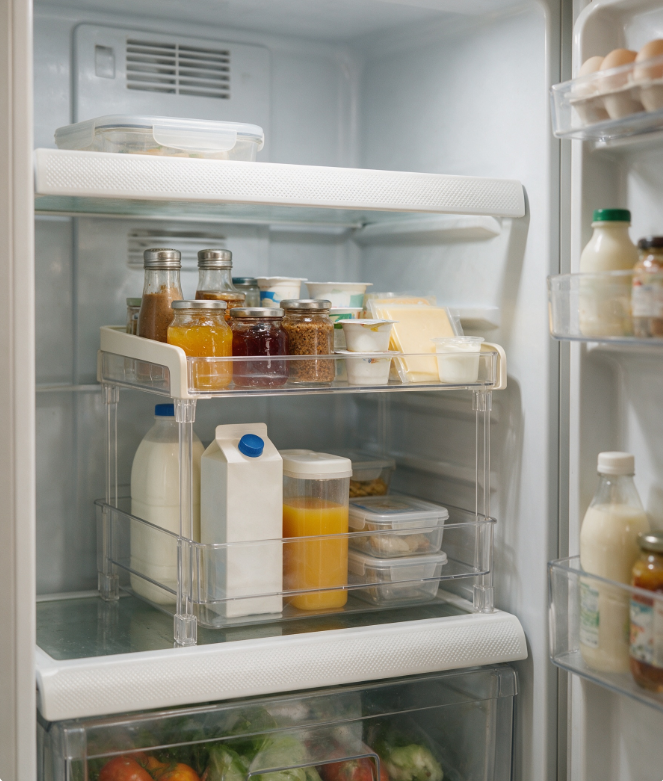
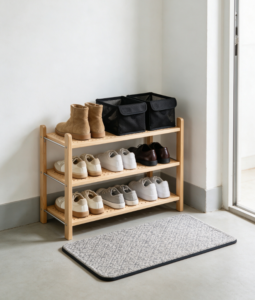
Vertical Space Utilization: Most families only use horizontal desktop and ground space, while ignoring abundant vertical space. Making full use of wall surfaces, cabinet tops, door gaps, and layered partitions can double the usable space of small apartments and realize zero-waste space utilization.
Room-by-Room Practical Storage & Organization Tips
Living Room Storage: Keep Public Areas Neat and Breathable
The living room is the core public area of the home, and disordered sundries will directly affect the overall home texture. The main clutter sources in the living room include remote controls, magazines, mobile charging devices, decorative sundries, and scattered toys. Avoid placing too many idle items on the coffee table and TV cabinet. Use layered closed storage boxes to collect sundries, ensuring flat surfaces are clean and tidy.
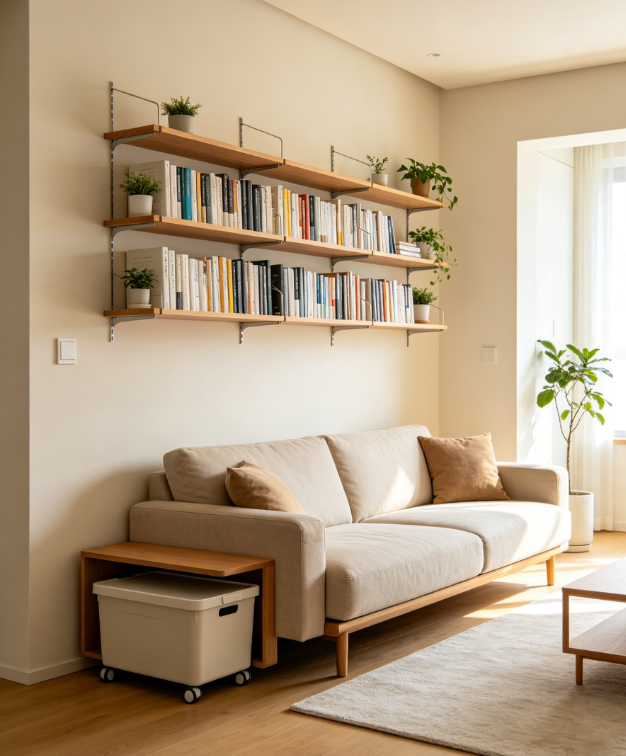
Make full use of wall storage space. Install lightweight wall-mounted shelves and hanging baskets to place books, green plants, and small decorations, reducing desktop stacking. Use the gap under the sofa and the top of the TV cabinet to store seasonal blankets and idle items. Adhere to the principle of “hidden storage first, open display second”, reduce visual clutter, and make the living room spacious and comfortable.
Bedroom Storage: Create a Clean and Restful Sleeping Space
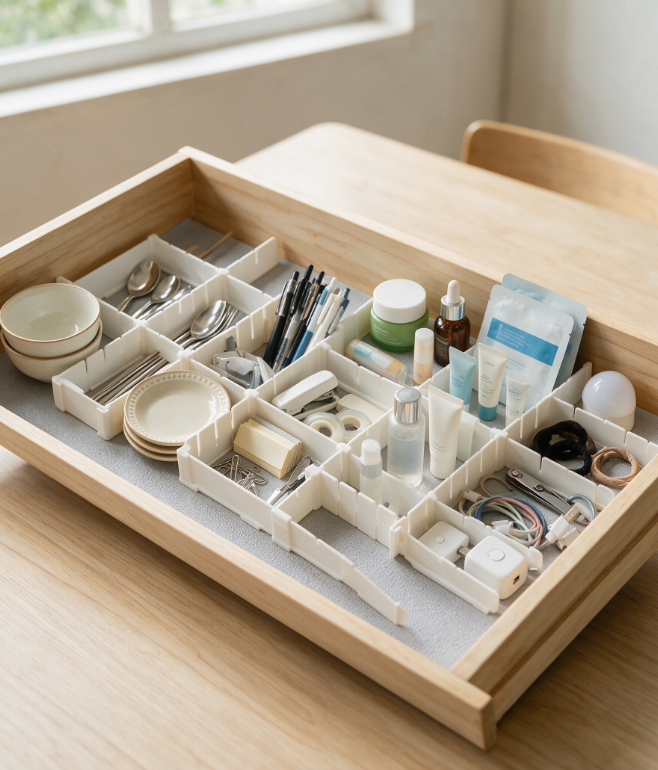
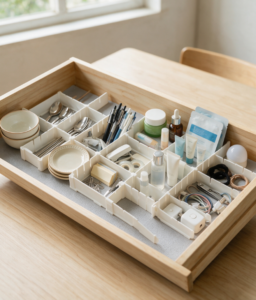
The bedroom focuses on simplicity, tidiness, and no clutter interference. The most prominent storage problems are disorderly clothes, scattered accessories, and accumulated bedding. Classify wardrobes according to clothing types, including coats, tops, pants, underwear, and seasonal clothing. Use drawer dividers and storage boxes to sort small accessories such as socks, belts, and jewelry to avoid messy entanglement.
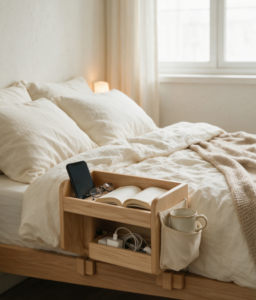
Make rational use of bed bottom space. The empty space under the bed is an excellent hidden storage area, suitable for storing quilts, thick blankets, and off-season clothing with sealed storage boxes to prevent dust and moisture. Keep the bedside table minimalist, only placing commonly used mobile phones, desk lamps, and skin care products, and avoid stacking miscellaneous items that affect sleep quality.
Kitchen Storage: Realize Zero-Sticky Countertop Management
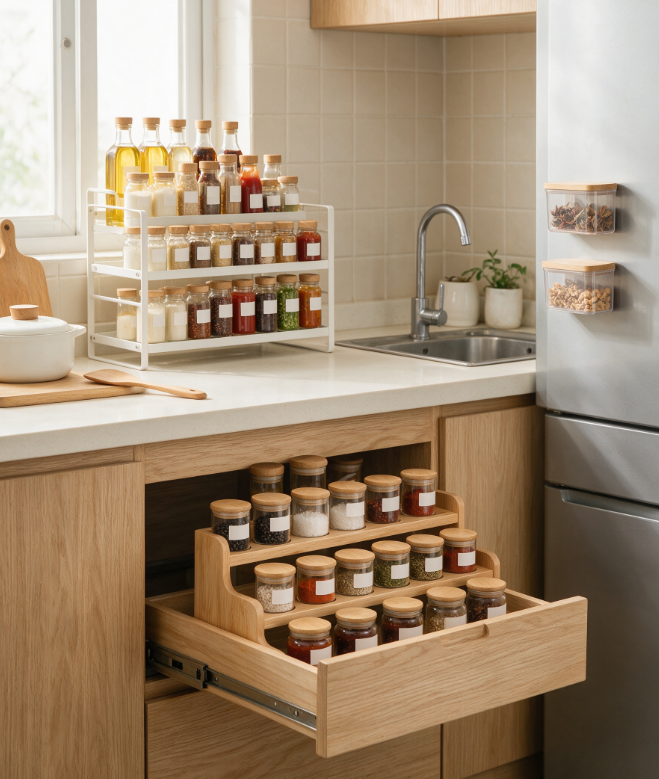
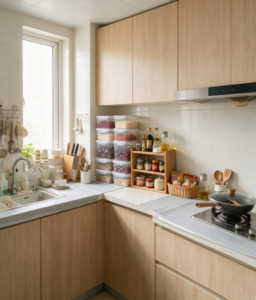
Kitchen clutter mainly comes from dense tableware, numerous condiments, and scattered small kitchen tools. A messy countertop easily accumulates oil stains and affects cooking efficiency. Adopt upper suspension and lower cabinet storage methods to empty the countertop completely. Install wall-mounted hanging racks to store spatulas, spoons, and draining tools.
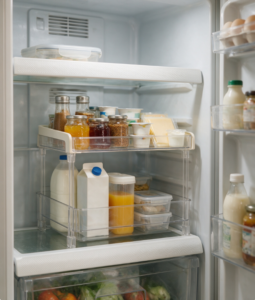
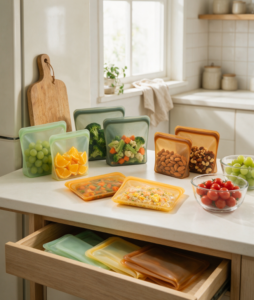
Use layered condiment storage boxes to classify oil, salt, sauce, and vinegar supplies, avoiding scattered placement. Sort tableware, pots, and baking tools in cabinets according to usage frequency. Place frequently used items in easy-to-reach positions and store infrequently used kitchenware in high-level or deep cabinet areas. Scientific kitchen storage keeps countertops clean, reduces oil dirt accumulation, and greatly facilitates daily cleaning and cooking.
Bathroom Storage: Moisture-Proof and Tidy Sanitary Storage
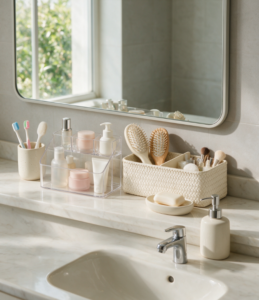
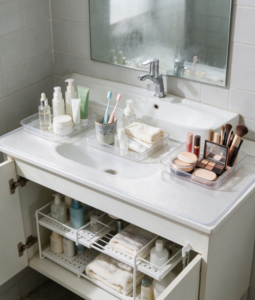
Bathroom storage needs to meet dual requirements of tidiness and moisture resistance. Daily skin care products, cosmetics, toothbrush sets, and cleaning supplies are prone to messy placement and water soaking. Use multi-layer bathroom storage racks to classify washing supplies and skin care products, realizing hierarchical storage and clear classification.
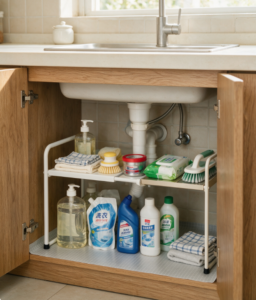
Make use of the gap behind the bathroom door and wall corner space to place folding storage baskets for cleaning tools such as mops and brushes. Store spare toilet paper, towels, and bath supplies in sealed moisture-proof storage boxes to avoid mildew caused by long-term humidity. Keep the bathroom sink countertop empty, only retaining daily essential products, to maintain a fresh and hygienic bathroom environment.
Seasonal Storage Sorting Method to Avoid Accumulation
Seasonal item accumulation is one of the main causes of household clutter. Many families store seasonal clothes, quilts, and seasonal supplies randomly, resulting in crowded cabinets and repeated stacking. Adopt quarterly seasonal sorting rules: sort out off-season items, clean and dry them thoroughly, and then place them in sealed dust-proof storage boxes with category labels.
Labeling is an efficient storage detail. Clearly mark the stored items on the surface of the storage box, which is convenient for quick searching and avoids repeated flipping and messy stacking. Seasonal sorting can timely eliminate expired, worn, and unused items, reduce household storage pressure, and keep cabinet space sufficient and orderly all year round.
Common Home Storage Mistakes to Avoid
Many people fall into storage misunderstandings, leading to more messy homes after organizing. The first mistake is blind purchase of excessive storage tools. A large number of unplanned storage boxes and racks occupy space instead of solving clutter problems, increasing household burden.
The second mistake is simple stacking without classification. Piling all sundries into storage boxes seems tidy on the surface, but it causes difficulty in taking items and accelerated dust accumulation. The third mistake is ignoring idle item cleaning. Retaining a large number of unused old items, expired products, and redundant supplies will always occupy effective storage space.
The correct storage logic is sorting first, storage second, and discarding redundant items before organizing, so as to fundamentally reduce household clutter.
Long-Term Benefits of Scientific Home Organization
Adhering to standardized home storage and organization can continuously improve the quality of family life. An orderly home reduces visual clutter and psychological pressure, relieves life anxiety, and makes the living space warm and comfortable. Fixed-point storage saves time wasted on searching for items and improves daily life efficiency.
Tidy storage effectively reduces dust accumulation and sanitary dead corners, lowers household cleaning difficulty, and maintains indoor environmental hygiene. Reasonable space utilization maximizes the use of limited housing area, making small homes spacious and large homes more layered. In addition, good storage habits cultivate neat living awareness, form a positive family living atmosphere, and improve overall home happiness.
Conclusion
Home storage and organization is a fine and systematic household management skill, not simple stacking and tidying. By mastering classified sorting, fixed positioning, and vertical space utilization principles, abandoning wrong storage habits, and implementing room-by-room refined organization, every family can completely solve household clutter problems. A well-organized home optimizes space utilization, reduces cleaning pressure, improves living comfort, and creates a clean, orderly, and high-quality long-term living environment.