Eco-Friendly Home Cleaning: Safe, Non-Toxic Methods for a Sustainable Living Space
Traditional household cleaning often relies on chemical-based cleaners that deliver fast results but come with hidden downsides. Most commercial cleaning products contain harsh toxins, synthetic fragrances, volatile organic compounds (VOCs), and residual chemicals that pollute indoor air, irritate sensitive skin, and harm the ecosystem. For modern families pursuing healthy living and environmental sustainability, eco-friendly cleaning has become the ideal alternative. Green cleaning uses non-toxic, biodegradable, and natural ingredients to remove dirt, eliminate odors, and sanitize living spaces without compromising health or the environment. This professional guide covers practical eco-friendly cleaning methods, common natural ingredients, and sustainable habits to help homeowners build a safe, clean, and zero-waste home.
Why Eco-Friendly Cleaning Is Better Than Chemical Cleaning
Conventional chemical cleaners are designed for powerful decontamination, yet they create long-term indoor health risks. When spraying or wiping with chemical detergents, harmful VOCs are released into the air, causing respiratory irritation, headaches, and allergic reactions, especially for children, pregnant women, the elderly, and pets. Chemical residues remain on countertops, floors, and tableware surfaces, which can be absorbed through skin contact or accidental ingestion, leading to chronic physical discomfort over time.
Beyond household health hazards, chemical cleaning products damage the natural environment. Synthetic ingredients in mainstream cleaners are non-biodegradable. After flowing into sewers and water systems, they pollute rivers, destroy aquatic ecosystems, and cause soil degradation. In contrast, eco-friendly cleaning solutions use natural, plant-based, or food-grade ingredients that are completely biodegradable, leaving no environmental waste.
Additionally, green cleaning protects household facilities. Harsh corrosive chemicals easily fade furniture paint, scratch delicate marble surfaces, oxidize metal hardware, and age fabric fibers. Mild natural cleaning formulas effectively avoid these damages, maintaining the original texture and service life of home decorations and appliances.
Top Natural, Eco-Friendly Cleaning Ingredients for Every Home
The core of sustainable home cleaning lies in simple, accessible, and zero-toxic natural ingredients. These common household items replace dozens of chemical cleaners, achieving efficient decontamination, descaling, antibacterial, and deodorizing effects safely.
Baking Soda: As a mild alkaline natural cleaner, baking soda excels at degreasing, stain removal, and odor absorption. It features non-abrasive properties, making it safe for almost all household surfaces. It effectively cleans kitchen grease, bathroom stains, tile grime, and carpet odors without causing scratches or residues.
White Vinegar: Rich in natural acetic acid, white vinegar is a powerful eco-friendly descaling and antibacterial agent. It dissolves hard water limescale on faucets and glass, eliminates mold spores in humid corners, neutralizes alkaline odors, and purifies indoor air. After natural volatilization, it leaves no harmful residues.
Fresh Lemon: Loaded with citric acid, lemon acts as a natural deodorizer, polisher, and stain remover. It removes metal tarnish, light kitchen grease, and water spots while releasing a fresh citrus fragrance to replace stuffy indoor odors naturally.
Sea Salt: Fine sea salt provides gentle physical friction for stubborn stain removal. It inhibits bacterial growth, absorbs moisture in damp corners, and cleans cutting boards and wooden surfaces safely without chemical additives.
Microfiber Cleaning Tools: Reusable microfiber cloths and mop heads capture 99% of dust, bacteria, and fine particles with only water. They eliminate the need for detergent reliance, reduce plastic bottle waste, and support zero-waste cleaning habits.
Room-by-Room Eco-Friendly Cleaning Recipes
Chemical-Free Kitchen Cleaning
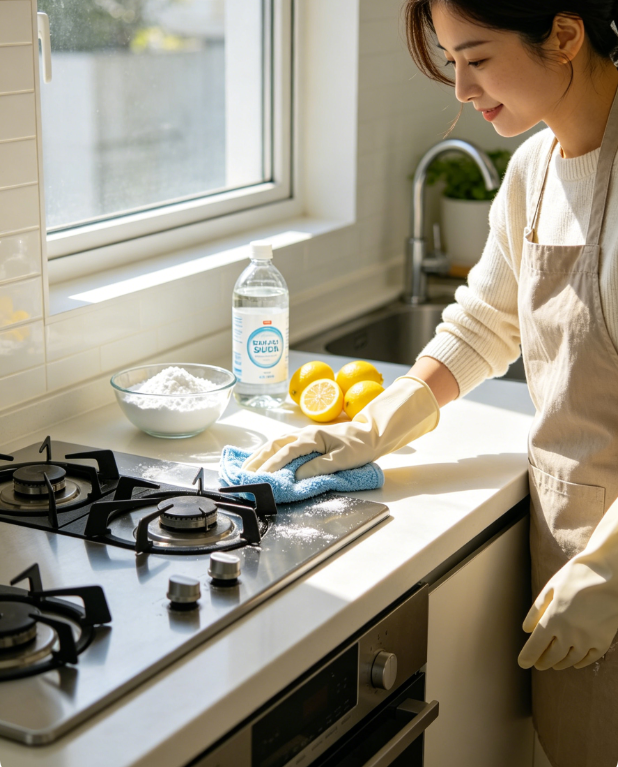
Kitchen cleaning focuses on food-grade safety and effective degreasing. For solidified stove and range hood grease, mix baking soda with warm water to form a thick paste. Apply the paste to greasy surfaces, leave it for 10 minutes to dissolve oil stains, then wipe clean with a microfiber cloth. This method removes stubborn grease without toxic fumes.
To clean kitchen sinks and drain pipes, pour baking soda into the drain, followed by a small amount of white vinegar. The natural foaming reaction decomposes pipeline grease, clears minor blockages, and eliminates sewer odors. Wipe countertops and cutting boards with lemon slices to sanitize surfaces and retain a fresh, clean scent suitable for food preparation areas.
Green Bathroom Mold and Limescale Removal
Bathrooms are prone to limescale, mold, and musty odors, and eco-friendly formulas can solve these problems safely. Mix equal parts white vinegar and warm water to create an all-natural bathroom cleaner. Spray it on shower glass, faucets, tile walls, and grout lines to dissolve hard water scale and inhibit mold growth.
For stubborn black mold in tile gaps, apply baking soda paste and scrub gently after standing. This physical mold removal method avoids bleach irritation and protects bathroom surfaces. After cleaning, open windows for ventilation to keep the bathroom dry and prevent repeated mold breeding.
Non-Toxic Living Room and Bedroom Maintenance
Living rooms and bedrooms require odor-free and hypoallergenic cleaning. Use dry microfiber cloths for daily dust removal to reduce floating particles without chemical sprays. Mix diluted lemon water and a small amount of vinegar to wipe furniture surfaces, eliminating static dust and refreshing indoor air naturally.
Sprinkle a thin layer of baking soda on carpets and sofa fabrics before vacuuming. It effectively absorbs pet odors, musty smells, and light stains, keeping soft furnishings fresh without chemical fresheners. Natural ventilation replaces artificial fragrances to maintain pure indoor air quality.
Key Zero-Waste Cleaning Habits for Sustainability
True eco-friendly cleaning is not only about using natural ingredients but also building sustainable daily habits. Replace disposable cleaning wipes, plastic sponges, and single-use detergent bottles with reusable microfiber cloths, washable sponges, and refillable cleaning containers. This greatly reduces household plastic waste and lowers carbon footprints.
Prepare natural cleaning solutions on demand instead of storing diluted mixtures long-term, ensuring maximum efficacy and avoiding waste. Classify and reuse clean domestic wastewater from mopping and wiping for plant watering, improving water utilization efficiency.
Avoid over-cleaning with excessive detergents. Natural light maintenance can maintain household sanitation, reducing unnecessary resource consumption and protecting indoor ecological balance.
Benefits of Long-Term Eco-Friendly Cleaning
Adopting green cleaning methods brings dual benefits of family health and environmental protection. Non-toxic formulas eliminate indoor chemical pollution, effectively reducing allergic symptoms, respiratory discomfort, and skin irritation, creating a safe living environment for infants, pets, and sensitive groups.
Natural cleaning protects household materials, avoiding chemical corrosion, fading, and aging caused by industrial cleaners, thus extending the service life of furniture, electrical appliances, and decoration materials and saving long-term household maintenance costs.
On an environmental level, biodegradable natural ingredients reduce chemical wastewater discharge and plastic waste generation, alleviating ecological pressure. Every eco-friendly cleaning habit contributes to sustainable green living, making household maintenance low-carbon and environmentally friendly.
Common Green Cleaning Misconceptions to Avoid
Many homeowners mistakenly believe that natural ingredients are completely safe in any combination. Never mix vinegar with hydrogen peroxide or other oxidation ingredients, as improper mixing may cause mild irritation. Always test natural acidic solutions on marble, stone, and painted wood surfaces to avoid slight corrosion and discoloration.
Another common misconception is that natural cleaners are less effective. With correct proportioning and targeted usage, natural formulas can completely replace chemical cleaners to remove grease, scale, mold, and bacteria, achieving both safety and cleaning efficiency.
Conclusion
Eco-friendly home cleaning is a modern, healthy, and sustainable household management method. By utilizing accessible natural ingredients, scientific green cleaning recipes, and zero-waste habits, homeowners can achieve thorough decontamination, effective sanitization, and natural deodorization without toxic chemicals or environmental pollution. Different from traditional chemical cleaning, green cleaning balances cleaning efficiency, family health, and ecological protection. Adopting long-term eco-friendly cleaning routines creates a pure, safe, and comfortable home environment while practicing low-carbon sustainable living, which is the best cleaning choice for modern healthy families.