Tiny Balcony Multi-Purpose Storage Hacks for Small Apartment Renters (Real Renter Experience)
Living in a small city apartment as a renter means every single square foot counts, and no space is more underrated yet challenging than the tiny balcony. For the past two years, I’ve rented a compact city studio with a balcony barely bigger than a standard doormat. It was originally just a forgotten, cluttered spot where I dumped old shoes, random cardboard boxes, and unused kitchen stuff. I constantly struggled with limited indoor storage, messy countertops, and nowhere to keep daily outdoor essentials without making my cramped apartment feel even smaller. After dozens of trial-and-error attempts, costly mistakes, and tweaks that fit strict renter rules (no drilling, no permanent changes, no paint), I’ve turned this tiny balcony into a multi-purpose storage zone that works for daily use, seasonal items, and casual relaxation. All the tips below are based on my real renting experience, with exact actionable steps and the honest flaws of each method—no perfect, unrealistic tricks that only work in staged photos.
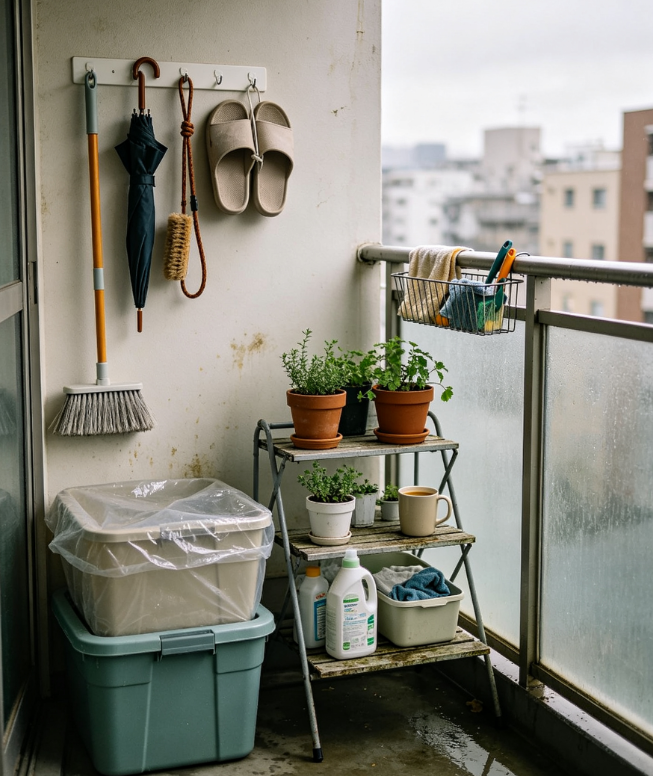
The first functional storage solution I set up is wall-mounted no-drill hanging storage for lightweight daily items, which solved my biggest early balcony mess. Before fixing this, I always left my outdoor slippers, umbrellas, cleaning brushes, and plant tools scattered on the balcony floor. The small floor space got completely occupied in minutes, and rain would make the loose items dirty or moldy. The setup process is super simple and totally renter-friendly. I bought heavy-duty adhesive wall hooks and slim over-the-rail hanging baskets from a regular local store. First, I wiped down the balcony rail and wall surface thoroughly with alcohol wipes to remove dust and grease, which makes the adhesive stick much longer. Then I stuck the large hooks on the empty wall section near the balcony door for long items like brooms, mops, and folding umbrellas. I hung two slim wire baskets on the balcony railing for small daily stuff: one for outdoor slippers and pet leashes, the other for cleaning cloths, spray bottles, and small gardening tools for my potted plants.
This method has been my most used storage hack for over a year, and it frees up 100% of the balcony floor for other uses. But it has clear real-world downsides that no casual blog mentions. First, adhesive hooks do not last forever, especially in changing weather. During hot summer months, the high temperature softens the adhesive, and I had one hook fall off with a mop after three months of use. In rainy, humid seasons, the edges of the adhesive start to peel slowly. I’ve learned I need to replace the heavy-duty adhesive strips every four to five months to avoid falling items. Second, this storage only works for lightweight objects. I once tried hanging a heavy rain jacket and a pair of winter boots on the hooks, and it caused the whole strip to peel off and leave faint marks on the wall. Even though it’s non-damaging most of the time, overloading will ruin the adhesive and leave minor residue that needs extra scrubbing to clean before moving out.
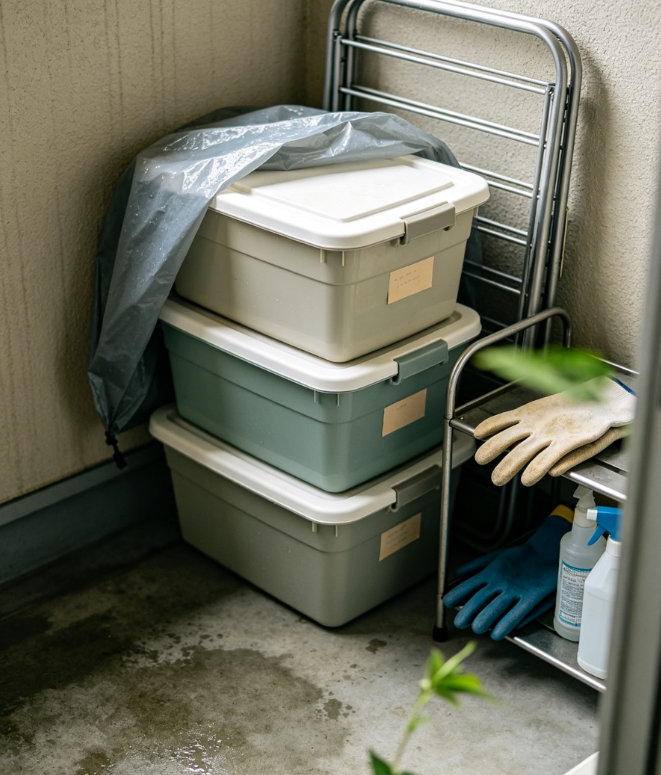
My second go-to multi-purpose storage fix is stackable weatherproof plastic bins for seasonal and bulk household items, which turned my useless balcony floor space into hidden storage. As a small-apartment renter, I have no extra closet space for seasonal stuff: winter blankets, thick coats, holiday decorations, extra toilet paper, and bulk cleaning supplies all piled up in my bedroom closet before. I finally moved all these items to the balcony with stackable storage bins, and it instantly freed up half my indoor closet space. My exact routine is straightforward and repeatable. I picked up medium-sized, lidded plastic bins that are waterproof and UV-resistant, designed for outdoor use. I sorted all my seasonal items by category: one bin for winter accessories and blankets, one for holiday decor, one for bulk paper goods and cleaning refills. I folded all fabric items tightly to save space, sealed each bin completely to block dust and rain, and stacked them neatly in the corner of the balcony that gets the least direct wind and rain. I also labeled each bin with simple paper stickers so I don’t have to open every bin when I need something specific.
This stacking system is the best way to maximize vertical space on a tiny balcony, and it’s fully removable with zero damage to the apartment. But there are definite shortcomings I’ve dealt with personally. The biggest issue is size limitation. Since my balcony is extremely small, I can only fit four medium bins max, which means I still have to keep a few oversized seasonal items like thick comforters indoors. Larger bins won’t fit at all, and stacking more than four makes the pile unstable and easy to topple over on windy days. Another problem is temperature impact. In extreme summer heat, the plastic bins get very hot inside, so I can’t store any heat-sensitive items like skincare products, candles, or rubber accessories out there. I once left a pack of rubber gloves in a balcony bin, and they turned sticky and deformed after a hot week. Additionally, even with lids, heavy wind-driven rain can seep through the tiny gaps of the bin lids during storms. I’ve had a few blankets get slightly damp once, so I now place a thin waterproof tarp over the entire stack on rainy forecast days, which adds an extra step to my routine.
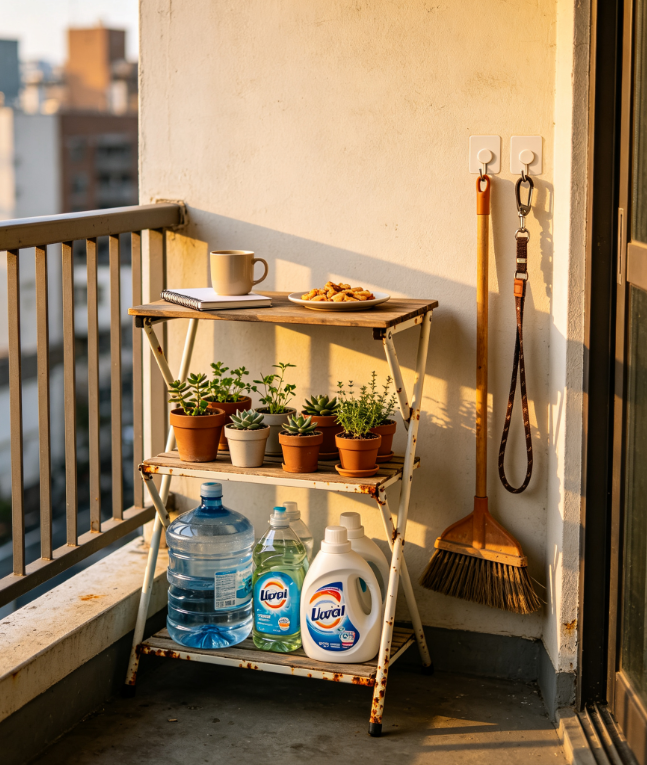
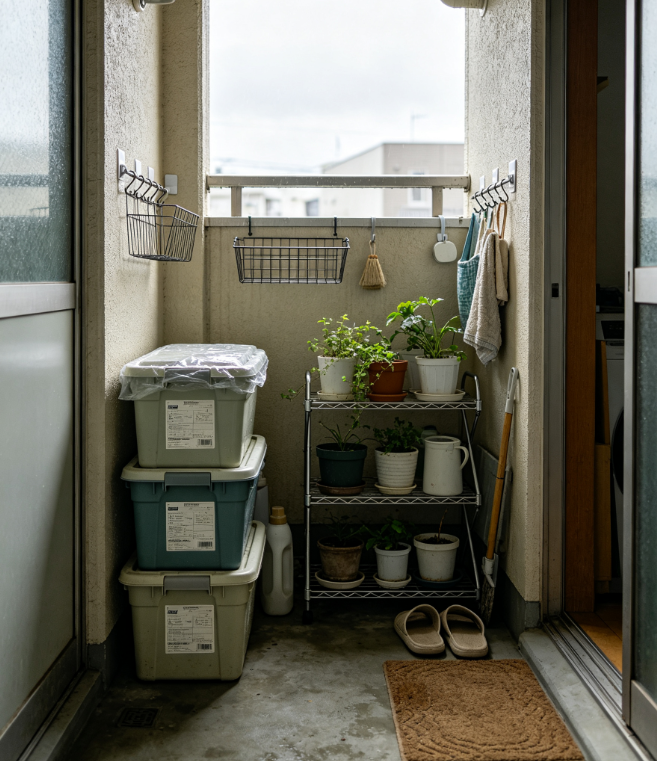
The third practical hack I’ve implemented is a foldable multi-purpose shelf for dual storage and temporary usage, which makes my tiny balcony functional instead of just a storage dump. I wanted my balcony to be more than just a stockroom; I wanted a small spot to drink coffee, air-dry small laundry, or place potted plants. A fixed shelf is impossible for my tiny space, so I invested in a fully foldable metal outdoor shelf that can be flattened and stored when not needed. My daily operation is simple. On regular days, I set up the 3-tier shelf against the empty balcony wall. The bottom tier holds my full water bottles and extra laundry supplies, the middle tier holds small potted herbs and succulents, and the top tier acts as a tiny side table for my morning coffee or evening snacks when I want to sit outside. When I need extra open balcony space for airing out large bedding or drying big laundry, I fold the shelf flat and lean it against the wall, which takes up almost no room at all.
This foldable shelf balances storage and daily usability perfectly, and it’s super easy to move or take down when moving out. Still, it has noticeable flaws I’ve adapted to over time. First, the foldable structure is not as stable as fixed shelves. If I place heavy items like full water jugs on the top tier, the shelf wobbles a little, so I have to strictly keep heavy things on the bottom tier only. Second, the metal material gets rust spots easily in humid weather. Even though it’s advertised as rust-proof, I found tiny rust dots on the shelf legs after six months of outdoor exposure, especially after continuous rainy days. I now wipe the shelf dry every time it rains to slow down rusting, but I can’t fully prevent it. The last downside is limited weight capacity. I can’t use it for any heavy storage, so it’s only suitable for light daily items and small plants, which means I still can’t rely on it for bulk household goods.
After over two years of tweaking my tiny balcony storage setup, I’ve learned that small-apartment renter storage is never about perfect, magazine-worthy organization. It’s about finding flexible, removable, low-cost methods that fit your limited space and avoid breaking rental rules. None of these hacks eliminate clutter completely, and all require small daily maintenance to keep working well. I still have to do monthly checks on adhesive hooks, cover storage bins on rainy days, and wipe down the foldable shelf regularly to prevent rust. But these simple, actionable changes have transformed my useless balcony into a multi-functional space that solves my core storage pain points, makes my small apartment feel more open, and gives me a tiny peaceful outdoor spot. For fellow renters with tiny balconies, skipping the overhyped perfect storage tricks and sticking to practical, adaptable methods with manageable flaws is always the most realistic choice.