Bedroom Closet Corner Organization for Small Apartment Renters (Real Renter Hacks)
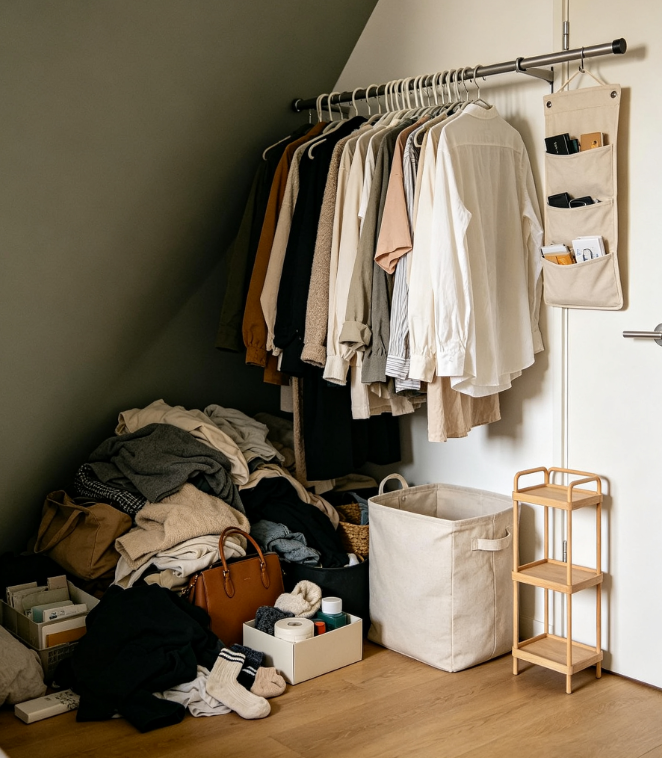
If you rent a small apartment, you’re definitely familiar with the useless closet corner struggle. Most bedroom closets have awkward, shadowed corner spaces that people tend to ignore entirely. These tight nooks sit right where hanging rods end or shelf lines shift, and they never seem to fit standard storage boxes, hangers, or baskets. For a long time, my closet corner was the black hole of my bedroom. I’d toss random items there—loose accessories, folded loungewear, old bags, and seasonal clothes—and within days, it turned into a messy pile that spilled out onto the closet floor. I could never find anything I needed quickly, and the clutter made my whole closet feel cramped and disorganized. Worst of all, as a renter, I couldn’t build new shelves, drill extra brackets, or modify the closet structure to fix the issue. After countless messy mornings, failed cheap storage fixes, and months of testing renter-friendly methods, I finally figured out how to make that awkward closet corner fully functional. Every tip below is my real daily routine, with simple actionable steps and the honest downsides no perfect organization post talks about.
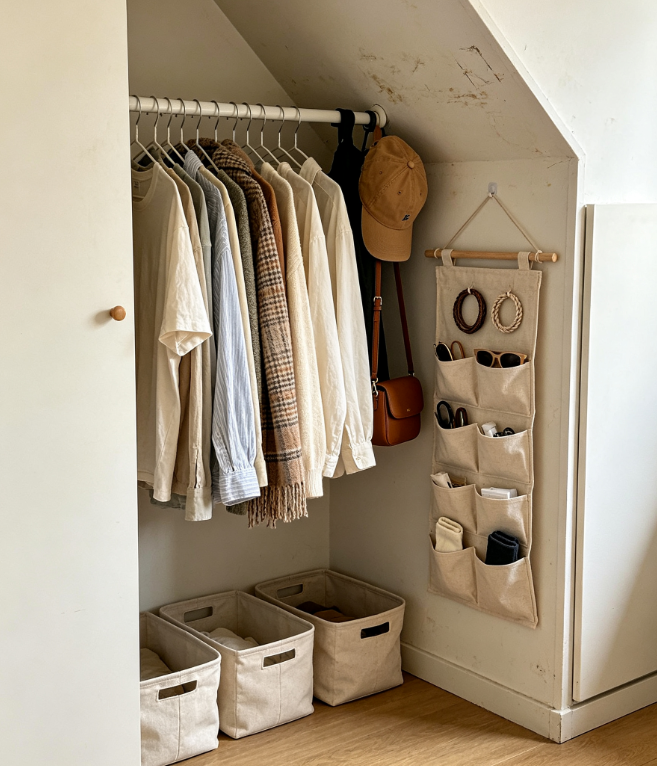
One game-changing tweak that completely transformed my awkward closet corner is using slim over-the-door and tension rod hanging storage to take advantage of unused vertical space. Most small closet corners waste tons of empty air space because people only use floor areas and main hanging rods. I started with a simple, no-drill tension rod installed horizontally across the empty corner gap, right between the two closet walls. The setup took less than five minutes with no tools or permanent changes. I adjusted the rod height to sit halfway up the corner, leaving room for longer hanging clothes below and lightweight items above. On this tension rod, I hang lightweight everyday items: camisoles, scarves, hats, workout gear, and small crossbody bags. I also added a fabric over-the-door pocket organizer on the closet door that faces the corner, using the pockets for tiny easy-to-lose things like hair ties, sunglasses, jewelry, and sock pairs. This keeps all small loose items out of pile-ups and fully visible.
This vertical hanging method is the best zero-cost way to unlock dead corner space, and it works perfectly for daily organization. However, it has very real limitations I had to learn through trial and error. Tension rods rely solely on pressure to stay in place, so they cannot hold heavy items. Early on, I tried hanging thick hoodies and denim jackets on the rod, and it slipped down twice, spilling all my clothes onto the closet floor. Now I strictly reserve this rod for thin, lightweight fabrics and accessories only. Another downside is door clearance issues. The pocket organizer adds slight thickness to the closet door, which means I can’t fully close the door if the pockets are overstuffed with bulky items. I have to keep pocket contents flat and minimal, which means I still can’t store any bulky accessories there. In humid weather, the tension rod also shifts slightly easier, so I have to readjust the tightness every couple of months to prevent slipping.
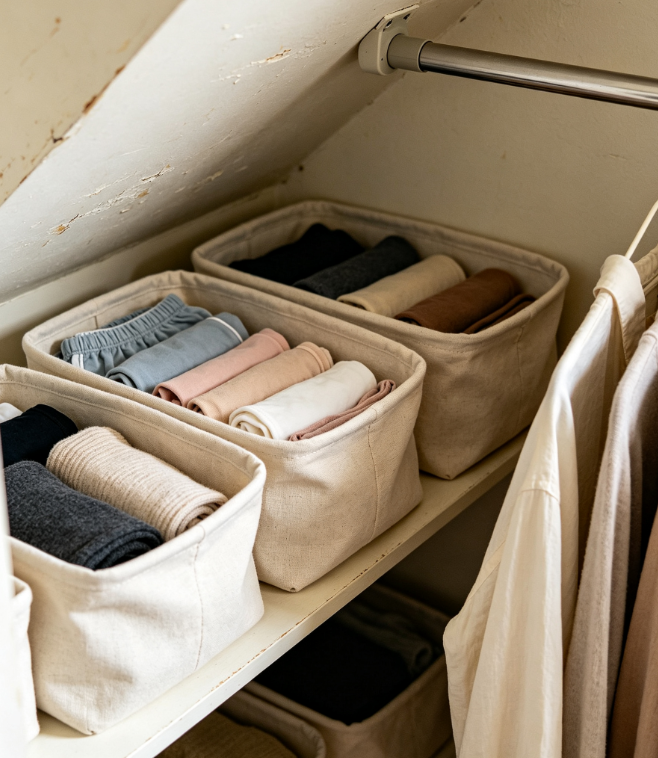
To tackle folded clothing overflow and random loose piles that always build up in odd corner spaces, I rely on uniform shallow stackable baskets as my go-to storage solution. The biggest issue with closet corners is their odd, angled shape. Regular square storage bins never fit properly, leaving gaps or sticking out and blocking the closet door. After buying three wrong-sized bin sets that I ended up returning, I finally switched to slim, shallow fabric baskets with soft sides that flex slightly to fit the corner angle. My simple routine is straightforward and repeatable. I fold my most-used casual clothes—loungewear, shorts, tank tops, and everyday leggings—and stack them neatly inside the baskets. I assign each basket a single category to avoid mixing items: one for daily loungewear, one for seasonal accessories, and one for extra underwear and socks. I place the baskets snugly into the back corner, stacking two tall and keeping one flat on the floor for easy reach. Since the baskets are soft, they mold to the awkward corner walls with no wasted gaps.
This basket system finally eliminated the random pile clutter in my closet corner, and it’s fully removable with zero damage, which is perfect for renters. Even so, there are clear drawbacks that make this solution far from perfect. Soft fabric baskets offer no rigid support, so they collapse easily if they’re not fully packed. If I take out one piece of clothing and leave the basket half-empty, the sides cave in and create messy lumps in the stack. I have to constantly smooth and repack the baskets to keep them neat, which adds a small daily maintenance step. Additionally, shallow sizing means each basket holds far less than standard storage bins. I can’t fit thick sweaters or winter layers inside, so bulky seasonal clothing still needs separate storage elsewhere. The fabric material also collects closet dust quickly, so I have to take all baskets out and shake them clean every month to prevent dust buildup on my clothes.
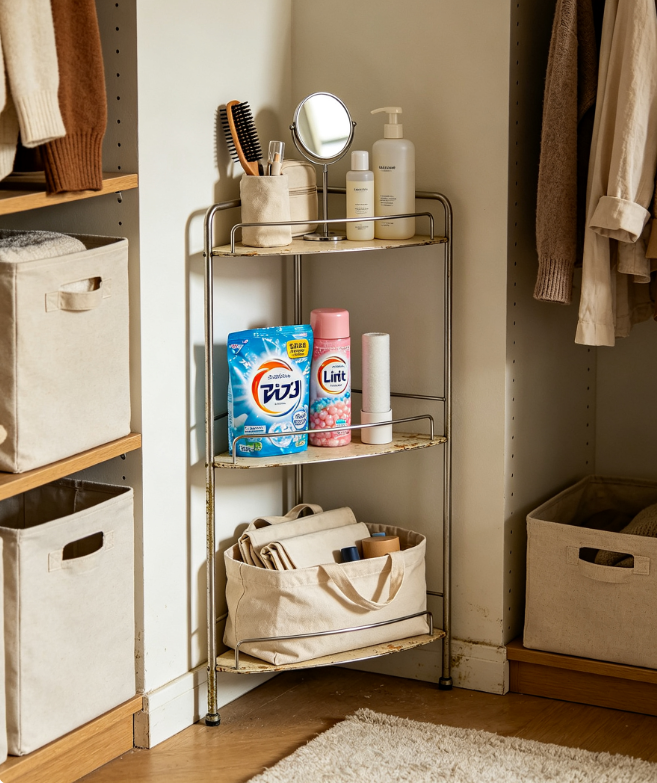
I’ve also added a small freestanding slim corner shelf to handle miscellaneous overflow and frequently used everyday items, wrapping up my full closet corner organization setup. After fixing hanging storage and folded clothing piles, I still had random odds and ends with no permanent home—extra skincare travel sizes, laundry pods, lint rollers, spare hair tools, and folded tote bags. These small items would slowly build up and create new clutter in the corner. I added a narrow, lightweight three-tier corner shelf designed to fit angled closet corners perfectly. I keep the top tier for daily use items I grab often, like hairbrushes and portable skincare. The middle tier holds laundry supplies and fabric fresheners. The bottom tier stores folded reusable bags and spare household small goods. The shelf sits flush in the corner, requires no installation, and I can move it anywhere whenever I need to rearrange the closet.
This slim corner shelf fills the last bit of dead space and keeps miscellaneous items organized and accessible, but it also has noticeable flaws. The lightweight build makes it easy to move, but it also means the shelf is not stable with heavy items. If I place full bottles or heavy hair tools on the top tier, the whole unit wobbles slightly. I’ve accidentally knocked items off a few times, so I’m always careful to keep heavier goods on the lowest tier only. The small tier size also limits storage capacity, so I can only store tiny miscellaneous items and cannot use it for clothing or large accessories. Another minor annoyance is dust accumulation on the flat shelf surfaces. Unlike covered baskets, open shelves collect dust fast, requiring weekly quick wipes to keep items clean and usable.
After organizing my closet corner with these simple, renter-safe methods for over a year, I’ve learned that small apartment organization is never about flawless, magazine-perfect spaces. It’s about working around awkward architecture, rental restrictions, and real daily living habits. None of these solutions eliminate maintenance entirely, and all have small downsides I adapt to every day. I readjust tension rods seasonally, repack fabric baskets regularly, and wipe down the open shelf weekly. Still, these small changes completely eliminated my worst closet clutter, made my morning routine faster, and let me use every inch of my previously wasted closet corner. For fellow small apartment renters stuck with unusable closet corners, these practical, low-effort, no-drill fixes are far more reliable than overhyped, unrealistic organization tricks.